Author: Tory Fodder

  • Book Reviews for November and December

    Book Reviews Nov and Dec

    Late last week, I was pleased to receive the opportunity to review two more books in the near future. The titles released earlier this year, but newly minted paperbacks are just hitting the shelves.

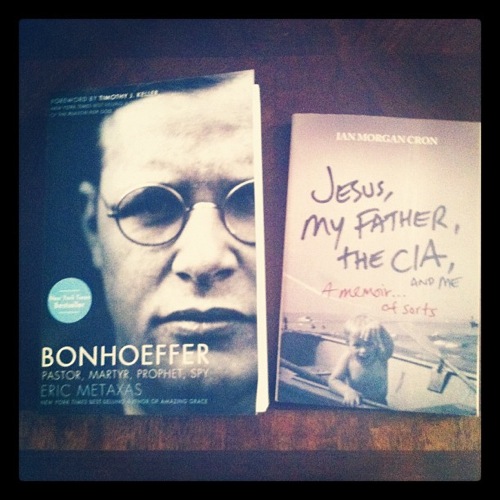
    The first review will be of author Ian Morgan Cron’s newly released memoir titled Jesus, My Father, The CIA and Me: A Memoir…of Sorts. Cron’s book chronicles the early years of his life, and explores the complexity of growing up with an alcoholic father who was also a spook for the CIA.

    N.B. Cron is also an Episcopal priest, so the memoir traffics into some weighty topics including depression, alcoholism, and the concept of grace. For those who avoid such books, consider yourself warned. And for those curious, Cron’s memoir has received excellent reviews from Publishers Weekly, and perhaps unsurprisingly, the Archbishop of Canterbury, Dr. Rowan Williams.

    The second review comes from a similar genre, although it’s more historical in tenor than spiritual. Author Eric Metaxas is most widely known for having written the biography of William Wilberforce that inspired the hit movie Amazing Grace. (A personal favorite of yours truly). His latest biography titled Bonhoeffer: Pastor, Martyr, Prophet, Spy is poised to become a similarly big hit. Released in April 2010, the book cracked number four on the New York Times Bestseller List only this September, and received glowing endorsements from such sundry quarters as the Wall Street Journal, The New Republic, Christianity Today, and even former President George W. Bush.

    The lengthy biography, of course, details the paradoxical life of pastor Dietrich Bonhoeffer, a theologian cum spy who was intimately involved in a plot to assassinate Adolf Hitler during World War II. Bonhoeffer was summarily executed for his heroics by the Third Reich, leaving the pastor/spy’s legacy shrouded in myth, and reverence among modern Christians.

    Check out the Thomas Nelson Trailer here:

    As always I would be remiss if I did not thank the appropriate parties for providing me the opportunity to review their works. Special thanks to Ms. Meryl Zegarek and her team at Meryl Zegarek Public Relations, Inc.

    More to come…

  • Book Review: The Scrapbook of Frankie Pratt – a novel in pictures

    Book Review  Scrapbook of Frankie Pratt

    I think each of us has an inner packrat. Whatever the object – say, hypothetically, it’s an empty lighter from a Vegas casino where you celebrated your first wedding anniversary (I digress) – whatever the object, we tend to invest items with emotional significance because of the memories associated with the object. Just by looking at the item, we can go back in time. And we remember.

    It’s this feeling of reminiscence that Caroline Preston captures superbly in her latest novel, The Scrapbook of Frankie Pratt: a Novel in Pictures (ECCO/HarperCollins Publishers; ISBN 13: 9780061966903; $25.99; Hardcover; 240 pages; Release: October 25, 2011). The novel tells the story of its eponymous heroine Frankie Pratt, tracking her life from a modest, New Hampshire farmhouse to the City of Light and the Left Bank. Along the way, readers encounter Frankie’s various romantic interests, a host of literary luminaries, and Frankie’s witty impressions of the “whiz-bang” years of the 1920s.

    The story is interesting in its own right with plenty of twists. But what makes Ms. Preston’s novel really standout is the telling. Rather than following a conventional novel form, one void of pictures and so often void of talent, The Scrapbook of Frankie Pratt is an actual scrapbook built “item by item” from vintage 1920s memorabilia.

    The effort was obviously painstaking. Preston notes spending “countless hours” to amass the 600-item collection of 1920s ephemera required to tell Frankie’s story. This lends the tale an appreciable degree of authenticity, with every detail of Frankie’s life requiring a genuine period piece. The range of items is impressive, from a first-edition dust jacket of The Sun Also Rises, to the 1915 Corona typewriter used for the captions of the book. The end result is a 240-page novel comprised of full-color photographs of the scrapbook built by Caroline Preston. For bibliophiles, this means a new type of novel that readers can not only read, but experience in a concrete, visceral way.

    One criticism I expect the book will receive is that scrapbooking itself is an anachronism, a hobby lost in the digital age not unlike stamp collecting and the U.S. Postal Service itself. But even while the story is told in a very specific way, and set in a very famous moment in time, the larger theme driving Preston’s novel is one that every sentient person can relate to: memories.

    At its core, scrapbooking is about preserving memories by compiling a personal history derived from objects that people ascribe significance to. While Preston communicates this preservation in the form of a novel, the concept of memory has a lengthy scholarly history. One quick example can be found in the unlikely source of German philosopher Friedrich Nietzsche. In his 1874 essay, On the Uses and Disadvantages of History for Life, Nietzsche muses about the the role of history, and its implications for those sad souls doomed to live in the present. His conclusion of the matter is that “the unhistorical and the historical are necessary in equal measure for the health of an individual, of a people and of a culture.” The implication is that dwelling too much in the past, can inhibit human proclivities for progress, while living hedonistically in the present without regard to the lessons of history can lead to a vacuous existence full of narrow-mindedness and selfishness.

    Nietzsche’s observation is something we tend to internalize intuitively as a species. We give objects significance because they remind us of a special moment, or because they mark an important occasion. In this way, we tend to balance our ‘living in the now’ with memories and lessons from the past. What Caroline Preston does in The Scrapbook of Frankie Pratt is explore this tendency to preserve memories on a personal level through the lost art of scrapbooking.

    In truth, scrapbooking itself isn’t all the foreign a concept either. When I was a young child, my sister and I took a trip across the American west with our grandparents. From the backseat of a late-80s, Ford Crown Victoria, the four of us visited nearly every American landmark that mattered. We made stops at Petrified Forrest National Park, an honest-to-God forrest of petrified wood; a massive meteor crater that would easily swallow our hometown; the Mesa Verde cliff dwellings; and Grand Canyon National Park. On the way home, we stopped at Toys ‘R Us in Amarillo, TX, before hopping the highway for a stake at the Big Texan Steakhouse.

    From each stop, we gathered a small library of brochures, park guides, ticket stubs, and receipts.  And when we weren’t pestering our grandparents with questions, my sister and I managed to take enough cheesy photographs to make the other tourists blush. Tucked away in the Fodder family annals is a photo of my sister getting in trouble for trying to swipe a large stump of petrified wood, and a snapshot of me awkwardly lying down in four states at once.

    Five years later, Grandma would pass away. Though we had resolved to take another trip west, the stars didn’t align for us to make the trek again. But even after all of these years, that three-week trip was one of my best memories of growing up. Whenever I look at the old shoe box of memorabilia from the trip, I’m instantly taken back to the long hours spent in the backseat of my grandparents Crown Vic, staring at the rolling desert as we made our way west.

    My items rest in a dusty shoe box, but the transition from storage to scrapbook is fairly easy to envision after having read The Scrapbook of Frankie Pratt. And quite literally every person could do something similar.

    In this way, far from being an anachronism, The Scrapbook of Frankie Pratt captures something we can all relate to. We all have our own coming of age memories. We can all recall having taken a trip to some place special. And we can all think of objects that we have imbued with significance, either because they remind us of our youth, or because they remind us of a unique event.

    Memory is simply the collective human experience. Caroline Preston understands this, and manages to bring memory to life in The Scrapbook of Frankie Pratt.

  • A Dispatch from Taos

    It’s a drop past 11AM here in Taos Pueblo. The temperature has languidly paced it’s way into the 50s. A cool breeze makes its way beneath the carport here at my Grandmother’s house.

    It’s mid-October, but wood stoves burn in the distance, and the smells of piñon waft through the air as it has done for centuries in this ancient, mysterious place.

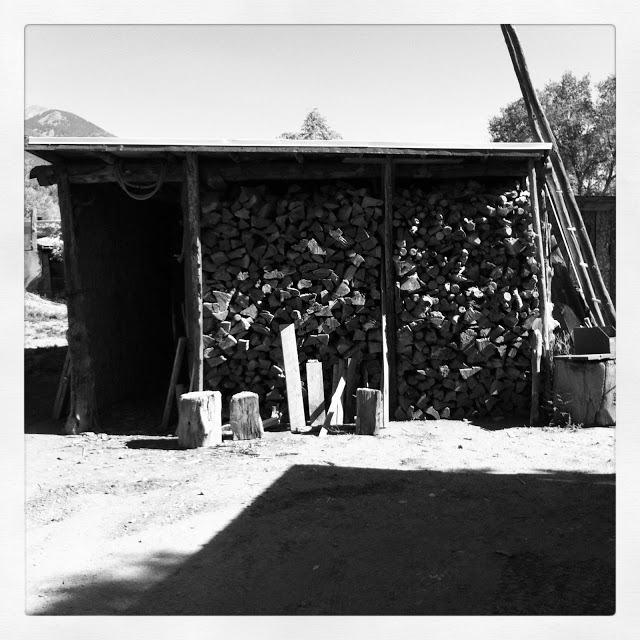
    There’s a shed across the dirt driveway. It is filled to the top of its 9-ft tall ceiling with enough wood to last two winters. I suppose the excess is important during the cold winter to come. But I’ve never seen the wood shed at less than capacity during any season.

    Maybe that’s the point. The cares and concerns here are about history and routine. Irrigating. Agriculture. Fishing. Hunting. Home repair. Tradition. Custom.

    In most respects, Taos is a full-throttled embrace of the historical. This disposition allows for language and tradition to coexist alongside the western/anglicized City of Taos less than a mile away.

    Naturally, this makes a balance with the unhistorical nearly impossible, as Nietzsche would say. Living in the moment, living for self, and the now are supreme challenges for Taos Pueblo and its denizens. Western arts, culture, and technology (aside from the ubiquitous Chevy trucks) are scarce on the reservation.

    Yet, as the leaves rustle, marking the passage of time, it’s a comfort to know that places like Taos still exist. Off the grid. A shrine to history.

    A place where time stands still.

  • September in the Rain

    The leaves of brown came tumbling down,
    Remember, in September in the rain.
    The sun went out just like a dying ember,
    That September in the rain.

    –Rod Stewart, September in the Rain

    It’s been a wet few days here in Tucson. But not even our Indian summer monsoons could compare to the tears that rained down from Congressional Democrats last night. At the end of an undoubtedly Bourbon-soaked evening, Democrats lost disgraced Rep. Anthony Weiner’s solidly blue Congressional seat to Republican Robert Turner, 47% to 53%. The White House made an effort to put its spin on the results, but the point remains the same: if Brooklyn and Queens aren’t safe for the Dems, what districts are?

    Unlike the unreasonable folks over at HotAir, I won’t read the results as anything other than what they are – an epic repudiation of President Obama’s failed policies that all but portends a historic GOP victory in 2012 and beyond. Objectivity aside, it strikes me that when there is a Republican Congressman from New York City (New York City!?), it’s either a sign of the apocalypse, or the sign of a burgeoning political tsunami. I’m hoping for the latter, but I think there’s some evidence that it may be the former.

    First, the New York Times, ran a reflective piece musing about the travails of living the authentic life. Alas, given that no one at the New York Times is actually authentic about anything, the article does little more than state the obvious. For the curious, the essay sagely observes that the image we project to others is little more than our perspective of how we want others to see us. Startling, I know. According to the NYT, this indicates that no matter how much we change our looks, or how ardently we attempt to conform to social mores, at the end of the day, we’re all about as authentic as a James Frey autobiography. Somewhere in Hell, Michael Jackson is rolling over in his grave singing “Black or White.”

    I suppose matters could be worse. At least many of us have, or will have, the comfort of a stable relationship/marriage to fall back on when times get tough. Unless, of course, you reside in the 2/3s of the country typified by the American South and the American West. These decidedly red states, where God’s faithful foot soldiers defend the citadel of marriage from the onslaughts of gay barbarians – these red states boast the highest divorce rates in the country. The hypocritical-evangelical-Christian meme is tired at this point, so I won’t go there. But I recognize that, with the exception of Kim Kardashian, people aren’t perfect. Still, maybe it’s time to give the gays a chance at being miserable too? Fair is fair.

    With New York turning red, marriages yielding to divorce, and weeks passing without a post, one might think your humble blogger has become more jaded than ever. This simply isn’t true. I start my day with a cup of Joe (that’s coffee, not Biden), and look for the good in the world.

    One source of inspiration for me is the performance of the Oklahoma Sooners football team. OU was recently ranked the No. 1 team in the land for a record-setting 100th time, besting Notre Dame, Ohio State, and USC, coming in lightyears ahead of Texas. Second, returning to the topic of marriage marriage, I was also encouraged to see that roughly 86% of all Americans now approve of interracial marriage, or as they say in Tennessee, miscegenation. Should my wife and I ever decide to have spawn, they’ll grow up in a much more tolerant society than the one Gary Coleman did, and that’s a good thing.

    But then I learn about products for children such as the Thudguard Infant Safety Helmet, and my hope for humanity languishes once again.

    The aim of the Thudguard is to soften the blow, so to speak, while children are learning to walk. This, of course, begs the question, how in 7 million years of human evolution did we ever get by without the Thudguard? God only knows what the poor kids will do once they’ve out-grown their helmet. Walk without one? I realize if you’re Rick Perry, the question may be a little different since the Earth is only slightly older than 5 thousand years. But even a creationist must consider how inexorably different history would have been. Imagine if Goliath was wearing a Thudguard when he fought lowly David? I’m not just saying, I’m just saying.

    After reading about the Thudguard, I immediately recalled the poetics of former hip-hop sensation Aaliyah (RIP), and wondered how the lyrics of her song Try It Again might change given the advent of so ingenious a device. Perhaps we wouldn’t encourage folks to try it again, so much as we would encourage them to be extremely careful while trying it the first time. Naturally, I promptly horrified myself by wondering whether Thudguard made an adult version of the helmet, and how much it might cost. If there’s a moral to any of the above, it’s probably that less is more.

    For all my hemming and hawing, I don’t think the apocalypse will be here any time soon. My Dallas Cowboys still haven’t won a football game, meaning that Hell hasn’t frozen over – unfortunately for the King of Pop. To celebrate the non-event, tonight, I will enjoy a quiet glass of wine with the wife who really is as close to perfect as anyone I actually know. I will be thankful that my marriage is well on the positive side of 50% of marriages in our great and blessed land. And I’ll probably block http://babysfirstheadgear.com/ in my bank account’s security settings.

    But assuming my own happiness isn’t enough to chase away your blues, as always, let not your heat be troubled. Things could always be worse. We could be living in Beijing.
  • Book Review: Irma Voth

    Irma Voth

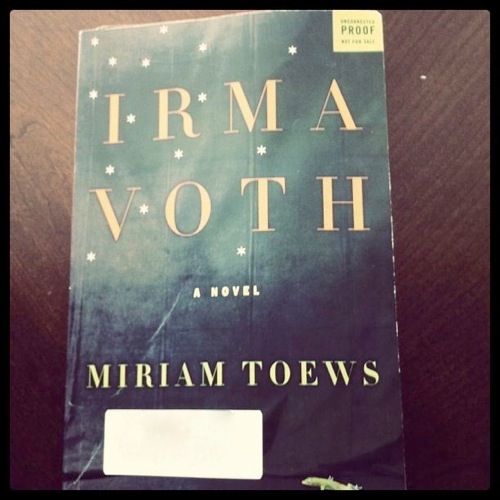
    The desert of Northern Mexico seems an unlikely place for religious dissidents to settle. Yet, in the late 19th and early 20th centuries, Mennonite families exited Canada in droves, en route to Chihuahua, Mexico in hopes of finding freedom, cheap land, and the opportunity to maintain their religious and cultural practices – the most important of which included the right to speak the Low German language. Miriam Toews’ latest novel, IRMA VOTH, (Harper; Sept. 6, 2011; $23.99), draws on the Mennonites’ history to present a concept of language that is at times both humorous and haunting.

    First, Toews uses language to fundamentally distinguish the Mennonite wayfarers of Chihuahua from the broader Mexican population. Early on, readers learn that the novel’s eponymous, main character, Irma Voth has married a Mexican man named Jorge. The union creates a host of problems for Irma, not the least of which includes a strained relationship with her mercurial father – who would very much prefer that the Voths live “in” the world while doing all they can to avoid becoming “of” the world.

    The clash between father and daughter results in Irma’s painful exile from her immediate family to a second house on the Voth family property. It’s unclear whether Irma’s father reacts to her marriage angrily because of racial, cultural, or religious differences. All three justifications make an appearance, yet, all three are united by Toews’ use of language as a differentiator. Race and cultural differences between Mexicans and Mennonites are typified in the novel by each group’s embrace of its particular language – obviously, Spanish in the case of the former, and Low German for the latter. The same divisions are present when analyzed from the perspective of religion. Low German is venerated by Irma’s father as the principle method of maintaining religious purity and social homogeneity among the Mennonite campos.

    Second, shortly after Irma’s banishment, Toews uses language in a markedly different way. Rather than using language as a tool for division, Toews uses language as a source of unity to develop the relationship between Irma and her sister Aggie. The entire Voth family has been instructed to avoid Irma. But Aggie is a fiery pre-teen and has absolutely no intention of avoiding her older sister. She mischievously begins a routine of making her way over to Irma’s house. Although somewhat precarious, the clandestine visits restore a sense of family, and love missing from Irma’s otherwise isolated existence. Irma and Aggie communicate in the hushed whispers of Low German to share news from home, and to share hopes for a brighter day.

    In this way, Aggie’s entry into the story presents language as a stark foil of the earlier scenes. Rather than using language to drive Irma away, Toews uses language to draw Irma and Aggie closer together. Language is used in a similar way when the novel’s other gaggle of characters arrive. A ragtag group of Mexico City film makers have designs to shoot a movie about life in the rural campo. The bulk of the novel develops as a result of Irma’s ability to communicate trilingually, landing her a gig as a translator for the film crew. This sets Irma up for exposure to a number of foreign, and secular ideas about life, culminating in a formative decision, that shakes the very foundations of existence as she knows it. But the point about language as it relates both to Aggie and the filmmakers is really the same: language is redemptive, wielding the ability recast a mechanism for dividing into a mechanism for uniting.

    And this manipulation of language is the point of the novel in a macro sense. Toews uses language not only to advance her plot, but also to communicate ideas, thoughts, and emotions. This is true of any story, but what makes Toews’ novel unique is its ability to immerse readers in the exercise of language manipulation from page one. Her prose has been called minimalist, but this is an understatement. The writing style is absolutely Spartan. This has the odd effect of causing readers to dive into her works not only for the sake of understanding the story, but also for the sake of carefully exploring each word for meaning.

    This is largely how the novel reads in its entirety. Each page is a potential hiding place for beauty – whether it’s a thought, a feeling, or an insight. And all the while, a reader’s search for these gems inexplicably unveils the novel’s plot.

    I suppose in this way Toews’ work mirrors life. In Irma Voth, she demonstrates life’s complexity through language, underscoring that life is not often lived in the world of black and white envisioned by Irma’s father. Rather, it is lived in the shades of gray where our ethical, moral, and religious suppositions are challenged by life itself – a world trafficked by Irma and Aggie, and all of the wonderful characters they meet.

    Miriam Toews’ Irma Voth is set for public release on September 6, 2011. It is available for pre-order here.