Author: Tory Fodder

  • The Hard Part About Blogging during a Pandemic…

    Pandemic shopping.

    I don’t write with much consistency these days. I thought that the pandemic and working from home would see an increase in posts and a whole series unfold on the different tech dilemmas that I find myself in.

    But the truth is my heart just hasn’t been in it.

    When I watch the news or read the headlines trying to drum up a creative spark that might lead to a post, I find that writing anything political or satirical would be mundane compared to reality.

    Take the recent Trump v. Biden debate for example. The debate was an absolute brawl put on by two men who desperately want to be the President of the United States (or acting President in the case of Biden). Both sides came out swinging, and caught the usually nonplused moderator Chris Wallace completely off guard. One candidate called the other a clown. The other retorted back by calling him stupid, and our moderator was left in the unenviable role of a Presidential Debate Schoolmarm who had clearly lost her class.

    If there’s one thing we’ve managed to do over the past year it’s figure out ways to clobber each other. I say this metaphorically with respect to politics, but given the riots-cum-peaceful protests, I have to say this literally as well. We are a Nation so divided that even our collective response to the pandemic has been politicized. Mask wears vs. the anti-mask wearers, to say nothing of the pending Supreme Court nomination, the looming election, the economic downturn that has beset so many, and those we’ve lost to this wretched virus.

    It’s strange but at a time when thoughts are plentiful, I’ve found it plenty difficult to focus on the tasks at hand. Sharing anything remotely thoughtful with the blogosphere has been low on the priority list – somewhere on the level of responding to emails, unfortunately. (Is the blogosphere even a thing anymore?)

    A personal failure of words strikes me as especially odd given that we are living in a truly historic time. And when one lives through history it would seem that there’s something significant to talk about. To wit, I think the last ‘certifiable’ pandemic was the Spanish Flu in the 1920s. However, it seems there’s some debate about this point as some quarters only call it a mere epidemic rather than a pandemic. Roaring twenties, indeed. Given that very few if any people are alive who survived the pandemic of the 1920s, it’s fair to say that we are living through a historic moment. And yet words have been few and far between.

    I think the difficulty stems from the fact that living through a pandemic is rather boring.

    Movie theaters are closed. Restaurants and bars have lost their appeal. Amusement parks are no longer amusing. Halloween has been canceled. Travel abroad is severely restricted. Travel at home is undesirable. And, to state an obvious (albeit unpopular) opinion, wearing a mask is tedious. Rather than breathe my own breath, like billions of people around the world, I’ve simply opted to stay home.

    In truth, it hasn’t been all bad for me. Home in my case, is back in Oklahoma. At present, I’m writing from the comfy environs of my childhood room, sleeping on an extra-long twin bed with a small writing desk allocated for me to do my work. It’s a humbling thing to be nearly 40 (gasp) and living at home with my parents.

    The saving grace of my situation is that it’s not for unfortunate circumstances that I am here. My apartment in Tucson is happily unoccupied with all of my belongings just as I left them in late May. I remain gainfully employed at the University of Arizona. And my health is as good as it ever has been – though I certainly need to lose a few COVID pounds at some point. My excuse is that the gyms are closed. That I would not have gone to one anyway is a moot point.

    So, despite it all, those I care about are safe and healthy. I have a job. My needs are met. Many have it far worse. I’m a fortunate person though I don’t deserve it. I just hope this thing turns around for us all very soon.

  • Easter in the Midst of Pandemic

    The video below was a live-streamed performance given today at the Duomo di Milano by Italian opera singer Andrea Bocelli. The performance was broadcast via YouTube as a message from the singer to the world, reminding us that Easter is a celebration of “the trust in a life that triumphs.” It’s one of the most beautiful and haunting renditions of Amazing Grace that I’ve ever heard.

    Toward the end of the performance, there are shots from the stilled cities of Milan, Paris, London, and New York. The images create a stark contrast between Bocelli’s message of hope and the dark hour besetting our world.

    I found the dichotomy to be exceptionally appropriate on this Easter Sunday. The message of Easter from the Bible is not that dark times will not come. This was, after all, the lesson of Good Friday. The death of Jesus on that day had to have seemed rather dark, indeed. Today, the empty streets across our lands bespeak a similarly dark time for us.

    And yet, the message of Easter morning is that we still have hope. Hope for a better tomorrow. Hope that life will triumph. And to Christians, hope that death is conquered because of the sacrifice of Jesus on the cross.

    Without the cross (the bad times) there could be no resurrection (the hope for tomorrow).

    I hope you’ve had a happy Easter, friend.

  • Managing Depression and Self-Care

    IMG_4030

    In the days before the global pandemic (four weeks ago), I took a week to work remotely and left town. I didn’t realize at the time what a luxury getting on a plane would be. I had no idea of the world chaos that would follow. I just knew I needed to get away, and I’m glad I did.

    Like millions of others, I’ve struggled off and on over the years with the dual beast of anxiety and depression. One easily feeds into the other. Anxiety about life (real or perceived) has often led to a downward spiral into depression. Similarly, feeling down and depressed has made me anxious about my mental health, and left me wondering whether I would ever feel back to my “old” self again. The feedback loop can be pure hell.

    I can’t say that I’ve managed this very well in the past. My m.o. has been to double-down on new medicines, carry on with whatever projects I have, and basically ignore how I feel. My thought was that if I had no physical ailments or illnesses, then whatever emotions were bothering me were simply something in my mind that I could control. This had been my mindset for a number of years. The latest incarnation of the mindset included my separation and ultimate divorce in 2016; being separated from my son and family (all of whom live in other states); and most recently the death of my Grandfather this past August.

    What I didn’t realize is that one can only keep the emotions and feelings contained for so long.

    It’s fair to say that I hit a wall in mid to late February. The jig was up. Grief unexpectedly snuck up on me after a busy month of work projects. I tried to force myself to work more. I took time to process less. I wasn’t terribly productive and this caused me alarm. I tried new medications (as prescribed by a doctor) that affected me in odd ways. I was sent reeling and didn’t know what to do. Panic attacks were common. I dreaded trying to sleep at night. No matter what I did, my mind simply would not shut off. And more than anything, I felt utterly alone.

    In brief, I was scared. I hadn’t reached this point before, so my response was atypical: I asked for help. I contacted my doctor. I contacted my parents and family. I contacted friends. I even contacted my superiors at the office. I requested a week to adjust to new medications while working remotely. I could work but I was in no shape for meetings, virtual or other. My request was granted in short order. I left town for a week at the invitation of amazingly generous friends to work remotely. I took a couple of days off in between to boot. During the days off, my friends and I explored the Blue Ridge Mountains along the Virginia and North Carolina border. I ate deep-fried southern food. I even managed a trip to visit the hometown of a personal hero – a place I had always wanted to visit – the hometown of Andy Griffith, in Mount Airy, NC. At first, I felt so incredibly guilty. Guilt born from a failure to power through. A guilt born of perceived weakness. An inability to man up.

    And then I got over it.

    The truth is, there was nothing that couldn’t wait. There were no emergencies that I couldn’t handle at a distance. Whether I was in Tucson, my home in Walters, or points beyond, the essentials got done, and I felt a whole lot better. It wasn’t a silver bullet. I still had/have a lot of things to work through. But ignoring them was never a sustainable solution. I just didn’t realize how precarious an alternative it had been. Through the process, I inadvertently followed two important, widely-recommended self-care tips without even realizing what I was doing.

    Self-Care Tips

    Psychology Today suggests twelve tips for exercising better self-care. Number six and number twelve are most relevant here:

    • Number 6: Take a self-care trip.
    • Number 12: Schedule your self-care time, and guard that time with everything you have.

    It’s old hat to most, but it’s a simple fact that we all need rest from time to time. There is no weakness involved. I desperately needed some time away to recharge. To heal. To allow my body to adjust to the new meds. I needed to be surrounded by people who cared in new environs. Functionally, it was a very selfish thing to do. But if there’s a lesson in the whole ordeal, it’s that being selfish to tend to my emotional, mental, and spiritual wellbeing is an okay thing to do.

    TAKING A TRIP

    The self-care trip wasn’t planned. I booked the ticket the day before I left. Some incredibly gracious friends knew how I was feeling and invited me to come to their home to convalesce for a week. The trip was impromptu but essential.

    I had been worried about my job and whether it was acceptable to get away for that period of time. But, in the end, my superiors were all incredibly understanding and sympathetic, if not empathetic. I did not consider the point, but nearly everyone has been in need of self care at one time or another. What can seem like an isolating experience is actually quite common. Where I was afraid to reach out and worried about my job performance, my colleagues were concerned about my wellbeing.

    I realize that not every job will be as forgiving in taking time away as quickly as mine was. But I think that many will be surprised at how understanding an employer can be. For those who are fortunate, like me, to have understanding colleagues, it’s a good reminder to be there for others down the road. #PayItForward.

    GUARDING YOUR TIME

    A second lesson I’ve learned from my experience in late February is how important it is to “guard” the time that I need for to take care of myself.

    The critical mistake that I made leading up to my very dark time was in not listening to the way that I felt. I tried to force myself to carry on with business as usual despite the fact that the business of my life was far from usual. I let work and other things become my distractions from how I was feeling. I devoted my time to these rather than guard or allocate the time that I needed to take care of myself.

    In retrospect, it seems obvious how wrong this was. At the time, it seemed like self preservation. My pride kept me from seeking help and reaching out for years. It became a habit that I didn’t realize I had developed. While this may make me sound too much like a hippy (I promise I’m not), it’s pretty clear that my life was out of balance.

    The point of guarding time is not to dwell on a problem indefinitely. It’s not even about coming to any definitive solutions. I didn’t have any lightbulb moments on my trip for example. To me, the purpose of guarding one’s time is to allow the soul the time it needs to rest. The decision to allocate time from hectic schedules must be deliberate. It must then be guarded for the sacred mandate that it is.

    KEY POINTS

    If I can be so bold as to offer a few takeaways from my experience, I think the following points sum up matters nicely. Given where I’ve been, I hope that some of these will be helpful to you, if you find yourself in a similar fix.

    1. There’s no weakness in seeking help. My pride kept me from seeking help for several years all because I thought that it would demonstrate weakness to not “have it all together.” But having it “all together” is a myth. No one has it all together all of the time. If I had sought help and addressed how I felt head on, I could have saved myself from literally years of pain.

    2. You’re not alone. This is a cliché. I don’t love that I have written it. It’s also true. The mountains of anxiety and depression that I perceived in my mind seemed like sui generis demons that I had created and that only I could slay. I did not think that anyone would understand what I had been through and that I would be judged all the more for not handling things on my own. This too is a myth and the reality is quite the opposite. The human experience is far more similar than it is different. As Solomon said, there’s nothing new under the sun. When I cracked the curtain and let a bit of light from others shine in, I realized that my situation was not unique and that a bit of help from others was not only welcomed but also immensely helpful.

    3. Be your own advocate. Of all the lessons, this was by far the most difficult for me to learn. I did not want to admit that I needed help because I thought it projected weakness. I did not want to allow others into my life because I didn’t think they would understand, and that if they did understand, then they would judge me for being weak (how’s that for cyclic thinking). So, being my own advocate and verbalizing what I needed was an extremely difficult challenge. But it had to be done.

    When I hit the wall in February, I finally came to a point of realizing that I had done too good a job putting up my facade of invincibility and isolating myself from others. No one asked how I was doing because I always gave the same talking points, deflecting the conversation away, answering the question without answering it: “I’m fine, thanks. How about you? How is x going?” Anything to avoid actually giving an honest answer. I realized that the only way I could get the help I needed was to be honest with myself and to advocate for my own wellbeing. Once I had done this, it seemed so easy and simple.

    I couldn’t for the life of me figure out why I hadn’t done it many years before.

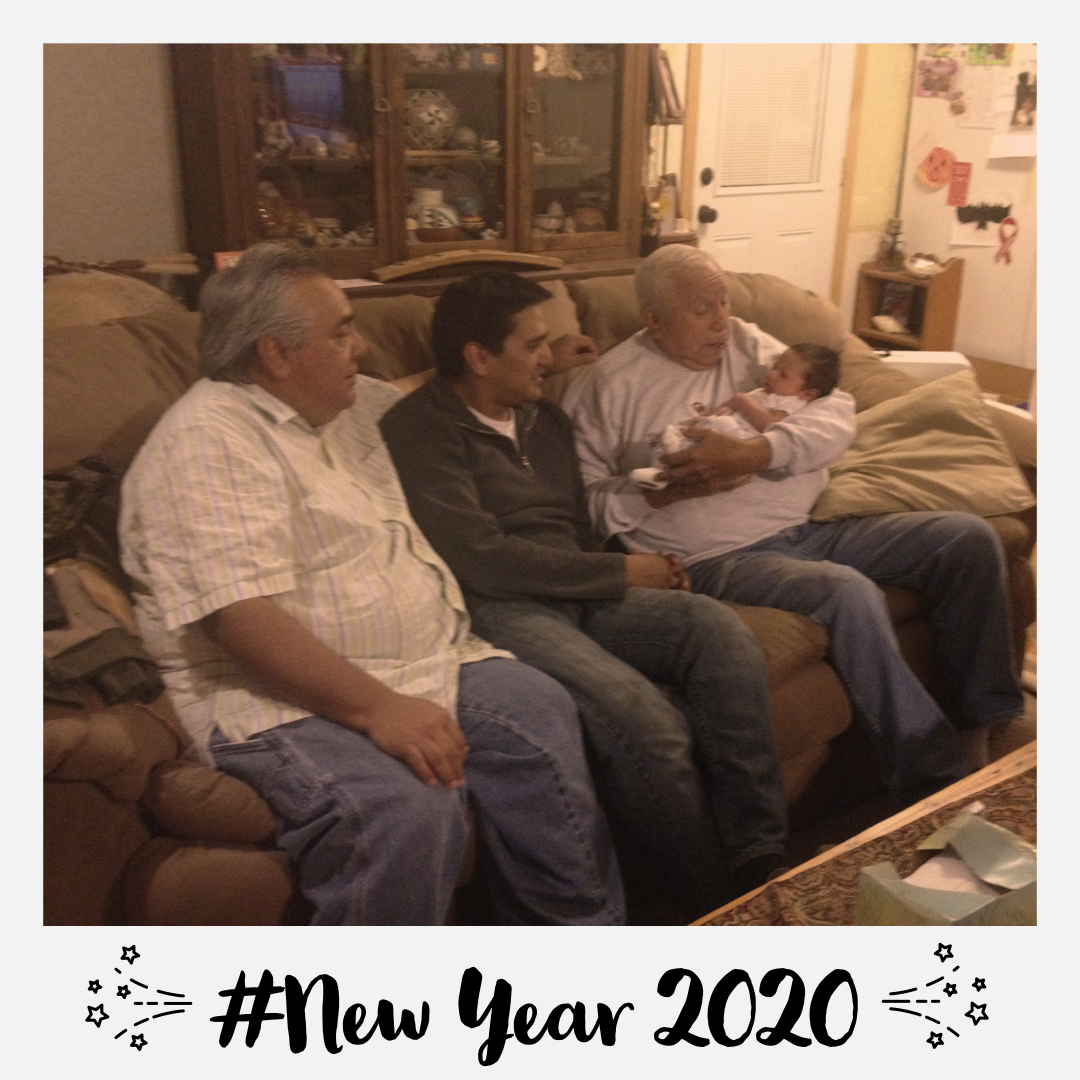
  • New Year’s Reflections 2019: For Auld Lang Syne


    I haven’t written much in the past few months. Each time that I’ve tried to sit down to write, I found myself at a loss for words. Mostly, I’ve lacked inspiration. This year easily ranks among the most difficult in my life. It caps off a roller coaster decade filled with ups and downs.

    Suffice it to say, when the clock strikes midnight, there will be no love lost for 2019.

    In no particular order, here’s a short summary of the past ten years: I’ve welcomed my son into the world and two nephews to boot, completed law school, earned an advanced doctorate in law, moved to and lived in a foreign country, traveled the world multiple times, adopted a dog, moved home, moved to Wyoming, moved to Arizona, got married (8/15/09 but close enough), got divorced, saw my career develop, stopped attending church, saw my physical and mental health decline, gained weight, lost sleep, and saw the decade cap off with my Grandpa’s passing on August 2, 2019.

    Along the way, I’ve also met scores of people from all over the world. Some are like family. All of them are good people. Folks that are passionate about their work. Some passionate about their faith. Others passionate about their families. To a person, these people have affected my life in positive ways and have inspired me to try and be a better person even when that didn’t seem possible.

    While I cannot say that the decade has been a total bust, I think it’s objectively fair to say that it was a difficult one. Highs and lows. Not just little dips: soaring highs and shattering lows. It’s a small miracle that I’ve made it through. In retrospect, it’s easiest for me to think of the 2010s as a hurricane battering the little ship that I call life. Now, as I come into port for 2020, I’m a threadbare schooner, wood split in places with a broken mast. A new year, a new decade are most welcome for my money.

    Still, a friend made me think about today and about the importance that I’m placing on a year that reads 2020 rather than 2019. According to her, “it’s just another night and a new year.” No big deal.

    So why is a new year so important? To me? To us? To the majority of the world that’s celebrating as I type? My friend is right on some level. Just another day/night. There’s nothing magical about the date January 1. Nothing substantively will change in my situation from Dec. 31, 2019 to Jan 1, 2020. But I think the importance of a new year is less about the date on the calendar and more about the chance to hit reset.

    A new year brings an opportunity to set in motion all of the goals a person can set for the year. It allows us to assess where we are as people over the next 365 days. It’s not the date that matters. What matters is the mindset we carry forward into a new year, and by extension the fact that it matters how we approach life as a new year kicks off. As a bit of caution, it seems pretty obvious to me from the past ten years that negative thoughts begat negative outcomes. Pessimism becomes the enemy of progress because it is self-sabotage from the outset. Nothing guarantees a bad year quite like making up the mind that it’s going to be a bad year.

    It’s also unnecessary.

    If I’ve learned anything from my tumultuous 2019, it’s that hope is the critical element of being happy in life (aside from God himself). When we lack hope, we lack that piece of us that makes us look forward to tomorrow. Hope is our internal motivation. It’s the reason we endure the troubles of a decade, fall asleep, and awake with the expectation that a new year will be better than the year and decade that has passed. (And while we are on the topic – how in the world did ten years fly by so quickly?)

    So, in response to my friend, I think a new year is important because it reminds us to hope. Hope is important because it’s the means by which we wake up and do it all again no matter what life deals our way. And the motivation we have through hope is what keeps us living life rather than merely waiting around to die.

    With that, here’s to 2020, friends. May the best of your 2019 be the worst of your 2020.

    Auld Lang Syne

    Should auld acquaintance be forgot,
    And never brought to mind?
    Should auld acquaintance be forgot, And auld lang syne.
     
    CHORUS
    For auld lang syne, my dear,
    For auld lang syne.
    We’ll take a cup o’ kindness yet,

    For auld lang syne.

    Courtesy of CNN.com

  • When Heroes Fall

    My Grandfather passed away this past Friday. The morning he took ill was unremarkable. It seemed like any other morning. Grandpa was out and about with a friend from church, having some lights installed on a camper. There was no urgency to the project, but it was something he wanted to get done – like a million other projects that he had prioritized over the course of his life.

    Somewhere along the way, my son and I got around and went to Lawton to pick up his Mother from the airport. They had planned to spend a couple of days here on the farm before catching a flight back to Indiana. We didn’t get very far along on our way back to Walters when I got a call saying that Papa wasn’t feeling well and that he was going to the doctor – like he had so many times before. At the age of 88, Papa had had his health battles. But they nearly always went away. A day or so in the hospital max. A dose of antibiotics. He was usually good to go.

    The Fall

    So, I didn’t think much of the situation when he was first admitted. My Mom decided to spend the night with him. We prayed and went home with a promise to relieve Mom in the morning. But something odd happened during that first night. While he was alert and talking when we left, his blood pressure started to drop during the night. His breathing grew more difficult. The doctors threw around the word sepsis. Quite unlike the many times before, Papa wasn’t getting better. I started to get concerned. A nagging worry that maybe something was different this time. A quiet unease growing at the back of my mind.

    Tuesday bled into Wednesday. We were back at the hospital as soon as we could. Before we got there, he was moved to ICU. My nagging unease transformed into a mountain of worry as a hive of nurses flitted about with concerned looks. Papa was still talking and alert but he wasn’t allowed food or water. There was talk of a potential procedure but no concrete plans. Food and water were restricted in hopes that they could operate. Nutrients and antibiotics alike were administered through an IV.

    Most of the family was exhausted by the time evening rolled around. I offered to stay with my Mother at the hospital for another night to help her get some rest. Everyone went home to rest and to pray. For me, it was a sleepless night spent walking the corridors of the hospital between nursing rounds. When I was in the room, Papa shifted often and wanted to adjust his position in the bed to be more comfortable. I moved him. When the nurses weren’t badgering him for blood draws and vital checks, I talked to him about football and Thunder basketball and gave him water when the nurses weren’t looking. Just little sips to wet his mouth and to quench his thirst. As the night wore on, he talked less and less. I didn’t realize it at the time but those conversations with me would be his last words. I wish I had asked him questions that were more profound. I wish I had talked to him about things that were more consequential.

    By Thursday morning, he had finally fallen asleep but his breathing had gotten worse. The doctor recommended a ventilator. We agreed. After a few hours on the machine, his condition stabilized enough that the doctors could run the emergency procedure that they had been planning – a procedure to hopefully address a blood clot resulting from the sepsis. The thought was that the clot was causing some of the problems with his breathing. By now, the prognosis was grim and the surgery odds were a even 50-50 given that he would need to be sedated. We waited and prayed. As the afternoon sun faded into night, in characteristic fashion, Grandpa pulled through. Our spirits lifted with hope that his blood pressure might rise once the sedative wore off. Eventually, his blood pressure did become more stable for some time in fact. But he didn’t wake up. As advised by his care team, we all chalked it up to him needing to get more rest. So, we went home to do the same.

    I woke early Friday morning to a phone call. In a situation like this, phone calls early in the morning are never good.

    His nursing team had kept watch during the night while his condition deteriorated. The ephemeral “they” ran another emergency scan and found a new rupture internally. He was losing blood. Fading fast. There was nothing they could do. We raced to the hospital. I hoped for a miracle that was not to be. By the time we arrived, loved ones had started to gather. The only option presented was to remove the machines. Before the vitals went flat, we all had time to say our brief goodbyes. There wasn’t nearly enough time. Never is.

    Once the ventilator was removed, Papa slipped away quickly. The warmth in his hands – hands that had held mine hundreds of times before – gradually grew cold. In a matter of minutes, he was gone.

    A Hero’s Life Remembered

    The days after are a blur. Funeral arrangements. Video tributes. Visits from loved ones and friends. At one point, we participated in an all night wake with him. The details of those days are fuzzy. At some point, the task of writing Papa’s eulogy fell to me. Any one of us could have done it. When you live a good life, it’s easy to say good things. But how do you summarize the life of a giant? Someone, who in life, always seemed larger than life itself? The effort was a fool’s errand. There were numerous stories to tell. Countless acts of kindness to note. Innumerable lessons learned at his table over coffee. Hours spent fishing at the ponds, soaking up his wisdom – all in blissful ignorance of the reality that it would one day end. Even the obituary that was put together, which accurately and thoroughly stated the bare facts of Papa’s life, seemed inadequate. His parents, wife, and survivors were all mentioned. A handful of his accomplishments graced the pages of the local newspaper. But neither the eulogy nor the obituary even remotely approached the totality of the man he was.

    As a family we planned Grandpa’s funeral. It was a service that was quintessentially him. The historic country church that our family calls our spiritual home is not necessarily one that has embraced the digital age. There are no projectors and screens adorning the stage. There are no cameras. The dark wood paneling of the sanctuary harkens back to an understated elegance that seemed to permeate rural construction at the turn of the 19th century. Yet, the congregation agreed to have the internet installed so that we could livestream Grandpa’s prayer service and funeral for his many friends and family from across the Nation. I think that Grandpa would have gotten a kick out of this bit of logistical planning, and the fact that his funeral was the first to bring the Church, as we call it, into our modern, technological era.

    We were careful to call the prayer service and funeral “celebrations” of his life. The use of the word celebration is really just an exercise in semantics but we wanted people to reflect upon Grandpa’s life and celebrate the work of a faithful servant of God and of a life lived well, as opposed to treating the occasion as than an opportunity to mourn his passing. In truth, it was a mix of both. Still, it was a service that befit the person Grandpa was, and it involved many of the people that he cared about and that cared about him. If the goal of such a celebration is to honor the memory of the loved one who has passed, then I think we succeeded.

    But to me it still didn’t seem adequate for a giant. For a hero.

    A Hero’s Farewell

    It wasn’t until the funeral procession to his grave that I began to feel like Grandpa was recognized for the hero that he was. It’s true that Grandpa was a proud veteran of the Korean War. He served his country bravely as a combat engineer, and instilled a similar sense of service in each of his grandchildren. My oldest younger sister is a foster care worker who has devoted her life to protecting children. My youngest sister will soon be a teacher. He never said it in so many words, but the message from our Grandfather was always clear: serve a cause greater than yourself.

    But beyond this, he was our rock. There was no situation in life that I couldn’t bring to him for wise counsel. There was nothing he couldn’t fix. No problem a bit of his common sense couldn’t solve. He mentored me without the need to call it mentoring. He encourage me. He pushed me to do things that were well beyond my comfort zone, the lot of which have made me a better person as a result. He didn’t fight villains at night. But he knew how to fight the enemies of self-doubt, insecurity, and intolerance. Like a true hero, he conquered all of these with a sword of love.

    Our family buried Papa with full military honors. As we made the descent from the church, down the hillside to the cemetery, located about five miles away, we were escorted by the Oklahoma Highway Patrol. The trooper’s lights flashed as cars pulled over to acknowledge the passing of a great man: a man whose greatness can be attributed simply to the fact that he loved God and loved others. As we pulled into the cemetery, American flags waved proudly long the cemetery’s fence line. Their vibrant hues of red, white, and blue provided a stark but fitting contrast to the solemnity of the day.

    Far too soon, the officer’s car came to a stop blocking both lanes of traffic along the country highway leading into town. As we passed, the officer stood at parade rest, his head bowed while the procession made its way through the gates. Gradually, the hearse would wind its way along the narrow lane of the cemetery, and I saw a lone bugler standing off in the distance. There would be no faux recording of taps at this funeral. When we arrived at Grandpa’s grave, the military color guard stood a short distance away, at the ready to pay one final tribute to a fallen warrior.

    We removed Grandpa’s flag-draped coffin from the hearse and carried it to its resting place while the color guard stood in salute. At the exact moment the interment ceremony began, quite by happenstance, an Air Force jet flew low and overhead. Our family likes to think that we have a number of friends, but we certainly don’t have the military connections to secure an Air Force flyby. We had a good laugh later when folks asked how we managed to do it.

    Although it was not planned, I viewed the flyover as a special nod from God, and perhaps from Papa himself, and made my peace. If anyone could talk the Lord into sending a jet over for his service, it would be him. It may seem like a cheeky ask of God during Papa’s first few days in heaven, but I wouldn’t put it past him to find a way to comfort a broken-hearted grandson like yours truly.

    When the guns blazed in salute and as taps played in the distance, I internalized the fact that Papa was gone. As we lowered him into the ground, there were still plenty of tears. Even from me. But when the final spade was turned and his body buried, I couldn’t help but smile a bit wistfully.

    Papa had gotten a hero’s farewell after all.