Author: Tory Fodder

  • Public and Private Life

    My wife, Son and I applied for an extension of our visas today. Coincidentally, today is also the four year anniversary of our marriage.

    If you had told me on our wedding day that four years hence we would be living in a foreign land, with an infant son in tow, I would have promptly asked you to leave. Our wedding was dry and, clearly, you would have been drunk.

    And yet, sometimes reality is even stranger than the fictions we create. So, here we are, sitting in an outdoor cafe, enjoying blue New Zealand skies, while Clark enjoys a bottle. Not only have we been away from America for six months but we have just applied to remain away longer – and during football season to boot.

    If there’s a comfort to be had in our absence, it’s that the public sector services here in New Zealand are just as dreadful as they are back home. There’s no more depressing place in earth than your local DMV. The same can be said for the New Zealand Immigration Office, Hamilton Branch.

    I won’t get too much into the weeds, except to say that only the government would make paying fees a fiasco and couple this inanity by referring patrons to a call centre rather than addressing questions in person – the presumptive point of having an office in the first place.

    Contrast this with my experience at my local (viz., private) bank in the same building only a few floors below. Prompt, courteous service. Happy to answer any questions Dr. Fodder. I’m not even the kind of Doctor that helps people and the staff was still deferential and unfailingly polite.

    All the same, it’s been a consequential four years to say the least. A good four years. And that’s not ever an easy or glib thing for me to say. I am blessed.

    – Posted using BlogPress from my iPhone

  • Indigenous Governance in the United States and New Zealand

    It’s been a long while since I’ve added an update on my work with Indigenous peoples. I had hoped this site would turn into a place where I could share some of the questions that have come about from my work and a place where I could obtain feedback from those interested in similar issues.

    Alas, somewhere between finishing my dissertation, welcoming my firstborn Son into the world, and moving to New Zealand, the blog was left to flounder.

    My time in New Zealand has been spent with the Māori and Indigenous Governance Centre in the Te Piringa – Faculty of Law at the University of Waikato. Having never lived abroad, it has been somewhat of a transition but the work has been interesting and I couldn’t be more please to be working in my field of expertise. And true to form, a lot of questions have come up that I’ve tried to address in various capacities – most directly in the form of a couple of law review articles that are still in the works.

    What I wanted to share, for now, is an article I drafted for the New Zealand Lawyer Magazine that applies some of the work done on Native Nation building in the U.S. to the situation of Māori iwi here in New Zealand. The response has been underwhelming so far but I hold out the naive hope that someone will give it a read and seek out further information – including the resources of our centre.

    By way of clarification, the point of the article, of course, was not to imply that America has the cure for every conceivable ill that colonization hath wrought. Rather, the point of the article is to suggest that there are enougH similarities between the challenges of indigenous governance in the U.S. and New Zealand that our countries can share lessons and avoid each other’s mistakes.

    I conclude the piece with this thought, which more or less summarizes my thoughts on Indigenous governance in general:

    Having traversed the desolate plain of trial and error, our tribal nations have experienced federal policies towards Indian governance that have ranged from the outright termination of tribal institutions, to the extant policy promoting tribal self-determination. If Māori can benefit from the troubling lessons of the United States’ past, we should be so fortunate to see something good come from something that was objectively rather grim. [Link]

  • Book Review: In the City of Bikes

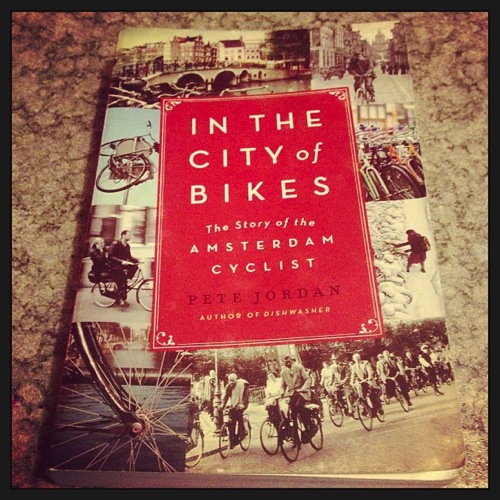
    In the City of Bikes - Pete Jordan

    If you’ve followed Pax Plena for any length of time, you probably know that I harbor a long-suffering interest in cycling. In good faith, I can’t call myself an avid cyclist having ridden all of 21 miles since I picked up a road bike here in New Zealand. But it is fair to say that I’m a cycling enthusiast. Naturally, when I received word about Pete Jordan’s somewhat autobiographical history of cycling in Amsterdam, well, it didn’t take long to catch my attention and post a review, once the book had traversed the Pacific.

    I usually don’t review works of non-fiction, but Jordan’s book In the City of Bikes: The Story of the Amsterdam Cyclist (Publisher: Harper Perennial; On Sale: April 16, 2013; Cost: $15.99), was a pleasant exception to the stereotype of the somber historical tome. Jordan ably makes the history of cycling in Amsterdam an entertaining read. As a survivor of high school AP European History, lo, so many years ago, I can personally attest to the fact that making history ‘fun’ is not an easy task. I’m honestly not really sure why this is the case. In most situations, history/reality are more entertaining than even the best of fiction, as recent debacles involving the Obama Administration indicate.

    Even so, Jordan opens the book with a bit of autobiography explaining his love of all things bike and his incipient, young hope of making American cities more cycling friendly. It’s all quaint really. Like most urban planning majors, Jordan was without a permanent place of employ upon graduation. And, having recently gotten married, it apparently seemed a swell adventure to fold up shop, under the thin auspices of a university study abroad program, and move to Amsterdam, Cycling Mecca of the World.

    Once there, however, Jordan tacitly adopts a mistress as he falls head-over-heels in love with the Venice of the North. The rest of the book follows suit accordingly, mixing an abiding love for Amsterdam with the honestly fascinating history of the city’s own love affair with cycling. I realize, having described the work so far, that it would be easy to dismiss Mr. Jordan as an overly libidinous Bill Bryson. This is my fault, not Pete Jordan’s. His history of cycling in Amsterdam is actually quite poignant in its own right. Consider this brief excerpt from the book describing the end of the Nazi occupation of Amsterdam: 

    During their time in Holland, the Nazis had stolen everything that hadn’t been nailed down. If it had been nailed down, they got a crowbar, pried it free and stole it – then they stole the crowbar. Factories were picked clean of both finished products and the machinery itself. Hospitals, museums, laboratories, libraries, etc. were looted…and of the 4 million bicycles, only 2 million remained, most of which were – as one observe at the time put it – in “extremely poor condition.” p.237 – 238.

    Though this excerpt isn’t exactly ‘fun,’ it is quite intriguing to gain such a pithy understanding of the depth and breath of the Nazi occupation of the Dutch and their principle means of transport. As Jordan describes the increasingly desperate situation of the Germans during WWII and the increasingly draconian regulations they placed on the Amsterdam cyclists, it’s quite easy to grasp and sympathize with their plight even though the events occurred some four generations ago. By the by, instances of history like this make me eminently thankful for America’s much maligned Second Amendment. 

    Fortunately, not all of the history is entwined with the atrocities of World War II. Among Pete Jordan’s more autobiographical accounts, he explains his wife’s choice to cycle to the hospital to deliver their first-born son – who, incidentally, was not wrapped in swaddling clothes and placed in a bike basket:

    Two weeks after the baby’s due date, we went to the hospital to have the labor induced. To get to the hospital, we could have taken a bus or a taxi. But since she’d been cycling pretty much every day since the baby’s conception – this day seemed no different – Amy Joy rode her bike to the hospital to give birth. Eventually…out came a baby boy. We named him Ferris. p.289.

    Aside from the fact that his son enjoys a certifiably awesome name, the conversant style above is typical of the vast majority of the book. Readers not only gain a better understanding of the history of cycling in Amsterdam, but also a fine insight into the author and his family during what was surely a formative time in their lives. It’s enough to hope one can cycle down to the local pub and grab an Amstel Light with Jordan, et al. Well, certainly grabbing a brewski with Mr. Jordan at any rate. Amstel Light is crap beer. 

  • The Lone Star Restaurant, New Zealand Style


    Having long grown tired of my much-too-small flat, I decided to brave the wilds of public transport and mosey on down to the Lone Star Cafe & Bar.

    As you can see in the photo above, the decor is almost spot on. Wood floors, exposed beams on the ceiling, and above all American country music blaring on the speakers. Granted the music is country music circa 1990, but it’s still quite good relative to the rest of New Zealand.

    Naturally, while the restaurant excelled in ambiance the food was sorely lacking. The first tell was the sign in the photo above. No self-respecting, Texas-imitation restaurant would ever advertise lamb as their special of the day. That’s much too ‘high falutin’ for Texas. Most Texans can barely spell lamb. Needless to say, when I saw the sign above, alas, I knew I was doomed.

    The second tell was the arrival of my burrito meal, which was inexplicably served with what was billed as the New Zealand equivalent of cold slaw.

    My “burrito” meal is below.

    IMG 1635

    Having lived in Arizona and having there enjoyed some of the best Mexican food there is, I’m obviously not an objective critic. But even by frozen-Mexican-food-from-Wal-Mart standards the burrito was subpar.

    For starters, the alleged burrito contained BBQ sauce on the inside, a holy accoutrement that should be reserved only for steak and ribs – as all good Texans know. Unless of course one is from Austin, in which case, the bar for knowledge is considerably lower.

    The meal did get one thing right, however, and this impressed me greatly. It was served with a small cup of sour cream and salsa, just like God Himself intended. How the Lone Star got this detail right and, nonetheless, put BBQ Sauce on its burrito, is something I’ll never understand.

    As I alluded to earlier, the frozen Chimichangas at good ‘ole Wally World are a better substitute for the burritos at The Lone Star Cafe & Bar in Hamilton, NZ.

    But I heard Johnny Cash’s Jackson in New Zealand. And, by God, that ain’t bad.

    – Posted using BlogPress from my iPhone

  • Book Review: Yesterday’s Sun

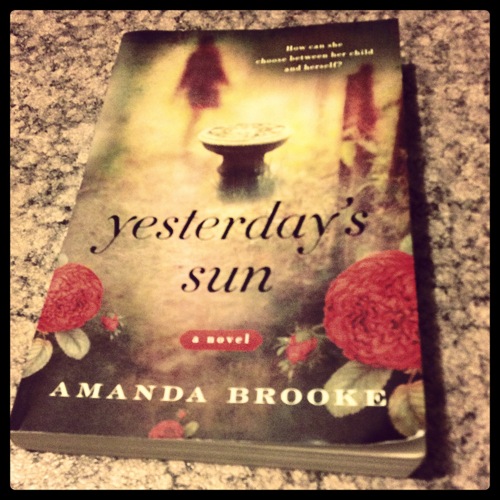
    IMG 0184

    Fate is a funny thing. In general, we tend to operate under the assumption that our decisions are freely made apart from some predetermined end – spare the errant Calvinist among us. But Amanda Brooke’s novel Yesterday’s Sun (Publisher: HarperCollins; On Sale: Feb. 12, 2013; Cost: $14.99) challenges this convention with an interesting story about human choice amid the reality of insight into a dark fate.

    The bulk of the story focuses on Holly and Tom. The two newlyweds have just left the smoggy streets of London for the fresh air of the countryside. Tom dutifully works long hours as an investigative reporter for a local TV station. His assignments take him far and wide while Holly struggles at home as an artist of moderate renown. Naturally, the two never lack for money.

    As the couple settle down for a life of country living, Holly finds herself in the unenviable position of trying to fit into a community with which she has no friends, no attachments and no genuine desire to change her situation. The malaise leaves Holly far more interested in settling into the new place than she should be. Eventually, her rummaging unearths a peculiar stone tucked away with a mysterious past and strange properties that give Holly a glance into a nightmarish future.

    At this point, I’m a bit concerned at giving away too much of the plot. This is a concern I always have where novels have an element of mystery to contain. But it is sufficient to say that Holly finds a stone that reveals much of her future, providing answers to questions that she could never otherwise know, answers related to future children, her husband’s career, and even her own death. The whole revelation is poignantly written and leaves much for readers to consider. The best summary of the novel comes shortly after Holly discovers the stone’s prognosticatory properties:

    “The choice of path isn’t free? What does that mean? Does it mean I have no free choice or does it mean something else? You said there was a price to pay.” p.175.

    As I read Ms. Brooke’s novel three related questions came to mind and remained in my mind throughout. The first question involved whether such knowledge of the future is so powerful as to be altogether maddening. The second question was how such knowledge of the future might impact one’s life in the present. And the third question was how knowledge of another’s future might impact ones dealings with others. In sum, three classic questions, really, about the nature and utility of fate and its impacts on one’s relationship to the self and one’s relationship to others.

    First, Holly’s discovery of the mystical moon stone provides clues and insights into her own death. This topic by definition is a morbid one; one we humans tend to avoid and when we cannot avoid the matter, it is one we tend to handle awkwardly, as recent diplomatic kerfuffles regarding the death of Lady Thatcher indicate.

    But assuming it were possible to know one’s expiration date, so to speak, how would this impact life itself? It strikes me that it’d be quite difficult to enjoy much of anything – particularly as life’s end neared. Imagine waking up next to a spouse or partner and realizing day by day that the end was rapidly approaching. I suppose this accurately reflects our lot in life but the rub comes in the knowing – the day, time, and perhaps even manner of one’s end. This knowledge is at least deeply troubling, and even assuming it is not maddening, then it is certainly troublesome enough to turn one into a bit of a nihilist, which is its own special brand of mad.

    Second, I suppose that knowledge of one’s mortality would also initiate a number of profound changes within an individual. It’s not difficult to imagine one with knowledge of their end who becomes a compulsive planner. For if nothing else, death sets the ultimate deadline of deadlines. Procrastination simply will not do. Knowledge of the day of one’s death might also have the effect of making an individual a superb manager. Envision being able to delegate tasks or manage one’s obligations with the crystal clear knowledge of whether the issue will matter in the end. Not interested in the afternoon, work social? Don’t go. It won’t matter when you’re dead. More inclined to take the trip than, save for retirement? Take the trip – or for that matter, don’t, depending upon the proximity of retirement and one’s untimely demise. 

    And in many ways that’s the attitude Holly takes in the novel. Once she catches a glimpse into her future, she makes decisions based upon what she presumes to be inevitable. The result is that she transforms as a person. From one that is as self-centered as any young spouse without obligations might be, to one of abject selflessness as she considers the future of her husband and child rather than her own. She gains perspective. She reconsiders her priorities. Such is the clarity of mortality.

    Finally, inner change is relatively uninteresting unless it is manifested in some external form, and indeed the novel abounds in examples of Holly reconfiguring her priorities in relationships with others. Rather than indulge the artistic whimsy of a wealthy client, Holly stands up to the client and asserts her own artistic expression. This is an important moment in the novel because Holly finally realizes that her inner principle of honesty is more important than any commission she might receive. I suppose this might be a bit Pollyanna-ish but the sentiment is easily mocked because so few of us live in a manner that is true to ourselves. 

    The knowledge of her end also transform’s Holly’s interactions with her family and friends in a number of ways. With her husband, she begins to promptly encourage him to pursue his passions rather than weighing him down with admonitions. It’s remarkable, really, to see how their relationship transforms when this occurs, leaving one to wonder whether more marriages might be better off with an ounce of preventative encouragement than with a pound of curative apology. With family and others, Holly becomes much more open. With one friend, in particular, she allows herself to be much more vulnerable in sharing her secrets. The sense is that the burden of knowledge of the future is too much for any one person to bear and so Holly shares it with a person who is non-judgmental enough to listen. This is true of many of life’s burdens. The natural question that follows is why we try so hard to keep our problems hidden, rather than seeking the cathartic help we need. And I think these responses closely mirror what many others would do in a similar situation. Relationships with loved ones, friends – these things would all take precedence over a number of competing obligations, including professional ones. We also would probably be more apt to live lives of truth rather than lives that conform to perceived social mores.

    When times becomes our most precious commodity, it’s amazing how one’s priorities can change. 

    One of the great benefits of reading a work like Brooke’s is that it forces readers to reconsider their priorities. We may not know the day and date of our death, but it is within each of us to live this day as if it were our last. And that’s what Brooke’s work reminds us of. A moment spent with a friend, watching a baby jump in his bouncer, or having a drink with a spouse or partner, these simplicities make life worthwhile. And Ms. Brooke’s eminently readable novel brings that thought to the fore of a reader’s mind.