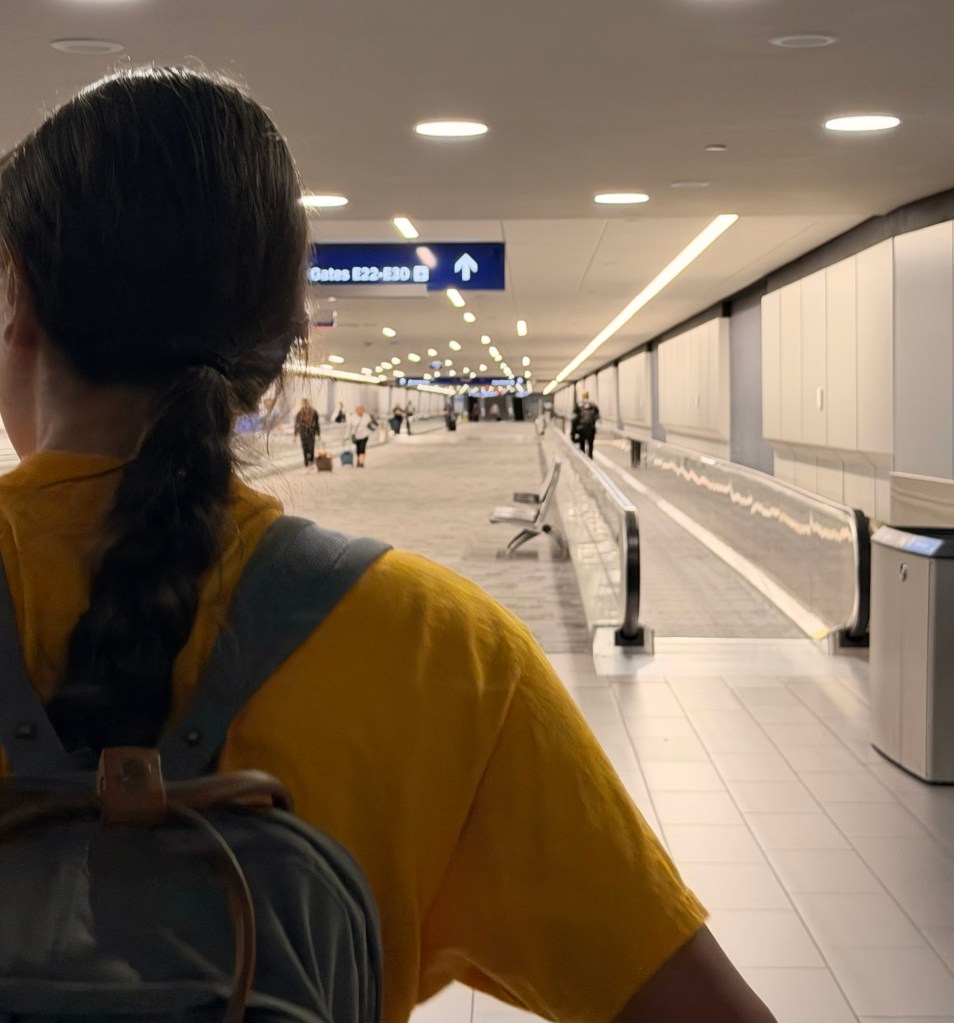
I’ve been thinking a lot about time lately. For all of my travels and nomadic lifestyle, more often than not, I wonder whether I’ve placed myself in the position of NOT showing up and being present for those I love and care about.
I live in Oklahoma. My son lives in Indiana. My family lives in Oklahoma. My girlfriend lives in Colorado. And my place of employment is based in Arizona- though much of my erstwhile work was mostly national and international in scope. Suffice it to say, it’s a lot to juggle and I live out of suitcases and backpacks more often than I’d like. A part of me longs for a place to call home.
Like many of you, I’ve done this for nearly a decade.
I heard a hymn long ago with a verse that says, “Time is now fleeting the moments are passing. Passing for you and for me.” That’s true. Every moment not spent in one place is spent in another. And once you string together enough moments, time passes by.
Time these days seems less about travel and more about presence.
In my life, I’ve often felt that life was such a hurry. A hurry to achieve – whether it be financial, career, or educational success. But I am learning, slowly, that the rush causes one to miss out on the things that are actually worth enjoying. As an old country music song put it, “I rush and rush until life’s no fun…but I’m in a hurry and don’t know why.”
And I wonder, what would be the harm in slowing down? To savor moments. To enjoy the journey as the Zen among us might suggest. Yet, this seems to be, among many things, one of the things I can’t seem to do. Rushing is second nature. On to the next thing, no matter how much I might try to savor the moment. At any given point, there are a million other moments competing for my attention, and I can’t for the life of me sort out why.
The reality is that none of my rushing matters. Clarity will come. Resolution will come. Satisfaction will come. Things will sort themselves out one way or another. All I can do is keep moving and wait.
The problem of time is that it moves so slowly when one would that it were fast. And it moves so quickly when one would that it were slow. If I were to rely upon the caprice of time, the result would be a perpetual state of malcontent – which, the years have taught me, is no way to live.
In this season of life, I feel that the best way to navigate the past and the road ahead is to slow down. I’ve rushed for so long and ventured so far from my moorings that it’s actually quite useful to take stock and see where my values lie.
The reality is that we don’t get a “do-over” in the life. It’s only one shot. And we have to make it count.
I’m usually garbage at keeping New Year’s resolutions. I make them. Forget them. Vaguely recall them in early February. Make a half-assed effort to revive them. And by Valentine’s Day or so, I’ve completely given up. “New Year, New Me” lasts roughly six weeks.
And then I’m stuck with old me. Same habits. Fairly similar routine. A bit disappointed that the holiday season is all over with so long to go until it comes ‘round again. So, rather than go through the whole ordeal of creating a resolution and ditching it from start to finish, I’ve decided to do something this year that might actually be achievable. I’ve decided to adopt one simple philosophy to guide my decision making: this year, I choose joy.
To put a finer point on it, there are a million decisions each year, each day even. Some of them are real dilemmas. Some of them are just options to avoid responding in anger or disdain. Others are opportunities to avoid annoyance and focus on the positive. Whatever the situation, my goal is to choose the option that will bring joy into my life.
In point of fact, I think joy is something I’ve long underrated. I slipped into a habit over the years of putting joy on hold. I defer joy until later and hope that it works out. I put off the things that make me feel alive and promise myself that I’ll get around to them at some point. Practicality over passion. I focus on the negative or allow annoyance to creep in, and ignore a response that might actually allow for joy.
In short, I ignore joy when it’s easy, and that makes it much more difficult to come back around to it when it becomes a choice that’s hard. But life is full of tough choices. So, why not opt for those that add joy to my life, rather than subtracting joy from it?
I get that it’s a rhetorical question I’m asking myself at this point. Yet, it’s taken years to arrive at this conclusion. So, I count it progress. And what can we hope to achieve in a year if not progress?
So, welcome 2025. I have zero control over what you will bring. Good or bad. But I can control how I respond to all of the things. And this year, I choose joy.
This past week marked the seventh anniversary of my divorce. It’s a topic that I’ve alluded to on these pages before, but I’m not sure that I’ve ever directly addressed it.
I don’t think the details are very interesting, although they are, admittedly, what most folks fixate on. In some ways I get this. We humans are a curious lot. As a culture, we tend to gravitate towards the details of other peoples lives in a way that almost seems baked into our DNA. Consider the prevalence of reality TV. Our society revels in the details of other peoples lives – from how they date, to the homes they buy, and even to how obese they are. Why we care, I’m not sure. But we damn sure love the details.
For my life, I think the details of a relationship matter less than one or two critical moments along the way. While it’s true that the little things tend to add up and drive the vicissitudes of life forward, I think that at the end of every relationship there’s a bit of a time wound that leads to the relationship’s end. This wound boils down to a single, decisive moment. A personal rubicon. Where going forward, the relationship is no more. And looking back, it is all that the relationship ever was. A wound in time for the aggrieved, and perhaps a moment of celebration for those making a break. Or some combination of the two.
For me, this moment is forever etched in my mind. I recall the hurt. It wasn’t my choice. It sent me spiraling into frenzy of depression and drinking (something I’ve only recently addressed). I also recall the loneliness and the fear. It was paralyzing. Would I see my son? Would I be a part of his life? Would he grow up calling my ex’s new husband Dad? (The very thought of this made me wretch.) At my age, would I ever find love again? How would I recover from the financial damage done after seven years of life lived together?
I have answers to some of these questions now. Some I don’t. I still haven’t found love and I just hit 40, so the odds aren’t necessarily in my favor to borrow from the Hunger Games. But if I could go back and chat with the me of seven years ago, I would sit down and tell him, “Dude. Calm the eff down. It gets better.” Not necessarily right away. But it does.
As a part of my own reflection, and mindfulness, I have lately opted to read a chapter of the Bible each day. I made it up to the book of Joshua before I gave up on reading the Bible in a year. But I figure I can at least read a chapter of the Bible a day. For some, I know that religion is anachronistic and passé. I’ve never felt that way. I find great comfort in faith but I get that your mileage may vary.
Anyway, I read Joshua chapter one the other day. There, God reaffirms the promise to guide Moses, and strikes it afresh with Joshua. As Israel stands poised on the banks of the Jordan to enter the “promised land,” God once again states his intent to remain a bulwark to Joshua and Israel.
Therefore shall not any man be able to stand before thee all the days of thy life: As I was with Moses, so I will be with thee: I will not fail thee nor forsake thee.”
– Joshua 1.5
God further exhorts Joshua to be strong and have courage. An important bit of advice, seeing as Joshua was essentially taking the helm of leadership over the entire Nation of Israel.
Be not dismayed: for the Lord they God is with thee withersoever thou goest.
– Joshua 1.9
The link I make between the words of God to Joshua and my own experience with my divorce is that the message could easily have been given by God to me – but for the fact that, at the time, I had no truck for hearing anything from God – let alone actually believing the sentiment of the message itself.
But it was true. What came to pass, ultimately “did not stand.” These many years later, I have not reconciled with my ex-wife. Yet, I live in her house and we co-parent in a way that most people do not understand. All of this is borne out of necessity. Our son has ASD (Autism Spectrum Disorder) and requires intense guidance and direction. From the time he gets up, to the time he gets on the bus for school, to the time he gets home, and throughout the evening, our lives are all about a routine that revolves around him. Given his disability, this is what he needs. We will never be a couple again. There’s no desire for this on either of our parts. But in the love we both have for our son, there is no daylight between us.
So, despite the spirals and darkness that followed my marriage’s end, I find that God was steadfast. I felt his presence even when I chose to ignore it. The Lord was with me throughout.
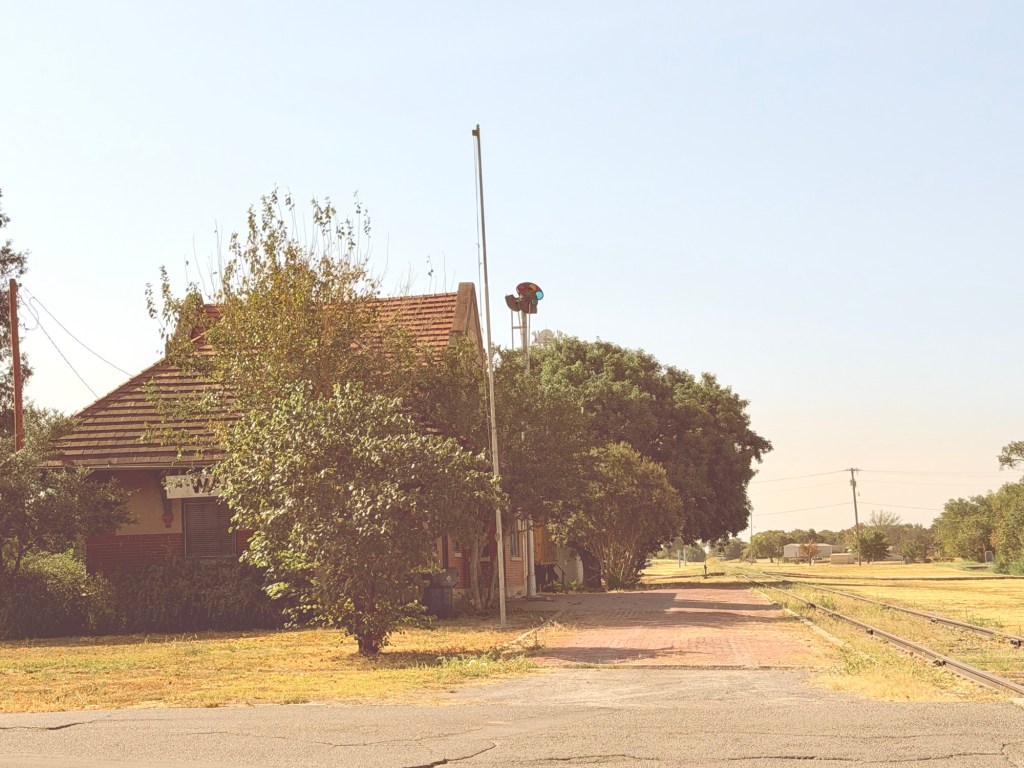
He was there as I sat on the bridge in Laramie, WY drinking whiskey. He knew my thoughts as I considered ending my life with a quick leap to the train tracks below me. He guided me to a new job in another state. He led me here to Indiana, in the midst of the pandemic, to care for my son. He allowed my work position to become permanently remote. And he facilitated this entire transition.
So, the end result is that what God promised to Joshua (and Moses before him), he promises to us today. I was foolish and afraid seven years ago. I was “dismayed.” But God’s grace exceeds my own failings. He is steadfast. I can look back on the past years and see grace made manifest in my life at every turn. I can look ahead, now, and see the opportunity to live a life without fear. After all, there isn’t much more to fear in life that exceeds what I have already endured.
The thought is a liberating one.
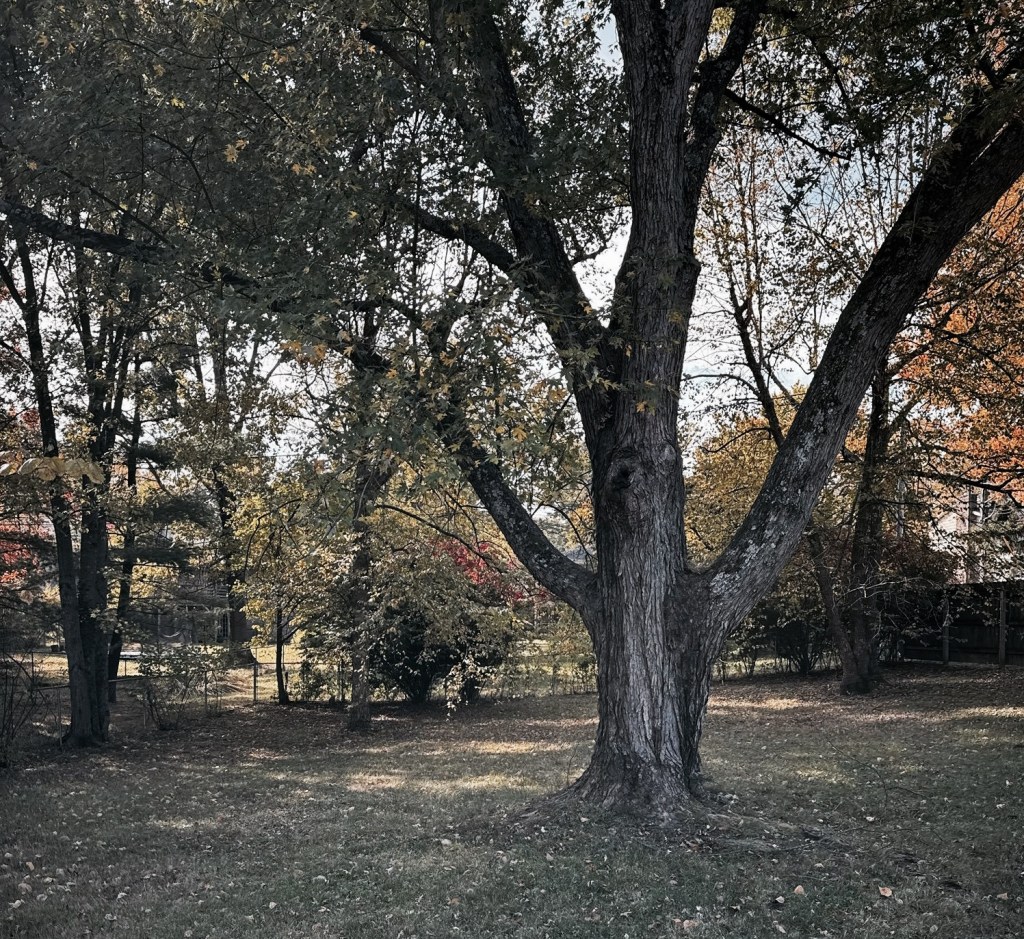
I’ve already gone through the fire. I’ve traveled to the dark places. I’ve stared down my demons. What was intended for harm, did not stand – all thanks to the steadfastness of God. Like the above rock in the desert, the oceans can fall away. The land can erode around me. The trees and vegetation can wither and die, just like the life I once knew. Yet, my own experience leads me to conclude that in the end, God will remain at my side even if the landscape around me is charred and barren.
This is all good.
But it presents an entirely different and exciting question as a result: How would you live your life, if you knew that there was nothing to be afraid of?
And once you have your answer, go do it. I’m still working on mine.
One of my favorite things to do during the holidays is to discover new Christmas music. Each year, I build a massive Christmas playlist that I begin listening to on approximately Nov. 1st at roughly 12am, give or take. This year’s playlist topped out at 519 songs with a total play time of 28 hours and 5 minutes.
Despite the library of Christmas music that I have accumulated over the years, I try to add new music each time Christmas rolls around. This year, I happened upon a song that I had never heard before, which is a very odd thing for yours truly.
Happily, my mind got a bit ahead of my fingers and I mistakenly typed an iteration of Mariah Carey’s perennial hit, “All I Want for Christmas is You.” Rather than typing the song title as it is, I searched instead for “You’re All I Want for Christmas.” Syntax aside (I do believe the latter reads better), I came across Bing Crosby’s 1949 release by the same name.
It’s hubris in the highest form, but I fancy myself to be a bit of a Bing Crosby connoisseur. There aren’t many songs of his that I haven’t heard, whether they be full of Yuletide cheer, or his pop releases dating back to 1939. I would even say that for any music lover, there’s really an obligation to listen to the greatest singer of all-time. And true to form, I thought that I had heard all of Bing’s music, at least his Christmas pieces, but apparently I was mistaken.
Bing’s music has always harkened back to better era by my estimation. There’s something about the style, and sound of music from the 40s, 50s, and early 60s, that just indicates a classier era to me. But a review of 1949 from the Washington Post casts some doubt upon this assumption as it pertains to life more broadly:
During Christmas of 1949, our flights of fancy didn’t run much beyond riding the streetcar, taking a school trip to the local dairy or visiting a government building. Oh, yes, and avoiding the scourge of the day–tuberculosis.
As complicated as life is today, at least visiting government buildings isn’t the thrill it once was. We’ve also got tuberculosis more or less contained, which is probably more than we can say for COVID. We’ve also made tremendous progress on a number of other fronts that would have been unthinkable back in 1949.
And that’s all fine.
But “You’re All I want for Christmas”is fundamentally a love song with a simple story: one lover, missing another at Christmas. It reminds the listener that Christmas is not about the stuff we give or get. Rather, it is the relationships in our lives that bring magic to the Christmas season. That Bing Crosby conveys this message with more meaning, and more emotion than any song Mariah Carey has ever written, only underscores that the best of Christmas traditions stand the test of time.
I do hope you enjoy the song above. And here’s wishing you and yours a very, merry Christmas.
I’m not sure that anyone still reads this anymore. The old blog has suffered from its share of neglect over time, despite major upgrades over the past two years. Truth be told, I actually thought of shutting the whole thing down after a couple of incidents. Suffice it to say, my online writings have caused issues for some over the years – but that’s another story for another time.
Yet, here I am, in an age where free speech seems to be no longer en vogue, pecking away at a keyboard, sharing my unsolicited thoughts with the internet and perhaps even the metaverse before too long. Given society’s penchant for shutting down opposing points of view, it strikes me as more critical than ever that we brave few and soldier on, and share whatever strikes our fancy – no matter whom we may offend.
What caught my attention of late is the subject of worry.
For many years, worry consumed me. I think everyone worries to some extent, but my worry became paralyzing. I think this was especially common during the pandemic given some polls out gauging youth depression rates, and some of the latest estimates that we are actually closer to the beginning of the pandemic, even now, than the end.
Ancient Wisdom for Modern Problems
There’s no panacea to the problem of worry. It’s simply a reality of the human condition. In dealing with my own struggles, however, I’ve often found and drawn comfort from my faith, which has its roots in the wisdom of the ancients. The challenge, in this case, is to apply ancient wisdom to modern problems. Fortunately for me, Jesus has a lot to say about worry.
“Therefore I tell you, do not be anxious about your life…”
Jesus (Matthew 6.25(a))
Matthew 6.25 came across my radar of late via TikTok. A fact that I think would make Jesus smile. Thirst trap, indeed. At any rate, it certainly found its way on to my desk at an appropriate time when I am very anxious (viz., worried) about a good many things in my life. Given my situation, the imperative quoted above struck me as an especially important thing to reflect on.
To add some background, the quote actually follows from the previous section where Jesus warns against efforts to serve both God and money. The point of the verses is that such a duality of service is simply not possible. Of course, that never keeps us from trying.
The question that follows logically, assuming we choose to serve God rather than money is what then? How do we live? How do we buy clothes, pay bills, buy food, save for retirement, etc. What will my kids do when I’m gone? For that matter, how long do I have left? Nothing sparks the existential dread we harbor inside quite like a pandemic where death seems to be all around. How can we live, let alone choose to serve God, without cash? The questions are unspoken at this point in the section but immediately after, Jesus gives us the lesson above. And it’s a simple lesson, elegant even: “Don’t worry about it.”
Elegant though it may be, the lesson can seem a bit quaint, and at stark odds with modernity. We worry about many things that would be inconceivable to the folks in Jesus’s day. We live lives that are much more complex and complicated than they were in the first century C.E., at least in our own estimation.
Nevertheless, it’s called ancient wisdom for a reason. The lesson is timeless. Or rather, it exists outside of time. A beacon from beyond, challenging our preconceptions of what it means to truly live.
The fact is, worry is an insidious demon. Not in the horns and fire sense, but in its subtle ability to take over our lives and destroy them, dream by dream. By contrast, the message from Jesus is intended to be one of liberation. Freedom. The antidote to worry is to not play its game.
Worry operates by placing tremendous stress upon our souls, mind, and our bodies. The stress that results is ultimately derived from fictions that we choose to believe are facts. We may grieve or regret something that has happened. We worry about what may come. Worry coerces us into believing that our worst fears are inevitabilities and this simply isn’t so.
In the end, we are only responsible for the present. That’s all we can control. This point underlies all of the wisdom and beauty that follows in the remainder of the chapter. I hope to unpack some of this in the posts that follow.
For now, the take home point is a counterintuitive one. Despite our view of life’s complexity, despite every emotion and temptation that besets us when life seems to be going awry – even so, it is still better to be a peace with our lot, rather than worry about what may come.
Jesus seems to be telling us, don’t worry because all is well.