• Book Review: A Silence of Mockingbirds – The Memoir of a Murder

    2012

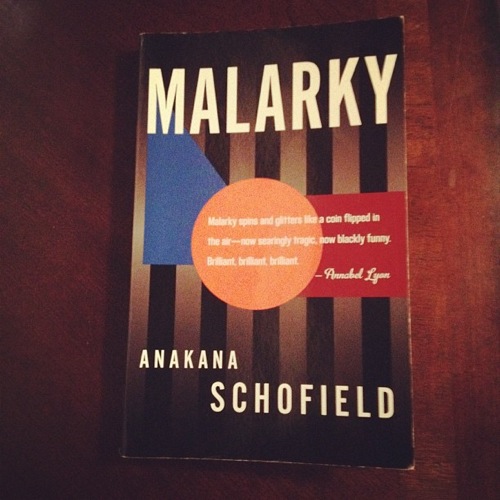
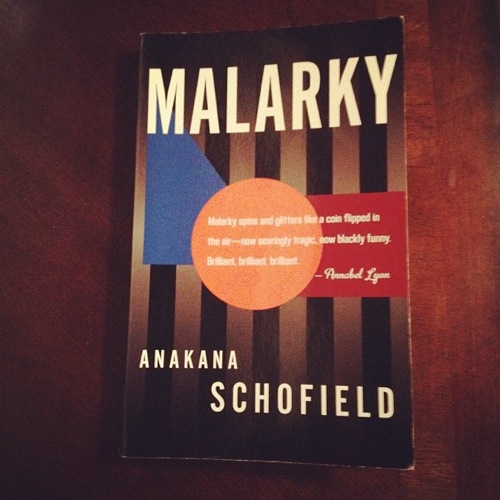
    For reasons having nothing to do with the author’s more than capable abilities, Karen Spears Zacharias’ new book A Silence of Mockingbirds ($16.50, MacAdam/Cage Publishing 2012) was an extremely difficult book to read and an even more difficult book to review. Zacharias’ work chronicles the true yet sordid tale of an innocent little girl named Karla “Karly” Sheehan.

    Sadly, Karly Sheehan’s tale would become the inspiration for Karly’s Law in the State of Oregon, which requires mandatory medical intervention in suspected child abuse cases where victims exhibit signs of suspicious physical injury. Ultimately, this is the end of Zacharias’ book. But this suggests that a tragedy had to occur before the powers that be reacted. And this reflection upon tragic events is what much of Zacharias’ book consists of.

    From the outset, the author is quick to note her own affiliation with the story. Ms. Zacharias’ family at one point had a familial relationship with Karly’s mother Sarah – a figure that comes across almost as much a villain in the tale as the actual villain who would abuse poor Karly to death. This relationship makes it quite impossible for Zacharias to be objective. But this misses the point of Zacharias’ work. Her point is not to be objective, but to use the story to raise awareness about “the epidemic of child abuse in our nation.” And on this score, the memoir could not have delivered better. I mention the point about objectivity, because it is important to remember that not all works of non-fiction need to be told through an objective lens. There is certainly a role for the objective eye, but when the point of a piece is to advocate, objectivity inevitably yields to the story being told.  

    The bulk of the work can be glibly typified as “somber” in tenor, but only insofar as readers know the outcome. Each detail of Karly’s life is lovingly presented. From Zacharias’ writing, it is clear that there were many moments in Karly’s life that were filled with love and with joy. Her account of Karly’s trip to Ireland to visit her father’s family comes readily to mind. But the final outcome of the account stalks even the happiest memories, ever lurking in the background of the book. Karly’s own presence in the memoir reminds me a bit of a delicate glass set precariously on the edge of a table. For but a moment all seems safe as Zacharias describes Karly’s sky blue eyes and whispy golden hair. Readers get every sense that she was a precious, perhaps precocious, little girl who was much beloved by the many people in her life. But knowing the outcome of the story, readers also understand that this cannot last. The glass on the edge of the table is doomed to shatter, and the result is that an innocent little girl must die. 

    My choice of the word “must” is intentionally provocative. In addition to presenting the tragedy of Karly’s death, Zacharias consistently explores the broader public policy implications, directly addressing the question of whether Karly’s death was preventable. The villain in the book and the man ultimately convicted of Karly’s murder was her mother’s boyfriend Shawn Wesley Field. But equally complicit in the sad outcome is a system that failed to protect Karly at manifold turns. As Zacharias writes:

    Karly’s death is not simply a tragedy – it’s an unforgivable shame.

    It takes the complicity of a community, and a nation, to stand by in silence as a child is tortured to death. That ought to give us all nightmares of children weeping.

    If there is a moral imperative to be gleaned from Zacharias’ work, this is it. And as the tale proceeds, the root of Zacharias’ anger becomes more clear. From a mother in denial, to the first child services inquiry filed by a worried daycare worker, to the shoddy follow-up investigation by Oregon’s Department of Human Services, to the failure of the Corvallis Police Department to have Karly’s physical symptoms examined by a doctor with expertise in child abuse cases, the list of should-haves in the book is depressingly long.

    The trial of Shawn Wesley Field is also an interesting aspect of the story. While readers at this point will long for justice, what actually struck me most was the lack of state’s evidence available to convict Field, despite the fact that Karly was abused for such an extended period of time. The trial turned on pictures that Field had taken of Karly that were timestamped only a few minutes before she died. The photographs showed Karly battered, yet clearly alive, leading prosecutors to conclude that the blow which ultimately took her life had to have happened while she was in the clutches of Shawn Wesley Field before the paramedics and officers arrived

    The lawyer in me recoils at hearing how such circumstantial evidence can connect a defendant to a crime. But this is true of a number of cases, and the inference made between the timestamped photo and the time at which paramedics and police arrived at Field’s house makes a lot of sense. What is most appalling is that in the two year span of abuse allegations, the best the State of Oregon had at trial were a few pictures. If there is a fortunate aspect of the tale, it may well be that so little evidence was sufficient to convince the jury of Shawn Wesley Field’s guilt. 

    Finally, it’s worth mentioning that the outcome of the trial really only hints at the title of Zacharias’ curiously titled book – although she addresses this directly toward the end. Mockingbirds are symbolic of people in society – we are a notoriously protective and obnoxious lot, always around, always causing some ruckus or another. Yet, in Karly’s case, when their alarm was needed most, the gaggle of people around her went silent and a little girl died. The natural question is “why.” Or whither the empty nest?

    While it’s true that we can address the public policy questions of Karly’s case through changes in law, and we can encourage individuals to be more vigilant, particularly when it comes to the vulnerability of children, there are never answers to questions like these. We can no more “know” what drives individuals toward evil anymore than we can know what drives saints and martyrs toward the light. But I like the approach Zacharias suggests. We can cry together. We can learn together. And we can take every precaution to ensure that our children are protected.

    I never knew Karly, but I have a hunch that protecting other kids would make her smile.

  • Review: The TiGr Lock

    Back in February I wrote about the story of an interesting new bike lock that I had been following on Kickstarter. Today, I’m glad to say that my TiGr Lock finally arrived, and I’ve spent most of the afternoon reviewing it.

    The first thing to mention about the TiGr lock is its size. The two feet long titanium bow was deceptively larger than I had expected. But upon picking it up, it was clear right away that the materials were solid, well-crafted, and quite sturdy. The bow itself even has a rubberized exterior to prevent scratching.

    TiGr Bow

    The end of the titanium two consists of two symmetrical prongs that fit into the locking cylinder. Naturally, the prongs are made from the same titanium that has been cast to produce the entire bow. This adds a degree of manufacturing continuity that gives the bow its overall stable feel.

    TiGr  End of Bow

    The locking cylinder itself is made out of stainless steel, with each cylinder uniquely matched to its keys by order number – should it ever becomes necessary to replace a missing key.

    TiGr  Key in Cylinder

    The craftsmanship of the cylinder lock is impressive in its own right. The picture below does not demonstrate this clearly, but the opening ring of the cylinder is actually narrower than the inside of the casing. This allows for the prongs to nestle into place before the steel pin in the center is depressed. Once the pin is depressed, the prongs cannot be removed from the cylinder because the opening ring entrance is too narrow.

    Tigr  Cylinder

    Once the prongs have been inserted, the lock looks like the photo below. The cylinder lock freely rotates around the prongs, but there is no way to remove them from the cylinder given the narrowness of the entrance.

    TiGr Cylinder Size Comparison

    Of course, what makes the TiGr lock a superb product is that it is incredibly light-weight and can be stored on the bike while riding. This is accomplished by two velcro straps that affix the bow to the tube of the bicycle.

    If there is a down side to the TiGr lock, it has to be the velcro straps that secure the lock to the bike. Frankly, at $200 per lock, I expected something a bit sturdier – something akin to the quality velcro one might get from a Timbuk2 messenger bag.

    Still, the velcro seems to do an adequate job. I haven’t really felt it coming loose on a ride, and it’s true that there are other alternatives for securing the lock should one really not trust the velcro straps that come with it. In the great scheme of things this is a fairly minor critique since the lock functions incredibly well. The picture below shows the straps and the lock on my bike.

    TiGr  Stored

    Since the bow is attached to the bike tube, I suppose it’s possible to lose a bit of leg room while pedaling, particularly on smaller framed bikes. But on my road bike, I haven’t noticed this to be an issue, even though the lock attaches and leaves a small gap in places.

    TiGr  Stored Overview

    Finally, here is a picture of the TiGr lock firmly securing my bike to one of my dining room chairs. I’m sure this picture will become too embarrassing to leave up at some point, but for now I haven’t thought to take a picture of my locked bike while out and about. You’ll notice that the lock is plenty long and flexible enough to secure the bike to the metal arm of the chair. Not only does it secure the frame, but it also secures both tires as well. The nice thing about this is that you no longer need to carry around a cable to secure that extra tire to a D-lock. With the TiGr’s flexible titanium bow, you can secure everything with only one instrument.

    TiGr Locked

    Finally, the TiGr lock comes with a pretty nifty key fob. And if you don’t like key fobs, then I’m pretty sure that makes you un-American.

    TiGr  Key Fob

    In all, I am rather impressed by the TiGr lock. It came exactly as advertised. It’s light, weighing all of 1.5 lbs. It’s secure, benefitting from both high-grade materials and excellent craftsmanship. And it’s extremely elegant in its simplicity – as all elegant things are.

    Not bad for a product that was only in the concept stage one year ago. I love innovation.

    Update: As promised, here’s a photo of the TiGr in action at my local Starbucks. 

    IMG 0106

  • Updates & Book Reviews for April & May

    Update

    I realize it has been a few weeks since I provided any updates on blogging or any new book reviews here at Pax Plena. Regular visitors may have noticed that lately I’ve put more effort into tweaking the design of the site than actually uploading new content.

    As any mildly narcissistic blogger will admit, this lack of focus isn’t good for a number of reasons.

    First, I suspect deep down, most people don’t really care how the site looks so long as the content is interesting. And yet, my own neuroses have left me obsessed with pushing the boundaries of a minimalist site while wanting all of the bells and whistles of a site made for web 2.0. This creates an unfortunate dilemma: I can sit and adjust html and css codes for hours, but what I really need to do is write and create content for the blog. Of course, if you have any thoughts on how to improve Pax Plena, or some cautions about the aesthetic direction I’ve taken with the layout – I would really like to hear your ideas. My personal tastes lean toward a minimalist design and layout, but I welcome any challenges to my preference.

    Second, my foray into web design and my lack of new content is not without reason. My dissertation is blessedly nearing it’s end, like a sheep being led to the slaughter – to keep the Easter imagery alive. Minor heresies aside, I’ve spent the better part of three weeks doing dissertation stuff – handing in final chapters, doing final edits, checking footnotes, getting feedback from professors, etc. – all in hopes of nailing my defense next Tuesday. My work continues apace, though I expect that the defense will be a curiosity for many in the Indian law community. Most folks studying Indian law do not apply libertarian critiques to the Federal Indian law system. My work tries to accomplish this while building a philosophical framework for advancing Indian rights under libertarian principles.

    For those interested, my defense is next Tuesday, April 10th in the Law School’s Rountree Hall, Room 215 from 10AM – 12PM. During the first hour, I will hold a public lecture about my work followed by a question/answer session. If the topic at all interests you, feel free to attend the lecture, meet me, and ask a question or ten. The last hour of the event, however, is closed to the public. There, I meet in camera with my dissertation committee to field questions, and talk more in depth about my work. Assuming all goes well, after that meeting, I should become the 12th person in the world to hold a Doctorate of Juridical Science in Indigenous Peoples Law and Policy.

    For those interested in my academic work generally, I’m planning to release a series of posts detailing my research over the past year. I hope to get these pieces published as a book at some point, but for now, I plan to share some of the ideas once a week or so via blog post when my dissertation is finished. My hope is to make the posts fairly easy to read so that even those without an Indian law background can understand the issues and begin to construct an informed opinion. Topics will include many of the major problems of Indian rights in the U.S. including – reservation poverty, ambiguous property rights, economic underdevelopment, lack of law and order on reservations, gender roles within cultures, and the role of technology in traditional societies.

    Book Reviews

    Because of my web-design misadventures, and the time consuming nature of my dissertation of late, I realize that book reviews have taken a backseat to mi vida loco. To rectify the imbalance, I wanted to give a quick preview of coming attractions.

    First off, special thanks to Meryl Zegarek Public Relations, Inc. for keeping me in the loop on new and newly released books. Meryl is a top-notch publicist that has the patience to get even miscreants like yours truly up to speed on good books that deserve a second look. Some readers may recall that Ms. Zegarek was my contact to review Ian Morgan Cron’s Jesus, My Father, the CIA and Me. She also very graciously offered me the chance to review Eric Metaxas’ Bonhoeffer. While I am more than half-way through, this remains a project that is still very much in the works.

    So here’s a few book reviews you can expect to read – ideally by the end of April.

    Book Review 04/2012

    Karen Spears Zacharias, A Silence of Mockingbirds: the Memoir of a Murder. Release: April 1, 2012.

    Ms. Karen Spears Zacharias is a former investigative journalist chronicling the heartbreaking murder of a young girl. The story is especially meaningful and touching given the author’s close relationship with the mother of the deceased child, and even the accused murderer himself. Look for a review in early April.

    Book Reviews Nov and Dec

    Eric Metaxas, Bonhoeffer: Pastor, Martyr, Prophet, Spy. Release: August 30, 2011.

    As the title suggests, this book is a biography of famed WWII era pastor/theologian Dietrich Bonhoeffer. The author tells a compelling narrative about Bonhoeffer’s life, beginning in the early years of his childhood through his death at the hand of the Nazi regime. It really is a fascinating read. I had hope to have the review done late last year, but life and work managed to get in the way. Look for a review sometime during the middle of April. I owe this one to Meryl.

    My Struggle  Karl Ove Knausgaard

    Karl Knausgaard, My Struggle: Book One. Release: May 1, 2012.

    Knausgaard has been fancifully called the Norwegian Marcel Proust. Having spent some time leafing through In Search of Lost Time, I’m not sure I agree at this point. But the largely autobiographical work is nonetheless compelling, if a bit laborious in places. While I’m not very far into the work, I suspect that each page will be a mini, literary cosmos all its own. And that’s the benefit of such a book really. Sometimes it’s just nice to simply enjoy the language of a work for the sheer joy of language itself. Look for a review by the end of the month.

    As always, thanks for your patience. And stay tuned for more…

  • Some Thoughts About Our First Child

    Baby Fodder

    About a week ago, my wife and I found out that we are set to become parents sometime around October 22nd.

    The news was somewhat surprising, although not wholly unexpected. I considered sharing some of the details with you, but I think the entire matter can best be summed up in a bit of helpful advice to those actively participating in various forms of family planning: Doubling up on the pill after having missed a dose does NOT right the ledger.

    Just saying…

    Anyway, the funny thing is that for most of our marriage I have been the weaker part of our duo – the one opposed to all things baby, including baby carrots, baby tomatoes and baby as a term of affection for one’s significant other. In fact, my personal taste of hell was the time I booked a last minute flight to Oklahoma which left me wedged between two obese passengers and a screaming baby directly in front of me. I realize this sounds a bit like a cliché. If only reality had been so kind.

    Nevertheless, once we received the news and had it confirmed, my opposition to children strangely melted away. I found myself involuntarily wandering to Baby Ralph Lauren, Baby J. Crew, and scouring the web for a “big sister” t-shirt for our dog. I suppose even the mightiest wall can crumble. Any residual opposition vanished entirely when I saw the photo above and heard our baby’s heart beating at a healthy 179 beats per minute.

    Of course, my wife Gwyn has been ready for children for some time now. I don’t know that pregnant women ‘glow’ per se, but she certainly has a luminescence of late. And even if this weren’t the case, the grin she permanently wears all but broadcasts our news. In terms of health, and mood swings, I have to say that my cherished partner has done remarkably well. In fact, my lone complaint through the entire pregnancy, thus far, was the $8, CVS Pregnancy Test that she used to find out we were expecting. Obviously the home test worked just as well as any of the others, but something about it made me feel like a spendthrift considering the $149 Clearblue Easy Fertility Monitor that we could have been using all along. Apparently, if we had ordered on-line we could have gotten the thing for a drop over $6. At least we didn’t buy it on sale.

    I suppose the main reticence I have about welcoming my own spawn into the World stems from the abject fear that I will somehow find a way to royally screw up this parenting gig. Childhood is really one of the most formative periods in life. It’s a time that is both precious and precarious. Given the immense pressure to succeed (think Baby Mozart CDs, early childhood education, sports clubsprep schools, college expectations, etc.),  I still can’t help but walk into Fatherhood with some degree of trepidation.

    More immediately, my concern is that personalities are formed during childhood and the process and experience that go into forging a human being are extraordinarily subjective. Dreams are hatched in the minds of precocious young kids. And while some kids are headstrong and sarcastic (viz., yours truly), for others the least bit of negative feedback can crush a childhood dream in an instant (viz., most of Generation X). On the other hand, one moment of well-timed encouragement could well spark a life long fascination in a child’s mind that leads it to incredible success. The possibilities and nuances are beyond my comprehension.

    Aside from personal quandaries, I also can’t help but think about the type of world that our child will be entering. With sabers rattling in Iran, the pervasive threat of terrorism, and pink slime in school cafeterias, I think it’s perfectly reasonable to wonder about our child’s future and the challenges it will face in the coming years. Of course, this reminds me that every child that has ever been born has also faced uncertain times. Our child isn’t being born in the midst of a World War, for example. And our child will be born in the United States of America, which even in the midst of recession is still the most consequential and powerful country in the world. It will have advantages that many of its peers around the world lack and will always lack. It will have access to the internet, clean water, healthy foods, health care, education, shelter, transportation, information, two laughably overeducated parents and the world’s laziest guard dog. Our child will not have every advantage. But it will have every opportunity to succeed after a decent start. And as a result of its generally favorable provenance, it will also have a moral and ethical obligation to serve others. I can’t help but think it all quite a lot to expect of someone that is, right now, less than an inch tall.

    Assuming there is a point to be drawn from any of the above, I suppose it is the obvious – that life is chaotic and unpredictable. And that’s ok.

    The best we can do is embrace the unknown, pray for strength and wisdom in our successes and failures, and resolve to forge ahead, day by day. In other words, c’est la guerre.

  • Innovation in America: The TiGr Lock Story

    I’ve been staying up inordinately late the past couple of nights, devouring the Suzanne Collins series The Hunger Games Trilogy. I think my approximate bedtime each night has been between 3:30am and 4:15am. I understand that moderation is the appropriate virtue that I should be seeking to develop – particularly with Lent beginning tomorrow. Still, there’s something very satisfying about greedily reading a book into the wee, small hours of the morning.

    After realizing that my long blinks were becoming increasingly longer, I decided to hit the sack. But a final check of my Email suddenly left me wide awake. Extricating myself from the vice-like snuggle of our pooch, I padded down the hallway as not to wake my wife. I fired up the computer, and in the dead of night I logged on to an obscure website called http://tigrlock.com/.

    The TiGr Lock is a kickstarter project that I have been following for almost nine months. The vision of a father/son duo, their goal was to create and market a bicycle lock that hit the holy trifecta of cycling – a bike lock that is secure, light weight, and aesthetically pleasing. Anyone who has cycled will immediately understand how such a lock has the potential to change the game in terms of bicycle security.

    The problem is that most bike locks on the market tend to be large and cumbersome – think massive chains, and weighty U-Locks. Needless to say, such prophylactic devices are hardly very convenient when riding around on a road bike that is engineered to be light weight and relatively minimalist in stye.

    There’s also the unfortunate matter that bicycle security devices, in general, aren’t terribly reliable. Security cables can be cut, and the ever popular U-Lock can be easily picked. As the market stands today, locking up a bike is more about theft deterrence than actual security.

    Enter the TiGr Lock.

    In preliminary testing, the TiGr Lock outperformed the typical U-lock in a series of three tests, using common bike theft tools: a tungsten-carbide handsaw, an angle grinder, and a (massive) pair of bolt cutters. And aside from its security benefits, the lock itself weighs about 1.5lbs  (or 24oz as the manufacturers cleverly note). The video below shows a side-by-side demonstration of the tests.

    Aside from the potential to revolutionize bicycle security, one of the things I find most exciting about this project is the way in which the TiGr Lock story so closely mirrors the adventures and misadventures of countless entrepreneurs. The scrappy idea began in the workshop of its father/son inventors John and Bob Loughlin. Realizing they were on to something, the two inventors first sought outside investment capital from grassroots supporters to get the project off the ground. In a matter of weeks, supporters funded the TiGr Lock Kickstarter program at roughly 300%.

    Sensing the lock’s obvious momentum, the next step for the team was to follow their Kickstarter program by doing live product testing using complimentary product samples for the same supporters who originally backed the project. After mailing sample locks to supporters of a certain donation level, they obtained device feedback over a period of several months. In the meantime, the team formed its own LLC, and sought patent and trademark protection from the U.S. Patent and Trademark Office.

    Finally, last night, the TiGr Lock website went live, offering customers the company’s first product run. Assuming the launch is a success, the rest may well be history. Already, the TiGr Lock story has been featured in a number of major publications including the Wall St. Journal, Forbes, and USA Today. Let it not be said that innovation in America is dead.

    After my clandestine rendezvous in our home office and another hour of reconnaissance, I quickly ordered my own TiGr Lock before slipping back into bed. Seeing as I neglected to inform my wife of the purchase, the $200 question will be how long I can keep a secret…