Tag: America

  • Endless Summers

    It’s been a minute. Half a year nearly. My plan coming into 2026 was to write more – and I have to an extent. Just not here. My journal is full. I’ve also unexpectedly written job applications and cover letters aplenty. But this space has surely been neglected.

    I think like many people who started blogging around the early aughts, the point was simply to share what was on the mind – whether it be about politics, faith or just what happened during the day. There was no rhyme or reason to any of it. I remember an embarrassing amount of two paragraph posts about nothing at all in the early days of Pax Plena. I also posted way more than I should have about politics (a quaint bygone era compared to the rough and tumble dissension we seem to have in the public conversation today). I even managed to continue posting through law school, my doctoral work and the early days of my academic career.

    Then things just gradually went off the rails. I started to self-censor. I was careful to the point of being paranoid about sharing thoughts or content related to my field. I felt the need to keep up a certain facade regarding my personal life. Eventually, all of the things that make a person interesting were out of bounds at least in terms of sharing and my own writing.

    Today, that notion of blogging is almost completely gone. There are TONS of platforms for sharing content. Pictures. Music. Videos. Memes. Things that are silly. Things that are sad. Sites for personal interests abound – fishing, gaming. watches, fountain pens, sports are a few personal favorites. There are also multiple sites for accessing content. It really doesn’t matter – if there is an interest in the content, whatever the stripe, it can be found in abundance.

    Which makes my whole exercise here at Pax Plena ripe for a revisit.

    Now that I lack institutional affiliation, I find myself wondering about the kind of content that I’d like to share. I wonder what folks would find interesting. I don’t feel the same shackles constraining me any longer. It’s almost like I can write about and say whatever I want again. It’s exciting but also strange. I suppose liberty can be that way.

    Most of my friends and colleagues don’t have this luxury. I know that some former colleagues do not write freely because professional obligations require them to self-censor. The first amendment may be alive and well as we approach America’s 250th Anniversary. But both the public and private sectors have a way of stifling speech that is far more nefarious than a lot of us think about. In the public sector, otherwise interesting writers are constrained to share or “publish” only the content that their bosses approve. If you are a federal worker, the authority of the President to fire simply doesn’t cut in your favor. In the private sector, thanks to the bastardization of at will employment, may workers find their speech rights limited by company policy, lest they find themselves axed for expressing an opinion that isn’t company friendly. It’s enough to make one wonder if the first amendment right to free speech is worth it. And for many it’s easier to self-censor rather than take the risk. Democracy truly does seem to die by a thousand cuts.

    So, I think it’s fair to say that I need to pause a bit and think more about what kind of content I’d like to share now that I have the luxury of freedom. I also need to think about what my stamina and pace of life will find manageable. I think I’m up for regular posts. A weekly essay would be interesting and doable – though it’s admittedly not very frequent. But I also don’t want to write just to write. So, I wonder what kind of value I can add to any reader’s life by my scribblings. The old adage is to write about what you know. These days, parenting and fatherhood, faith, doubt, job transitions, and relationships are all at the forefront of my mind. Maybe it’s just the general ennui of one’s mid-40s that keeps my focus so narrow. But it’s also good manners to stay in one’s lane so to speak. Lot’s to think about.

    For now, it’s Fourth of July Eve here in the USA. My nephew’s birthday will kickoff soon. He turns 12 this year. Hard to imagine really. It’s a funny thing with these kiddos: the time seems to pass so quickly.

    I can recall being 13 and the summers seemed endless. Back then I could while away an afternoon inside my grandparents’ house, parked in front of the AC reading the latest volume I’d slipped from the Library in town. Grandma would fix us lunch. There was the hope of fishing in the late afternoon still to come. The future then seemed so bright and exciting. There were no worries. No debts to pay. No utilities to cover or careers to maintain. No people to please. I had an unshakable, blind faith and confidence in the world and the people around me. I knew that they would take care of me and that all would be well.

    It never entered into my mind (not with any sort of fulsome reckoning), that one day, the people I love and trusted, the real grown ups in my life, would no longer be around.

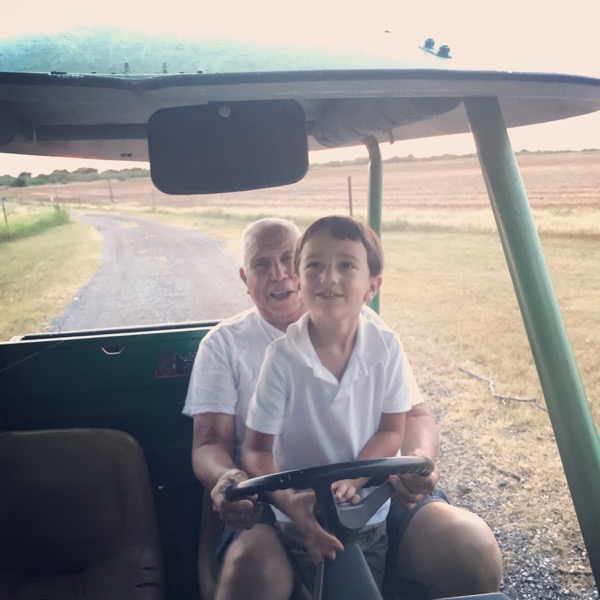
    Seven years ago on July 4th, 2019, we all popped fireworks out at my Grandpa’s house. We did the same on July 6th at a relative’s place. I had no idea that less than a month later my Grandpa would be gone; that seven years later, Grandpa, the dogs in the picture, and even my relative’s partner – and a whole host of others – would all be gone. Such things do not really cross the mind of a grown man, not really. Let alone the mind of a child.

    This year, the Nation is 250 years old. I’m 43. My son is 13. And it feels like the entire world has changed.

    Summers, now, seem so quick. The future seems dark – like the best of days are all behind us. I find that I trust people less. And it’s a sad, thing to trust others less, particularly when I know how garbage of a person I am.

    On this 250th Anniversary of America, I feel most for the kiddos. It’s like the current generation of kids got all of the fake adults. I think that most of us Millennials really know don’t know how to adult. We all just woke up one day, and all of a sudden we found ourselves here with kids, jobs, relationships, regrets and none of the fun we were having back when we were 13. It’s not true but the whole thing doesn’t seem fair. Some days it doesn’t even seem real. Life is but a dream. It feels like maybe one day we will wake up and none of this will have happened. The world won’t be so chaotic. Mistakes won’t have been made. We won’t have elected a crazy orange dictator to leader our country. And I’ll be young, safe and happy once again.

    Maybe in the distance, my Grandpa will be lighting fireworks while the dogs trot behind him ready to sit back down when the nonsense is over.
  • Crows on the Lawn

    I saw a gaggle of crows outside my office window this morning. They foraged in the grass, looking for food, I assume. Either that or looking for whatever crows look for on sunny fall days. With expert practice, they flipped the leaves with their long beaks and nuzzled their way into the grass underneath the leaves.

    After a time they became bored, strutting about the lawn before taking flight in the direction of the sun.

    This morning I read that the midterm elections are tightening with all signs pointing toward buoyed Republican prospects next Tuesday. Perhaps sensing the inevitable, President Biden and the Democrats are bemoaning the news, warning Americans that potential Republican gains are simply “dark forces that thirst for power.” Meanwhile, most Americans are simply fed up with both parties, and seem to think that no matter who wins they will do a piss-poor job of governing the country.

    With war still raging in Ukraine, inflation running rampant, and grocery prices soaring, the only glimmer of hope that even CNN can offer us is that avocados are getting cheaper.

    How I envy those crows.

    The crows didn’t seem to care much about who wins next week’s midterms. I suspect that they would gladly poop on whatever political party is in power, and fly off cawing to one another about the reactions from the humans on the ground far below them.

    They’re also wonderfully content. They feel no need to annex another crow’s territory, or threaten their existence with nuclear weapons.

    And they take sustenance from the world around them. The crows have no use for money unless it’s a paper bill that might make good lining for a nest. Grocery prices, gas prices, mortgages, credit card bills – all of the things that our more ‘sophisticated’ species takes for granted as part of every day life – have no relevance to my black-feathered friends.

    I believe the crows are on to something…

  • Thoughts from an Airport Cafe: International Indigenous Governance, and Home

    IMG 6765

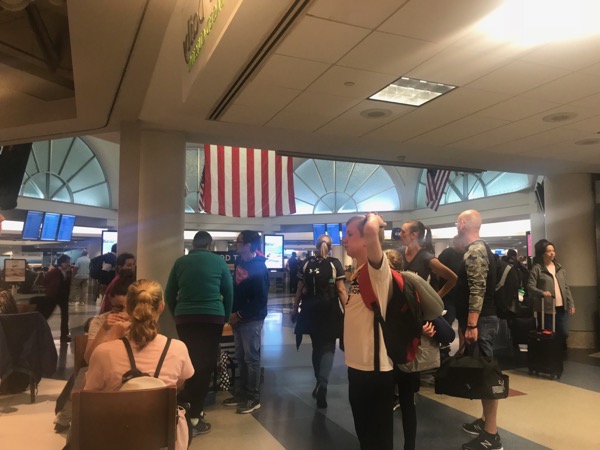
    A parade of humanity streams by, each passenger more harried than the last. There’s no rhyme or reason to the fracas here in Terminal 4 of the Los Angeles International Airport. Gate 48B to be precise.

    No less than four American flags at the arrival gates remind folks that this is #Murcia. But no one seems to pay them any mind. Wrangling young kids who would rather run off, and finding the proper gate capture the attention of most passengers who are either deplaning, making a connection, or hoping to board. 

    I’m traveling solo, seated at a table for two. I’ve given up two chairs that surrounded my table to an Australian group consisting of two families and more kids than should ever be brought on an international trip.

    Naturally, they were a lovely bunch.

    My travels this week take me to New Zealand and the World Indigenous Business Forum. I plan to share the work we are doing at the University of Arizona to develop an International Indigenous Governance Consortium that will deliver access to education on Indigenous governance to Indigenous peoples around the world. It’s a tall order in a world that is constant motion – not unlike Terminal 4 here at LAX. 

    Screen Shot 2018 10 04 at 9 46 06 PM

    It’s a cliché (but a useful cliché) to say that what makes these jaunts worthwhile is the opportunity to share information with communities, and folks who haven’t been exposed to the ideas of Native Nation Building. It’s true that the foundation of our research began with the Harvard Project on Native American Economic Development some twenty years ago. But for most Indigenous peoples, twenty years is a drop in the bucket of time. And as recent developments across global jurisdictions demonstrate, the lessons are timely, relevant, and important. 

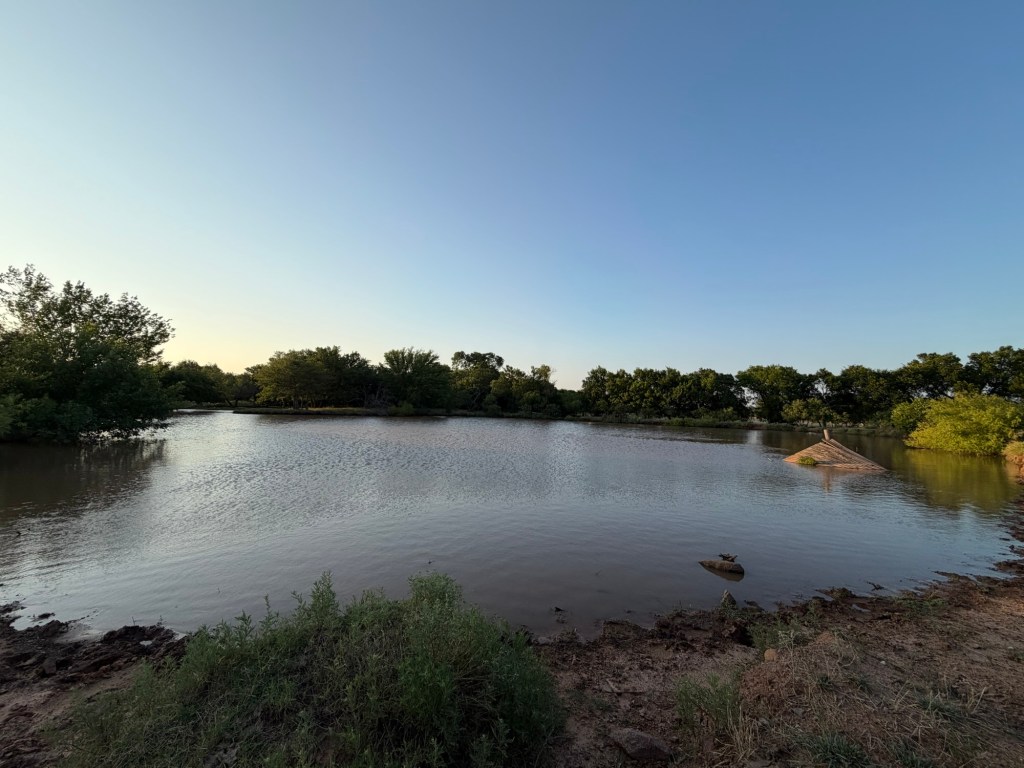
    Whenever I take these trips, I set my phone to an image of home, 300-odd acres of Oklahoma plains, and the home place where my Parents, Grandparents, and Great-Grandparents built, lived, and made a life in a world devoid of traditional values. 

    IMG 5133

    Thinking about Grandpa back in Cotton County helps me keep in context the work that I do. It reminds me that our target audience isn’t really the academics and Indigenous business elite who are attending the conference, but the folks at home who live on the land, and deal with life in all of its complexity. 

    And, of course, I think about my son, Clark, and the world that my generation will leave behind for him. Given the political quagmire surrounding our President’s Supreme Court nominee, it makes me question the future as he becomes a man. But I still have hope. For him. For the folks at home. And for the many people who will be attending the World Indigenous Business Forum. 

    But such questions are far from the mind here in Terminal 4 at LAX. The irritated faces of travelers, and the frenetic announcements of the PA system all take top billing over such introspections.

    Soon, I will join them and contribute to the broad stream of people who pass through LAX everyday. But my true north will always be far from the locales that I visit.

    It remains as it always has – on 360 dusty acres in Cotton County, Oklahoma. Where Papa sits in his recliner watching Football, and the crickets chirp outside.

  • Why Dads Matter

    My Post

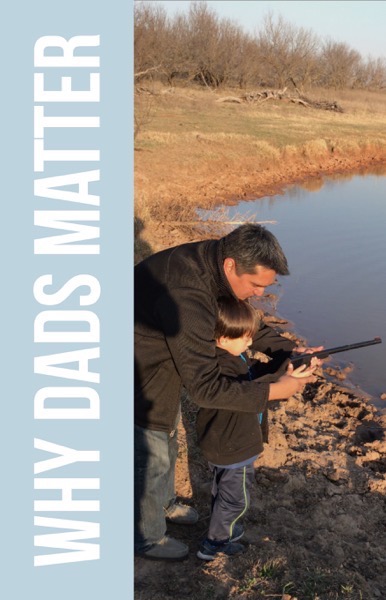
    It has been a long while since I’ve graced the pages of Pax Plena with a new post. Given a quiet Father’s Day Sunday here in the U.S., I couldn’t think of a better time to resurrect our ailing blog once again. Like Lazarus rising from the dead, this disease of blogging silence never quite seems to lead to death. Our blog has merely fallen asleep.


    What prompted me to write this afternoon was an opinion column by the Washington Post’s Megan McArdle that shared some personal reflections on why fathers matter.

    [Link]

    Truth be told, I don’t really know of any camps that are ardently claiming that fathers do not matter. Granted, an article in the Atlantic, circa 2010, made the case that “there’s nothing objectively essential” about the contribution of a father to the well-being of a child. The point seems a bit weak. The absence of evidence is not evidence of absence. Indeed, other sources cite a wide body of literature that assess the importance of fathers and their role in fostering the well-being of their kiddos.

    Then again, it is the Atlantic, so one would do well to consider the source… 

    By contrast, McArdle notes of her own family life that “my mother was usually the one who dressed wounds if you fell off the jungle gym; my father was the one who encouraged you to climb a little higher than felt strictly safe.”

    Sure, the point is anecdotal, but I think it’s about right. In our family, Mother was always the one who set the rules, bedtimes, and made sure that we went to church. My Father seldom went to church, and had zero inhibitions about letting me ride in the open bed of a pickup truck while we drove around dusty county roads picking up cans to take to the recycling center. Note: This wasn’t something we did for the sheer virtue of a good deed, or environmentalism. There were no such bourgeois luxuries in the Fodder family of the 1980s. We just needed the money.

    Such parenting today would immediately draw the ire of the nearly every child advocacy group in America, and quite possibly one’s local Department of Child Welfare. Suffice it to say, times were different in the 80s. And, to be fair, if Dad had insisted that I sit next to him inside the cab of the truck, I probably would have pitched a royal fit, and left him wishing that I had just rode in the back of the damn truck to begin with. We poor kids could be a precocious lot. 

    But there was something that was actually quite important that I learned from those dusty drives with dear old Dad. I gained a sense of independence, and self-sufficiency that I never would have gotten had either of my parents been the “helicopter parent” that’s en vogue today. From Dad, I learned to search within myself, and try to solve problems instead of complaining about them. I learned that you can’t always have what you want, but that you can obtain what you want if you’re willing to work for it. And I learned that there are literally millions of ways one can perish by eating a Twinkie.

    (Family Joke: Whenever someone passes away, and one is foolish enough to inquire as to their cause of death within earshot of my Father, Dad’s glib response is always that they “choked on a Twinkie.” We usually groan and laugh, but I suppose normal folks might think this is morbid. Tomāto/Tomăto.) 

    And really, that’s why Dad’s are important: they show love to kids in a fundamentally different way from that of a Mom. And the difference is accounted for in that each parent brings their own lived experiences to the child rearing table, and kids are better for it. After all, what kid doesn’t need more love in their life?

    So, to all of the Dads out there, take heart: you matter. And don’t let the Atlantic tell you otherwise.

  • The Art of Making Strategic Decisions

    In class this week, we walked through a few of the main arguments that set the theoretical framework for building effective tribal governments (See Rebuilding Native Nations).

    According to the authors’, one of the key elements for building effective tribal governments is for tribal leaders to engage in strategic decision making. The whole section reminded me a bit of the biblical adjuration, Where there is no vision, the people perish. I think that passage is actually talking about prophetic visions, but divorcing a quote from context has never stopped me before.  
    Regardless, the point is the same. In order to run an effective government, organization, institute, non-profit, etc., there has to be some vision toward which the entity aspires. For tribes, some of the questions include, What kind of society do we want to create? What’s our primary objective? What values guide our decision making? Where do we want to be in ten years? How do we get there from here? How do our values inform our policies? And, fundamentally, What do we want? 
    While the text applies these considerations, quite correctly, to tribes, the potential applications ofsuch analyses are actually much broader.  In fact, they even lie at the heart of the U.S. Presidential Election:
    • What kind of country do we want? 
    • Would we shut the borders of the United States to Muslims seeking entry? 
    • Would we seriously consider deporting 11+ million illegal immigrants? 
    • Why are we afraid to categorize people who are here illegally as illegals?
    • But, is deportation the best use of our rather finite National resources? 
    • Are we content with a criminal justice systems that disproportionately affects blacks? 
    • Are we content with a nation where top officials can flaunt their violation of our strictest national security laws? 
    • What kind of person would we like to see on the Supreme Court? 
    • How can we provide health care in such a way that we maximize the Liberty interests of citizens, while delivering the best possible service?? etc…

    The point is simply that the questions besetting tribes are no different than the kinds of questions that we face as a Nation. The only difference is that tribes must ask such questions not as free peoples exercising their right to self-government, but as wards under the guardianship of an external government that has assumed the authority to nullify their decisions with the stroke of a pen (See Congressional Plenary Power). 

    And so the question remains for tribal governments, When will the moment in time be right to challenge the legal presumption that Congress has absolute authority over American Indian tribal nations
    Granted, the time isn’t now. But when the time comes, what is the strategy for throwing off the yoke of Washington in order to truly allow tribes to engage in their own exeperiment in government by the consent of the governed?  And make no mistake, consent is key here. Any exercise of tribal self-determination must begin with the will and consent of Indian peoples. 
    Even so, what’s the plan? What would that form of sovereignty look like? 
    Lots of questions to explore and it’s only week one. Onward…