Tag: America

  • Country and Culture

    I’m writing today from steamy Carnegie Park, home of the Kiowa Gourd Clan’s annual celebration. While an American flag is prominently displayed in the middle of the arena and scores of veterans line the rows of chairs behind it, the event is decidedly not a celebration of America’s Independence from Great Britain. 

    Somewhere around the time that the Kiowa Indians came to call this part of Oklahoma home, the early days of July coincided with the ripening of the skunkberry, indicating that the time for holding the sun dance was near. As Kiowa warriors came to defend their territories in the infamous “Indian Wars” against the U.S. Cavalry in the late 1800s, trophies of battle were proudly displayed in the literal center of the annual ceremony. Given its origins, the event became more a celebration of tribal insurgency than a celebration of American Independence from European powers.

    Yet, it is impossible to discount the appreciation for our country here marked by a plethora of red, white, and blue, along with the deep admiration expressed repeatedly for the young men from Kiowa Country who have fought with honor on distant shores. It’s also noteworthy that Native Americans have the highest record of military service per capita of any ethnic group in the United States. It is fair to say that American Indians are a rather patriotic lot all things considered.  

    But if there’s a conclusion to be drawn from the Kiowa Gourd Clan celebration and its implications for the nexus of culture and country, it is that America’s relationship with its tribal nations is rife with complexity. And though it may be surprising, it is exactly this complexity that makes the annual celebration here in Carnegie a quintessentially American affair.

    A couple of years ago I wrote that America is like a large dysfunctional family. I think this is still mostly true. Consider the hullabaloo surrounding the Supreme Court’s recent Hobby Lobby opinion. Proponents of Obamacare and those who generally support the mass availability of contraception have bemoaned the “dangerous implications” of the Supreme Court’s “radical” decision. Meanwhile, faith-based organizations and those opposed to family planning have hailed the ruling as a profound “victory for religious freedom.”

    Given our divide, it’s clear that both our internal relationship with other Americans, and America’s relationship with tribes, are complex things. And yet, like a marriage on the rocks, America somehow manages to hold it together year in and year out, providing relative stability for the world and bags of cash when good will isn’t good enough.

    It’s true we can do more to cooperate and solve big problems. We can be more united and less inclined to bickering. But as a society we seem to hold our collective paradox rather well.

    With our population so divided on so many issues, perhaps celebrating our cultural disconnects really is the best we can do.  

  • Analyzing Excellence, Part II

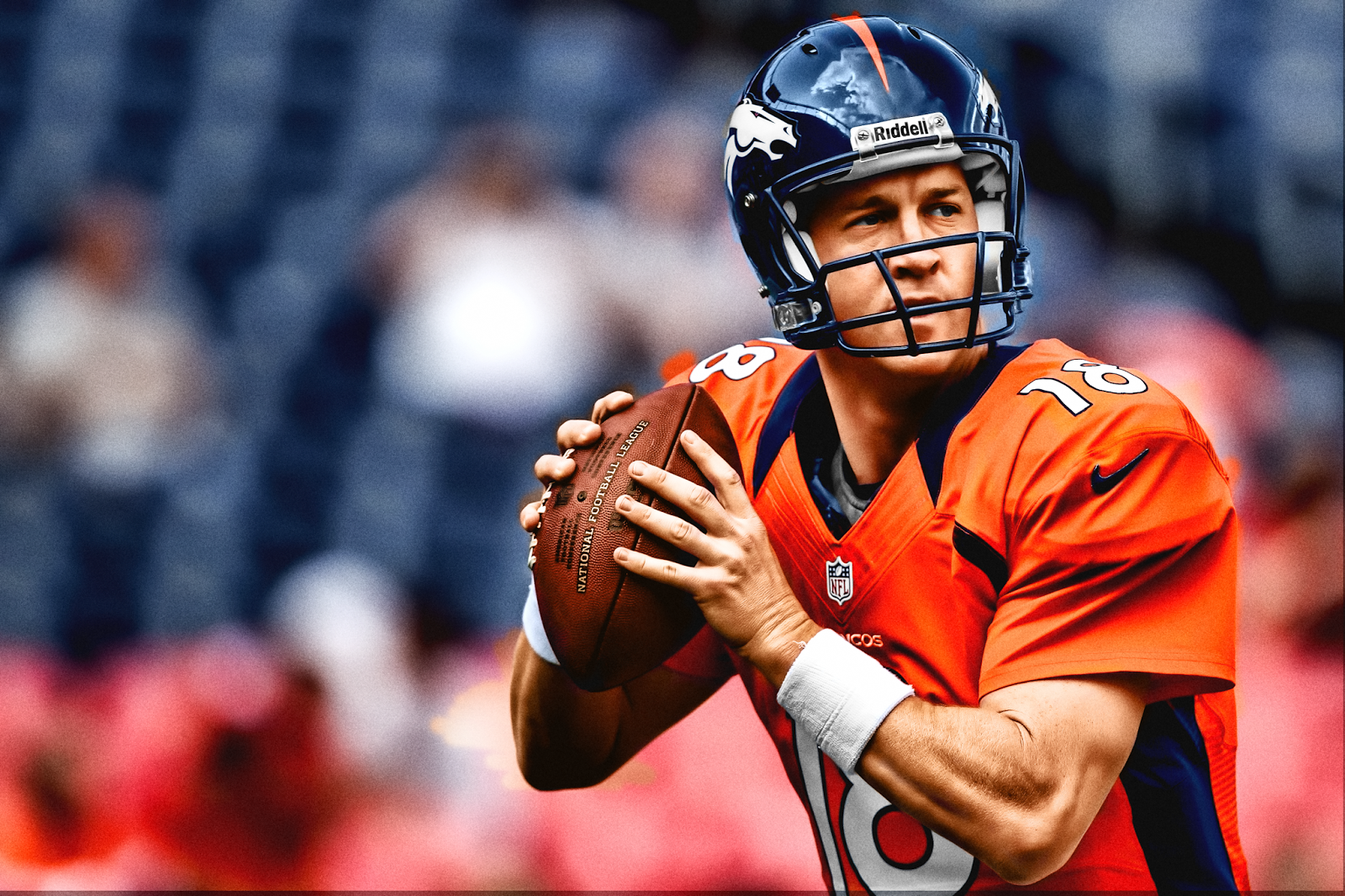
    Courtesy of the AP / Photo by Ben Liebenberg

    When I wrote the piece on excellence yesterday morning, it was well before Peyton Manning and the Denver Broncos suffered an epic collapse in one of the most lopsided losses in Super Bowl history. During the 4th Quarter of the game, infamous Seahawks cornerback Richard Sherman left the game with an ankle injury and did not return.

    What makes this blip on the Super Bowl radar interesting is that in the weeks prior to Super Bowl XLVII, Sherman made it a point to repeatedly criticize Peyton Manning’s passing abilities. At one point, he compared his throws to wobbly ducks languidly flying through the air. To his credit, Manning brushed off the comments during the week and moved on to other things.

    Fast-forward to yesterday’s game.

    The Broncos had just taken a drubbing and the media circus was already in full swing, documenting the aftermath, and dismissing the Broncos performance as an NFL embarrassment. If anyone could justify going off the grid, after a loss like that, it’d be Peyton Manning.

    So what does he do?

    He trudges down the winding corridors of MetLife Stadium, the sting of defeat still burning his eyes. He by-passes the Seattle acolytes celebrating their victory at his expense. And Peyton Manning calls on Richard Sherman, the man who had excoriated him in the media weeks earlier and defeated him on the field moments ago, to inquire as to his health and make sure that he was okay. ‘Ankle injuries are serious things. Just making sure you’re ok.’

    You see, when you’re excellent, it doesn’t really matter whether you win or lose.

  • Analyzing Excellence

    It’s Super Bowl Monday here in New Zealand. In an hour or so, I plan to watch the big game with a buddy – a fellow American who appreciates football in a way that Kiwis simply don’t understand. While I know a number of friends will be cheering on the upstart Seattle Seahawks, just for today, count me among the legions of football fans who will be rooting for one player in particular: Peyton Manning.

    By most accounts, Peyton Manning is having one of the greatest seasons in NFL history. Despite a nearly career-ending neck surgery two seasons ago, Manning set NFL records for both yards and touchdowns thrown in a season. Just last week he was named the MVP of the league. Naturally, these are remarkable accomplishments, feats that will surely catapult Manning into the hall of fame as soon as he becomes eligible for induction.

    But what struck me about Manning’s monster season is the way that he achieved it. True, the man has a remarkable physical talent. But according to the Wall Street Journal, what sets Peyton apart from other quarterbacks in the league, and perhaps makes him arguably the greatest of all-time is the preparation with which he hones his craft. Of Manning’s preparatory habits the Journal notes:

    Manning’s devotion to film study and game-plan ideas keeps the rest of the team up at night. He records voice memos with stray thoughts and sends them to coaches late into the night so everything can be sorted out early in the morning. “He’s really taking advantage of modern technology,” said quarterbacks coach Greg Knapp. “You’ll get a message that says, ‘Let’s do this drill tomorrow; I think my left foot needs to open up more.’ I have my own ideas that he wants to do but he’ll give me that and I’ll say ‘Good idea!”‘  

    [Link]

    The anecdote above is all the more impressive after considering what Manning has already accomplished. His place in the temple of football gods is already secure. His records this season are forever gilded in the annals of NFL history. He has one Super Bowl to his credit. And yet Manning studies, dissects, and analyzes every aspect of his game until he has an abject mastery over the subject. This type of motivation is the epitome of true excellence – a relentless pursuit of perfection for its own sake.

    To some extent, we are all limited by our natural condition and physical capacities. But what Peyton Manning demonstrates is that our preparation and work ethic are aspects of life that are nearly limitless. We can prepare. We can study. We can master the task or opportunity in front of us if we are simply willing to put in the effort to be excellent.

    The Wall Street Journal article above calls Peyton Manning “annoying” in his preparation and habits. I think this says more about “us” than it does about him. The simple fact is that there are many opportunities in life to hunker down, work hard, and pursue excellence. But excellence is rare because it’s not often that people put in the work to be great. We choose the path of least resistance. We opt for short-term rewards at the expense of more fulfilling long-term gains. We settle. This doesn’t necessarily make us bad. It just makes us not great.

    When the Broncos take the field in an hour or so against the Seattle Seahawks, viewers will be watching history in the making one way or another. Should the Broncos win, we will see, arguably, the greatest quarterback of all-time as he pursues the ultimate reward of his sport. If the Broncos lose, we will still be watching the greatest quarterback of all-time as he pursues the ultimate reward of his sport.

    That’s the funny thing about excellence. When you’re excellent, it doesn’t really matter whether you win or lose.

  • Language, Identity and Culture

    We had a farewell morning tea for a colleague earlier today. My friend is a lovely woman of British extract who will be moving away to start life anew with her ‘partner’. The use of the term partner as a synonym for all manner of couplings is something I’ve found strange here in New Zealand. I suspect that if I ever called Gwyn my partner rather than my wife, I might see more than a few raised eyebrows back home in the good old U.S. of A.

    Language

    While stubbornly drinking my morning coffee (all good Patriots know that tea is for redcoats and commies), I had a chat with an acquaintance who forcefully insisted that New Zealand’s adoption of the Māori language (te reo Māori) as one of the country’s official languages was one of the most ‘liberal’ and forward-thinking moves NZ had made in recent years.

    Before I had time to reply, she then took aim at the United States, arguing that America’s refusal to adopt Spanish and the 566 languages of America’s Indian tribes was an especially sordid transgression. By the same token, she ignored the fact that America doesn’t actually have an official language. Perhaps this was an inconvenient truth as Al Gore might say. Nevertheless, in her view, such a lack of linguistic accommodation reduced the American values of equality, life, liberty, and the pursuit of happiness to nothing more than empty falsehoods.(They [Americans] don’t support those [values]. Not really.)

    Identity

    As one might imagine, I’ve had several conversations about America with my Kiwi friends. The lone commonality between them is that everyone seems to have an opinion of America. (Do you really own a gun? What’s Walmart like?). Despite the many chats I’ve had, I can’t recall having ever been told, prior to today, that the bedrock values of my Country are a sham. Suffice it to say, this particular conversation did not last long and I excused myself for the comforts of a quiet office.

    When my blood pressure reached a plateau, I paused to consider her comments. She was correct in that in so many places, the notion of language is inextricably tied to notions of culture – almost to the point that a language can define one’s national identity. This is true, perhaps, in most places – China, France, the UK, Germany and even Mexico all come to mind. Still, I don’t think my colleague quite appreciates how things work in America.

    Unlike New Zealand which has a total population that is roughly the size of Boston, the United States is a massive, free-wheeling, culturally diverse Nation. In previous posts, I’ve likened the US to a big dysfunctional family that stays together for tax purposes. Like it or not, the left is stuck with the right because, let’s face it, the costs associated with revolution and secession would really cramp our style. We’ve already tried a separation, and as the fates would have it, we’re better off together than apart. True love lasts, as the kids say.

    As this matter of population diversity relates to identity, perhaps nowhere in the world is identity so loosely linked to language than in the United States. English is spoken by the vast majority of Americans, so this is the de facto language in which we do business. It’s not prescribed by law (although attempts have been made). It’s simply the way things are done. In America, language, then, is not so much a matter of national identity as it is a matter of national convenience in a wildly diverse country.  

    Culture

    Even so, perhaps my acquaintance’s remarks are more on point as they relate to culture. Perhaps American values are moot points because we do not accommodate a plethora of languages and the cultures they purportedly represent. It’s true that culture is a thorny concept in America. Historically, we don’t do very well with cultures that are not our own. The trail of tears and subsequent expropriation of American Indian lands come to mind. Slavery and Japanese interment camps also ring a bell.

    Still, I’d like to think that these are exceptions to the rule of American exceptionalism. Our values aren’t diminished because we fail to meet the standards. Even under our founding documents, the values of equality, life, liberty, and the pursuit of happiness are objectively self-evident truths. As such, our standards should rather inform our future actions as opposed to being defined by them.

    And I think, in general, this is how it works. This is why Edward Snowden’s revelation of the NSA’s domestic surveillance programme prompted such a strong reaction. Same for Obamacare. Same for drones. Same for Benghazi. Same for the IRS harassment of conservative groups. These issues became big deals because they so starkly cut against the core of what America stands for as a Nation. 

    As a country, then, America is not a Nation that finds its identity through the mass conformity to or accommodation of a particular language. America finds its identity through the common acceptance of a shared set of values, no matter how imperfect our policies may be.

    Sum

    And with that thought, my temper cooled. My pulse no longer raced. In fact, I quite nearly felt a twinge of sympathy for my acquaintance. For unless one is an American and rather accustomed to breathing the sweet air of freedom, I suspect that it is very difficult to apprehend how this all works in practice. Easier to find inconsistencies and write off the whole system of universal human rights than to accept the nuance reflected in the universality of the human condition.