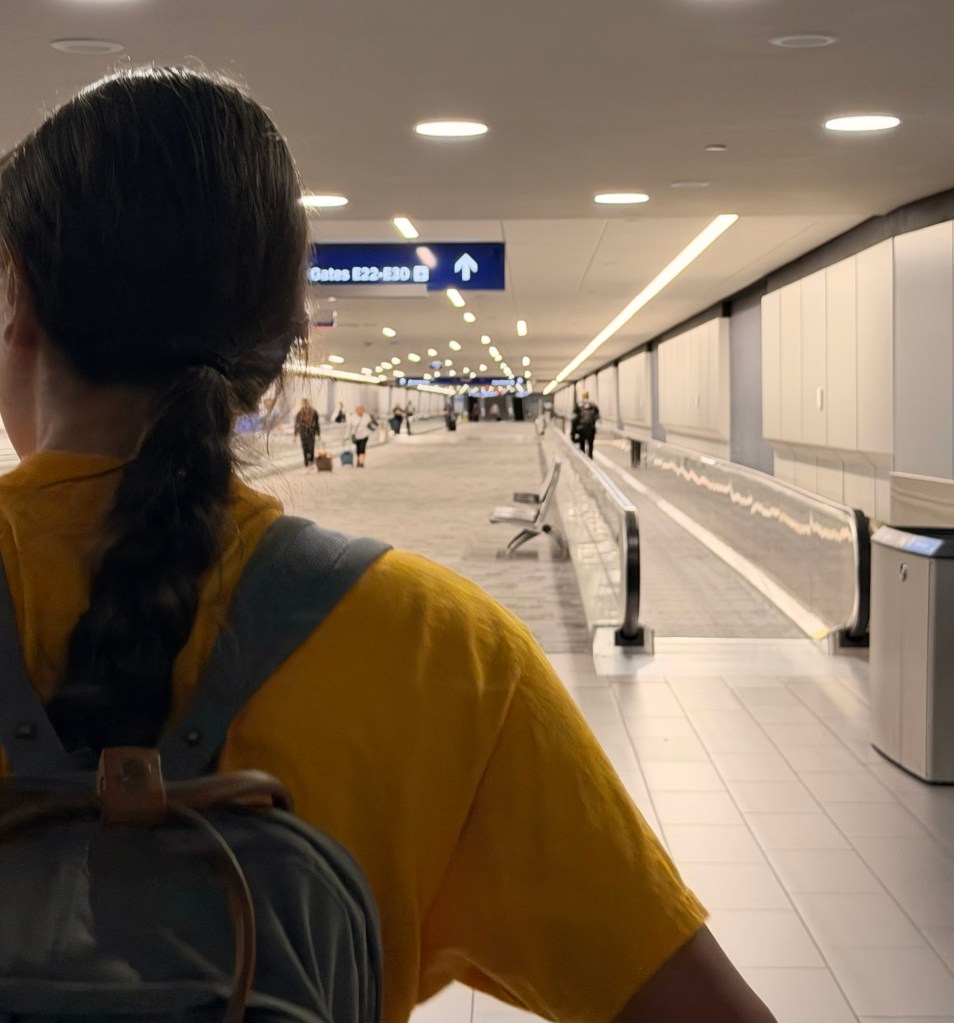
I remember that night well. We were hurtling down the airport corridor trying to catch our flight. The hop from Indy to Dallas wasn’t a long one, but the window was a bit tight, connecting from Dallas to our home airport in Lawton, OK. The start of the summer was underway and it seemed we had nothing but leisure ahead of us.
And we did. I just didn’t account for the blinks.
The blinks. I’ve used the phrase far too much over the years, yet it’s the simplest expression for how quickly time can pass. In a blink our tribe’s Homecoming Celebration was over. Another blink and our summer side-trip west was done. In one final blink, the Summer of 2026 will be in the books as well.
I have my son for the summer each year. But at the end, my son goes back to Indiana. He leaves on Sunday. We are doing a family pizza night here at the house in a few. But this will probably be the last hurrah before the summer ends. I’m aware of time passing, but each year the summer seems to go by more quickly. It’s like a new summer brings with it a faster clock, along with a myriad of differences from the last that allows time to slip by undetected.
But in truth, this summer has passed like many others. The Oklahoma humidity from the early summer rains yields to the broiling temperatures of late July and August. First comes the pow-wow in mid-July. Vacation Bible School at church follows. Not that we participate. Screaming kids, heat, and music are all in the top five of the things my autistic son hates, so attending is really a non-starter. With those all done, all that remains of this summer is the day the kids dread – the resumption of school.
On this account, my son goes back next Wednesday (8/5). We have meetings with the school on 8/3 per usual – this is the meeting where they tell us all of his deficiencies and how they’ll plan to bear the burden of his presence. This will be followed by my son’s appointment with a developmental pediatrician on 8/4 to help us learn more about his outbursts, diagnosis and how to deal with them (hopefully). I plan to be in Indiana with him for the first three days of back-to-school and for the first full week of class.
But with all of the things coming to a close, it’s strange to think back on where the time went. I was only unavailable for a couple of days due to speaking engagements back in mid-June. We spent a Dallas weekend with my girlfriend and took a trip to CO to see her for a week. But the rest of it’s a blur. The reality is that I was home with my son for most of the summer and we really didn’t see anyone. I think that’s how summer usually goes around here. We skulk to our houses to escape the heat. In the process, the summer winds down as we sit in the AC unawares.
In retrospect, I must have backed out of our driveway 100s of times. Driven the same roads. Gone to the same places. And all of the local fare must have been substantially similar to last summer.
Except that this summer my son sounds more like me than the little boy he was last year. He’s taller than me too. Somewhere in those 100s of repetitions he grew up and became a man. Well, a little man. But he’s more man now than boy. I was there for all of it. But I don’t know when it happened.
I think that’s just how life goes. The last egg. The last prayer at night. The last bedtime story. Even if you’re intentional about soaking them all in, the moments will still pass too quickly. They all disappear in a damn blink.
It’s the last week of summer. Technically, there’s next week. But my alone time with my son lasts through the end of this week (7/20 – 7/24). Soon, his Mom will come down and get him. School back in Indiana will start the first week of August. Then, summer 2026 will be a wrap.
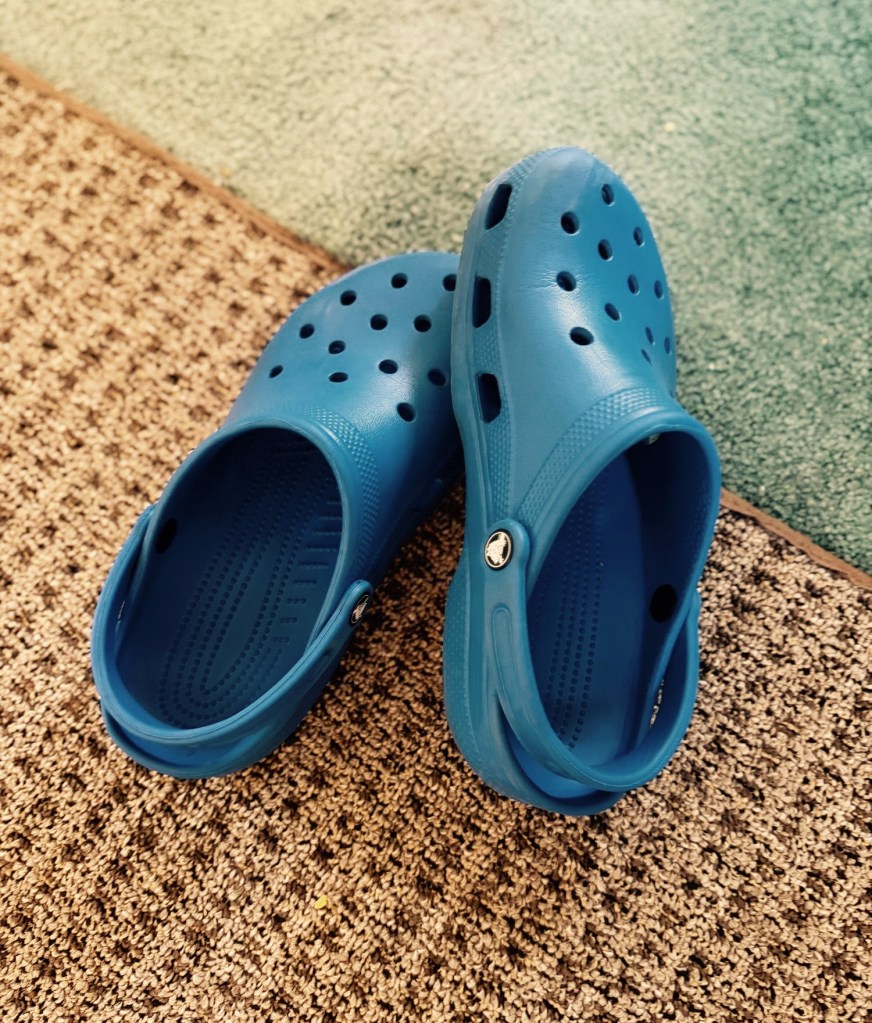
It’s a funny thing how time works in a kid’s mind. All summer long I’ve been hounding him to put away his clothes. Pick up his toys. Throw away trash. And pick up his shoes. You’d think after two months of hounding that the message would sink in. But I walked by the shoe area just now and saw these in the middle of the floor – a fact notable only in that this is NOT where shoes belong. I reckon a couple of months is just a blink to a kid, no matter how we adults might think otherwise.
It’s true that my son really isn’t a kid anymore. My son is now a fully-fledged member of the teenagers’ cohort. His ASD diagnosis notwithstanding, I don’t think there are many teens lurking about who have mastered the art of picking up after themselves. He may not run the tidiest of ships, but if my nephews and friends’ kids are any metric, his general lack of comportment is hardly due to being on the autism spectrum.
Of course, not all of the summer has been like this. There have been the usual summer pitfalls that are absolutely attributable to the autism spectrum. His sleep has been dysregulated since he got to town. Also, they’re less frequent now, but the meltdowns seem to have gotten more intense. Yelling and screaming are usually the pièce de résistance of his outbursts. And then there are those moments late at night, long after he’s drifted off to sleep, where this Dad just feels like he’s flailing about and not entirely sure what to do to fix any of it.
But then there are the wins. My kid has read two chapter books this summer (the first two of The Olympians series). We took a trip to Colorado and deftly navigated the chaos and noise of the airports. He has gotten into a new video game in his own right (Ark: Survival Ascended). We’ve even graduated to noise cancelling headphones, adult shampoo/conditioner and grown-up toothpaste. When you add in that he’s never missed a meal, and learned how to use the air fryer to boot – well, it’s nearly enough to counter-balance the challenges.
The summer is surely drawing to a close. And it’s fair to say that things have been far from perfect. There’s still shoes on the floor. But I suspect that in a few weeks when the house is quiet and everything is tucked away in its proper place, I’ll miss those shoes on the floor and will see more of the wins from this summer than the challenges.
It’s been a minute. Half a year nearly. My plan coming into 2026 was to write more – and I have to an extent. Just not here. My journal is full. I’ve also unexpectedly written job applications and cover letters aplenty. But this space has surely been neglected.
I think like many people who started blogging around the early aughts, the point was simply to share what was on the mind – whether it be about politics, faith or just what happened during the day. There was no rhyme or reason to any of it. I remember an embarrassing amount of two paragraph posts about nothing at all in the early days of Pax Plena. I also posted way more than I should have about politics (a quaint bygone era compared to the rough and tumble dissension we seem to have in the public conversation today). I even managed to continue posting through law school, my doctoral work and the early days of my academic career.
Then things just gradually went off the rails. I started to self-censor. I was careful to the point of being paranoid about sharing thoughts or content related to my field. I felt the need to keep up a certain facade regarding my personal life. Eventually, all of the things that make a person interesting were out of bounds at least in terms of sharing and my own writing.
Today, that notion of blogging is almost completely gone. There are TONS of platforms for sharing content. Pictures. Music. Videos. Memes. Things that are silly. Things that are sad. Sites for personal interests abound – fishing, gaming. watches, fountain pens, sports are a few personal favorites. There are also multiple sites for accessing content. It really doesn’t matter – if there is an interest in the content, whatever the stripe, it can be found in abundance.
Which makes my whole exercise here at Pax Plena ripe for a revisit.
Now that I lack institutional affiliation, I find myself wondering about the kind of content that I’d like to share. I wonder what folks would find interesting. I don’t feel the same shackles constraining me any longer. It’s almost like I can write about and say whatever I want again. It’s exciting but also strange. I suppose liberty can be that way.
Most of my friends and colleagues don’t have this luxury. I know that some former colleagues do not write freely because professional obligations require them to self-censor. The first amendment may be alive and well as we approach America’s 250th Anniversary. But both the public and private sectors have a way of stifling speech that is far more nefarious than a lot of us think about. In the public sector, otherwise interesting writers are constrained to share or “publish” only the content that their bosses approve. If you are a federal worker, the authority of the President to fire simply doesn’t cut in your favor. In the private sector, thanks to the bastardization of at will employment, may workers find their speech rights limited by company policy, lest they find themselves axed for expressing an opinion that isn’t company friendly. It’s enough to make one wonder if the first amendment right to free speech is worth it. And for many it’s easier to self-censor rather than take the risk. Democracy truly does seem to die by a thousand cuts.
So, I think it’s fair to say that I need to pause a bit and think more about what kind of content I’d like to share now that I have the luxury of freedom. I also need to think about what my stamina and pace of life will find manageable. I think I’m up for regular posts. A weekly essay would be interesting and doable – though it’s admittedly not very frequent. But I also don’t want to write just to write. So, I wonder what kind of value I can add to any reader’s life by my scribblings. The old adage is to write about what you know. These days, parenting and fatherhood, faith, doubt, job transitions, and relationships are all at the forefront of my mind. Maybe it’s just the general ennui of one’s mid-40s that keeps my focus so narrow. But it’s also good manners to stay in one’s lane so to speak. Lot’s to think about.
For now, it’s Fourth of July Eve here in the USA. My nephew’s birthday will kickoff soon. He turns 12 this year. Hard to imagine really. It’s a funny thing with these kiddos: the time seems to pass so quickly.
I can recall being 13 and the summers seemed endless. Back then I could while away an afternoon inside my grandparents’ house, parked in front of the AC reading the latest volume I’d slipped from the Library in town. Grandma would fix us lunch. There was the hope of fishing in the late afternoon still to come. The future then seemed so bright and exciting. There were no worries. No debts to pay. No utilities to cover or careers to maintain. No people to please. I had an unshakable, blind faith and confidence in the world and the people around me. I knew that they would take care of me and that all would be well.
It never entered into my mind (not with any sort of fulsome reckoning), that one day, the people I love and trusted, the real grown ups in my life, would no longer be around.
Seven years ago on July 4th, 2019, we all popped fireworks out at my Grandpa’s house. We did the same on July 6th at a relative’s place. I had no idea that less than a month later my Grandpa would be gone; that seven years later, Grandpa, the dogs in the picture, and even my relative’s partner – and a whole host of others – would all be gone. Such things do not really cross the mind of a grown man, not really. Let alone the mind of a child.
This year, the Nation is 250 years old. I’m 43. My son is 13. And it feels like the entire world has changed.
Summers, now, seem so quick. The future seems dark – like the best of days are all behind us. I find that I trust people less. And it’s a sad, thing to trust others less, particularly when I know how garbage of a person I am.
On this 250th Anniversary of America, I feel most for the kiddos. It’s like the current generation of kids got all of the fake adults. I think that most of us Millennials really know don’t know how to adult. We all just woke up one day, and all of a sudden we found ourselves here with kids, jobs, relationships, regrets and none of the fun we were having back when we were 13. It’s not true but the whole thing doesn’t seem fair. Some days it doesn’t even seem real. Life is but a dream. It feels like maybe one day we will wake up and none of this will have happened. The world won’t be so chaotic. Mistakes won’t have been made. We won’t have elected a crazy orange dictator to leader our country. And I’ll be young, safe and happy once again.
Maybe in the distance, my Grandpa will be lighting fireworks while the dogs trot behind him ready to sit back down when the nonsense is over.
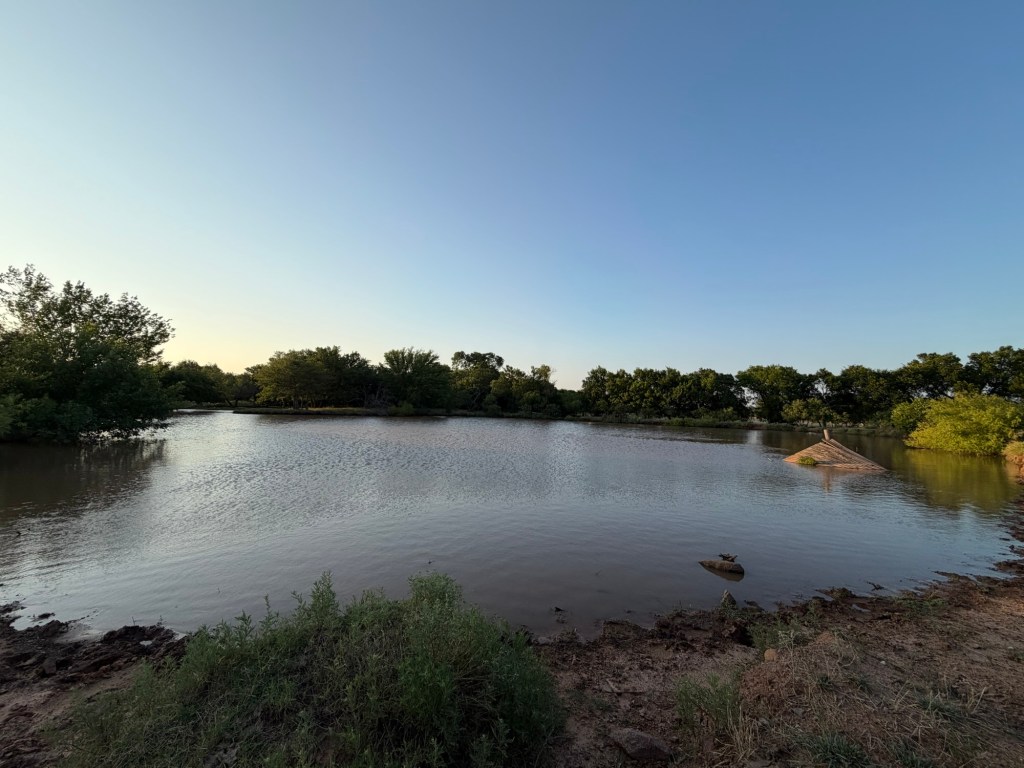
Summer 2024 has been quite the summer, though you might be hard-pressed to tell given the fields surrounding the house here in Cotton County. They look about the same as they always do this time of year. Freshly plowed fields lay open and quiet during the blistering months of summer. But these will soon yield to a flurry of activity brought on by late summer planting and fertilizing. Come late spring of next year, it’ll be harvest time once again. And then the cycle will repeat. Just like it always has since the land was first worked, some seven generations ago.
Of course, this languid pace is no match for the 24/7 news cycle. In the course of the same time that our fields have lain empty, waiting for end of season planting, our country has witnessed a political assassination attempt; we’ve seen a sitting President of the United States unceremoniously drop his campaign for re-election; and while the Olympics have begun over in Paris, the opening ceremonies were all but mired by coordinated arson attacks. All of these headlines are just within the past few weeks.
It’s fair to say time moves at a different pace here. But not in every way. I’ve spent a good deal of my time this summer with my Son, Nephews, and Nieces. They range in age from 13 years to 1 year old, putting them all squarely in the camps of Gen-Z / Gen-Alpha. Having long considered myself to be the “cool” uncle/Dad, I was shocked to discover that my son and miscreant nephews (ages 11, 13 and 10 respectively) were using a language that I simply did not understand while we casually played video games. This led me down an entire rabbit hole of linguistic exploration, turning first to the sage pages of Parade Magazine to try and figure out a) what the hell these youngsters were saying, and b) whether or not I should be offended (I should have been offended – they called my shoes “mid” (average, mediocre, of poor quality).
Apparently, somewhere between the time I showed my older nephew the finer points of throwing a spiral pass with a football, and when I introduced my youngest nephew to Call of Duty, the whole generation up and created their own vernacular that the rest of us cheugy (not at all trendy) folks have yet to fully figure out. Major L (loss or fail) on our part. Not only this, but they went and replaced some terms that I still hold near and dear to the heart. Terms like “word,” which for us millennials meant an all-purpose affirmation or simply “yes.” You might be sad to know, dear reader, that word / yes have now both been set out to pasture, replaced by the trendier, non-cheugy term “bet.” Bet you didn’t know that.
And on the more avant-garde end of the Gen-Z spectrum, my son has been harping about Skibidi Toilets for months now. I have no idea where this came from and it honestly never occurred to me to “search it up” with any sort of detail. But this is apparently a thing. Granted, a hideous thing featuring human-headed toilets, but a thing nonetheless, and a thing that is incredibly popular among the Gen-Z set. So much so that the YouTube videos from whence it came have some 17 billion views and counting. The surge in popularity has left the franchise (can we even call it that?) set to receive the Michael Bay treatment and we can expect to see a “Skibidi Toilet” feature film directed by him in the near future. Bet you didn’t know that either. Bet.
It’s enough change to make my old head spin and I’m only 41. I suppose that makes me certifiably ancient to a Gen-Zer, but it doesn’t feel all that old to me. But when I think about the dirt and the land, and the cycle of planting and harvesting, I suppose that even here, and in my own life, change is the only constant. At the start of the summer, I had a relationship end unexpectedly, on less than good terms. A very short time later, I learned that my living arrangement in Indiana with my ex-wife, aimed at taking care of our son would also end because she was beginning a new relationship. Two’s company, three’s a crowd as the saying goes. It was certainly glum days here for a while. I don’t think anyone particularly enjoys a relationship breakup. And of my divorced friends, I can’t say that I know of anyone who gets overjoyed when their co-parenting arrangement collapses around them. But, shit happens. What can you do?
What can you do?
I’ve thought about that question a lot this summer. And it occurs to me that my Gen-Z friends might be on to something. It strikes me that they did two things that were rather quite profound while the rest of us were busy glued to our devices, none the wiser to the looming linguistic changes in the offing. This isn’t to say that they weren’t glued to their own devices. Odds are, most of the new lingo was developed over a combination of texting, gaming chats, and video messaging with friends as opposed to actual, physical human interaction. But they did pull off a fairly remarkable feat.
First, Gen-Z walked away from the phrases, words and expressions that didn’t work for them. I don’t know that “bet” is a better alternative than “word” was. But “word” didn’t work for Gen-Z for whatever reason, so they left it behind. Periodt (as the kids say). There were no harsh feelings. I can’t say for sure that there was even any thought given to the vernacular that they were replacing. It’s not like there was a Gen-Z convention where the new terms were settled and agreed upon. It just happened. They simply let go of the lingo that didn’t work for them. And that seems to suit them all just fine.
The second thing Gen-Z did was to create something entirely new to suit their own purposes. We Millennials, Boomers, Gen-Xers and olders can all wonder where the hell Gen-Z came up with their words – cheugy comes to mind – but the terms are unique. They’re different. Different terms for a different generation. And the words selected suit the new generation that’s using them. Again, no disrespect was intended to the old lingo (well, maybe some if you ask my nephews). The new words just came about and were widely adopted. Something new when the old didn’t work.
And I think that’s the secret sauce with change.
Even when we can’t see change occur, that doesn’t mean it isn’t happening, as frightening as that may seem. It’s inevitable. Sure, to the extent we can anticipate a change, we can prepare for it. That’s all well and good. But it’s the unexpected changes that seem to send us reeling. It’s the unexpected changes that leave us the most unsteady. For theses sorts of changes, I think Gen-Z’s example bodes well. It’s okay to walk away. It’s okay to go and to create something new. No disrespect or guilt required.
In my case, I need to do both. My co-parenting vision for my son changed even though I didn’t see the change coming. My task is to walk away from that old vision just like Gen-Z did from the old lingo. It’s dead. It’s not coming back. So, as much as I had hoped for that vision to come to pass for my son, I need to let it go. The outcome was never guaranteed. It’s an outcome that never will be. It’s not my fault. I have nothing to feel guilty about. There was no disrespect in the process. It’s simply time to walk away and let it go. Gen-Z has taught me that that’s okay.
The second thing I need to do, is figure out what the hell a new vision looks like. Deciding to walk away is only half the enterprise. The second half is figuring out what you replace the old with. My Gen-Z friends created their own lingo and way of relating to each other after leaving words and terms that didn’t work for them behind. I’m leaving behind a dead vision of co-parenting and now I have to figure out how I can maximize every second that I spend with my son. The co-parenting won’t really be a thing, being nearly bi-coastal, so what will the new relationship dynamic with him look like? How do I want it to look like? What are the unique memories that he and I can make together? These are fun questions to consider that he and I can answer together. We’ll create something new that suits just the two of us. Gen-Z taught me that that’s okay.
I suspect when I look out at the field tomorrow, it will look pretty much the same as it does today. Open rows of sod ready for planting when the time is right. Eventually change will come to the land too and the cycle will repeat. But I think when it’s time to plant this year, I’ll have a look out the window, sip my coffee, and smile. I’ll think about my son, about Gen-Z, and all the change we cannot see. And I’ll think about how that suits me just fine. Thanks for the lessons, Gen-Z. No cap.
This past week marked the seventh anniversary of my divorce. It’s a topic that I’ve alluded to on these pages before, but I’m not sure that I’ve ever directly addressed it.
I don’t think the details are very interesting, although they are, admittedly, what most folks fixate on. In some ways I get this. We humans are a curious lot. As a culture, we tend to gravitate towards the details of other peoples lives in a way that almost seems baked into our DNA. Consider the prevalence of reality TV. Our society revels in the details of other peoples lives – from how they date, to the homes they buy, and even to how obese they are. Why we care, I’m not sure. But we damn sure love the details.
For my life, I think the details of a relationship matter less than one or two critical moments along the way. While it’s true that the little things tend to add up and drive the vicissitudes of life forward, I think that at the end of every relationship there’s a bit of a time wound that leads to the relationship’s end. This wound boils down to a single, decisive moment. A personal rubicon. Where going forward, the relationship is no more. And looking back, it is all that the relationship ever was. A wound in time for the aggrieved, and perhaps a moment of celebration for those making a break. Or some combination of the two.
For me, this moment is forever etched in my mind. I recall the hurt. It wasn’t my choice. It sent me spiraling into frenzy of depression and drinking (something I’ve only recently addressed). I also recall the loneliness and the fear. It was paralyzing. Would I see my son? Would I be a part of his life? Would he grow up calling my ex’s new husband Dad? (The very thought of this made me wretch.) At my age, would I ever find love again? How would I recover from the financial damage done after seven years of life lived together?
I have answers to some of these questions now. Some I don’t. I still haven’t found love and I just hit 40, so the odds aren’t necessarily in my favor to borrow from the Hunger Games. But if I could go back and chat with the me of seven years ago, I would sit down and tell him, “Dude. Calm the eff down. It gets better.” Not necessarily right away. But it does.
As a part of my own reflection, and mindfulness, I have lately opted to read a chapter of the Bible each day. I made it up to the book of Joshua before I gave up on reading the Bible in a year. But I figure I can at least read a chapter of the Bible a day. For some, I know that religion is anachronistic and passé. I’ve never felt that way. I find great comfort in faith but I get that your mileage may vary.
Anyway, I read Joshua chapter one the other day. There, God reaffirms the promise to guide Moses, and strikes it afresh with Joshua. As Israel stands poised on the banks of the Jordan to enter the “promised land,” God once again states his intent to remain a bulwark to Joshua and Israel.
Therefore shall not any man be able to stand before thee all the days of thy life: As I was with Moses, so I will be with thee: I will not fail thee nor forsake thee.”
– Joshua 1.5
God further exhorts Joshua to be strong and have courage. An important bit of advice, seeing as Joshua was essentially taking the helm of leadership over the entire Nation of Israel.
Be not dismayed: for the Lord they God is with thee withersoever thou goest.
– Joshua 1.9
The link I make between the words of God to Joshua and my own experience with my divorce is that the message could easily have been given by God to me – but for the fact that, at the time, I had no truck for hearing anything from God – let alone actually believing the sentiment of the message itself.
But it was true. What came to pass, ultimately “did not stand.” These many years later, I have not reconciled with my ex-wife. Yet, I live in her house and we co-parent in a way that most people do not understand. All of this is borne out of necessity. Our son has ASD (Autism Spectrum Disorder) and requires intense guidance and direction. From the time he gets up, to the time he gets on the bus for school, to the time he gets home, and throughout the evening, our lives are all about a routine that revolves around him. Given his disability, this is what he needs. We will never be a couple again. There’s no desire for this on either of our parts. But in the love we both have for our son, there is no daylight between us.
So, despite the spirals and darkness that followed my marriage’s end, I find that God was steadfast. I felt his presence even when I chose to ignore it. The Lord was with me throughout.
He was there as I sat on the bridge in Laramie, WY drinking whiskey. He knew my thoughts as I considered ending my life with a quick leap to the train tracks below me. He guided me to a new job in another state. He led me here to Indiana, in the midst of the pandemic, to care for my son. He allowed my work position to become permanently remote. And he facilitated this entire transition.
So, the end result is that what God promised to Joshua (and Moses before him), he promises to us today. I was foolish and afraid seven years ago. I was “dismayed.” But God’s grace exceeds my own failings. He is steadfast. I can look back on the past years and see grace made manifest in my life at every turn. I can look ahead, now, and see the opportunity to live a life without fear. After all, there isn’t much more to fear in life that exceeds what I have already endured.
The thought is a liberating one.
I’ve already gone through the fire. I’ve traveled to the dark places. I’ve stared down my demons. What was intended for harm, did not stand – all thanks to the steadfastness of God. Like the above rock in the desert, the oceans can fall away. The land can erode around me. The trees and vegetation can wither and die, just like the life I once knew. Yet, my own experience leads me to conclude that in the end, God will remain at my side even if the landscape around me is charred and barren.
This is all good.
But it presents an entirely different and exciting question as a result: How would you live your life, if you knew that there was nothing to be afraid of?
And once you have your answer, go do it. I’m still working on mine.