Tag: Children

  • Endless Summers

    It’s been a minute. Half a year nearly. My plan coming into 2026 was to write more – and I have to an extent. Just not here. My journal is full. I’ve also unexpectedly written job applications and cover letters aplenty. But this space has surely been neglected.

    I think like many people who started blogging around the early aughts, the point was simply to share what was on the mind – whether it be about politics, faith or just what happened during the day. There was no rhyme or reason to any of it. I remember an embarrassing amount of two paragraph posts about nothing at all in the early days of Pax Plena. I also posted way more than I should have about politics (a quaint bygone era compared to the rough and tumble dissension we seem to have in the public conversation today). I even managed to continue posting through law school, my doctoral work and the early days of my academic career.

    Then things just gradually went off the rails. I started to self-censor. I was careful to the point of being paranoid about sharing thoughts or content related to my field. I felt the need to keep up a certain facade regarding my personal life. Eventually, all of the things that make a person interesting were out of bounds at least in terms of sharing and my own writing.

    Today, that notion of blogging is almost completely gone. There are TONS of platforms for sharing content. Pictures. Music. Videos. Memes. Things that are silly. Things that are sad. Sites for personal interests abound – fishing, gaming. watches, fountain pens, sports are a few personal favorites. There are also multiple sites for accessing content. It really doesn’t matter – if there is an interest in the content, whatever the stripe, it can be found in abundance.

    Which makes my whole exercise here at Pax Plena ripe for a revisit.

    Now that I lack institutional affiliation, I find myself wondering about the kind of content that I’d like to share. I wonder what folks would find interesting. I don’t feel the same shackles constraining me any longer. It’s almost like I can write about and say whatever I want again. It’s exciting but also strange. I suppose liberty can be that way.

    Most of my friends and colleagues don’t have this luxury. I know that some former colleagues do not write freely because professional obligations require them to self-censor. The first amendment may be alive and well as we approach America’s 250th Anniversary. But both the public and private sectors have a way of stifling speech that is far more nefarious than a lot of us think about. In the public sector, otherwise interesting writers are constrained to share or “publish” only the content that their bosses approve. If you are a federal worker, the authority of the President to fire simply doesn’t cut in your favor. In the private sector, thanks to the bastardization of at will employment, may workers find their speech rights limited by company policy, lest they find themselves axed for expressing an opinion that isn’t company friendly. It’s enough to make one wonder if the first amendment right to free speech is worth it. And for many it’s easier to self-censor rather than take the risk. Democracy truly does seem to die by a thousand cuts.

    So, I think it’s fair to say that I need to pause a bit and think more about what kind of content I’d like to share now that I have the luxury of freedom. I also need to think about what my stamina and pace of life will find manageable. I think I’m up for regular posts. A weekly essay would be interesting and doable – though it’s admittedly not very frequent. But I also don’t want to write just to write. So, I wonder what kind of value I can add to any reader’s life by my scribblings. The old adage is to write about what you know. These days, parenting and fatherhood, faith, doubt, job transitions, and relationships are all at the forefront of my mind. Maybe it’s just the general ennui of one’s mid-40s that keeps my focus so narrow. But it’s also good manners to stay in one’s lane so to speak. Lot’s to think about.

    For now, it’s Fourth of July Eve here in the USA. My nephew’s birthday will kickoff soon. He turns 12 this year. Hard to imagine really. It’s a funny thing with these kiddos: the time seems to pass so quickly.

    I can recall being 13 and the summers seemed endless. Back then I could while away an afternoon inside my grandparents’ house, parked in front of the AC reading the latest volume I’d slipped from the Library in town. Grandma would fix us lunch. There was the hope of fishing in the late afternoon still to come. The future then seemed so bright and exciting. There were no worries. No debts to pay. No utilities to cover or careers to maintain. No people to please. I had an unshakable, blind faith and confidence in the world and the people around me. I knew that they would take care of me and that all would be well.

    It never entered into my mind (not with any sort of fulsome reckoning), that one day, the people I love and trusted, the real grown ups in my life, would no longer be around.

    Seven years ago on July 4th, 2019, we all popped fireworks out at my Grandpa’s house. We did the same on July 6th at a relative’s place. I had no idea that less than a month later my Grandpa would be gone; that seven years later, Grandpa, the dogs in the picture, and even my relative’s partner – and a whole host of others – would all be gone. Such things do not really cross the mind of a grown man, not really. Let alone the mind of a child.

    This year, the Nation is 250 years old. I’m 43. My son is 13. And it feels like the entire world has changed.

    Summers, now, seem so quick. The future seems dark – like the best of days are all behind us. I find that I trust people less. And it’s a sad, thing to trust others less, particularly when I know how garbage of a person I am.

    On this 250th Anniversary of America, I feel most for the kiddos. It’s like the current generation of kids got all of the fake adults. I think that most of us Millennials really know don’t know how to adult. We all just woke up one day, and all of a sudden we found ourselves here with kids, jobs, relationships, regrets and none of the fun we were having back when we were 13. It’s not true but the whole thing doesn’t seem fair. Some days it doesn’t even seem real. Life is but a dream. It feels like maybe one day we will wake up and none of this will have happened. The world won’t be so chaotic. Mistakes won’t have been made. We won’t have elected a crazy orange dictator to leader our country. And I’ll be young, safe and happy once again.

    Maybe in the distance, my Grandpa will be lighting fireworks while the dogs trot behind him ready to sit back down when the nonsense is over.

  • The Night Before I Turn 40

    It’s a drop past 11pm here on the East Coast, and just a few minutes away from my Fortieth birthday. I usually don’t let big, decade birthdays consume too many of my thoughts – age is just a number, as the kids say.

    But it’s hard not to think back on this night ten years ago and reminisce. I had just driven back to my hometown, Walters, Oklahoma. I had finished up my law school and doctoral years in Tucson. With no job and an uncertain future, I left the Old Pueblo and headed for home with my nearly one-month old newborn son, and then wife in tow.

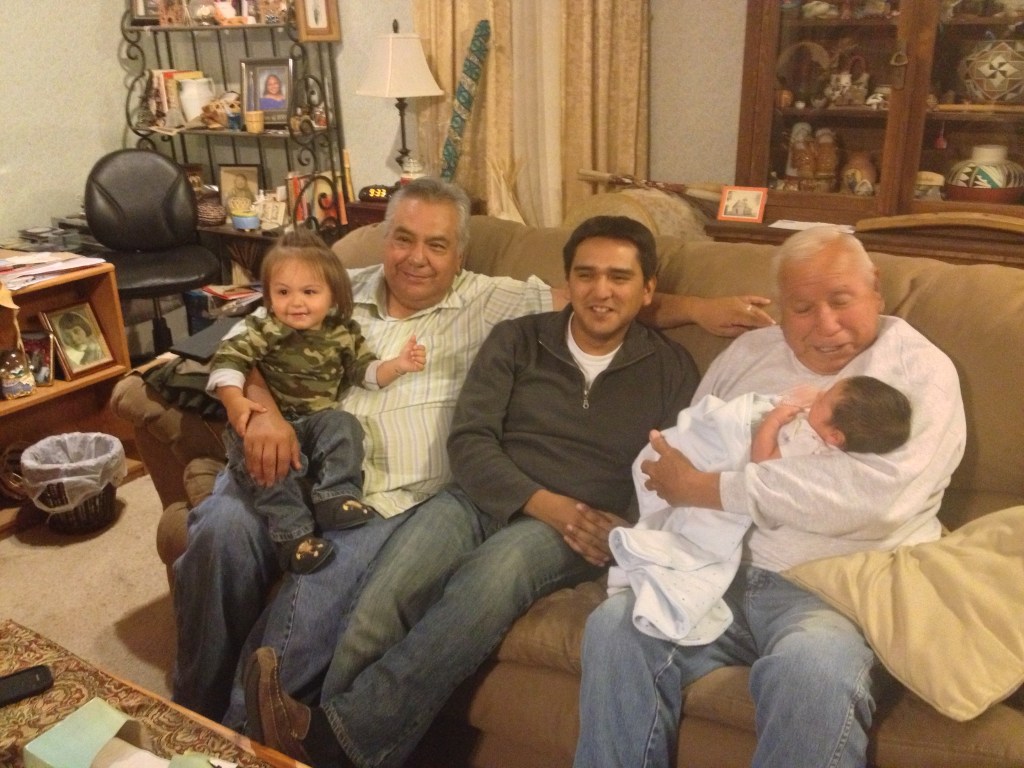
    It had been a predictably long drive. God knows the drive between Tucson and Walters is long. But we made it safely. The photo below, marked the first time that there would be four generations of Fodder men all in the same place. It was also the first time that my Grandfather would get to meet his Great-Grandson.

    Now my son is ten. My Grandpa has passed on. And life seems far more complicated today than it did back then. But it’s hard not to be thankful. My baby nephew is now playing football. My Dad is well. I’d say we fared okay, all things considered. I hope that we will be so fortunate in the next ten years.

    It seems like a lifetime ago, and yet it seems like yesterday. I remember how tired we were after the drive. How great it felt to be home. How excited and nervous I was at the thought of being a parent. It was all so new.

    But it strikes me that each milestone year is like that. Ten years from now, I don’t know what I will be doing on this night. I don’t know who will will be by my side when the next picture is taken. For all I know, it could be my Dad holding his latest Grandson. Stranger things have happened.

    What I do know is that I don’t want to take a single moment of this next decade for granted. To paraphrase Thoreau, “I want to live deeply and suck out all the marrow of life.”

    If I had had this perspective ten years ago, I would have cherished each moment when that photo was taken. I would have basked in the company of family, and relished the excitement of welcoming a new life into the world. I would have been satisfied with a weary body, tired after closing an old chapter and excited to open a new one.

    But the past is done.

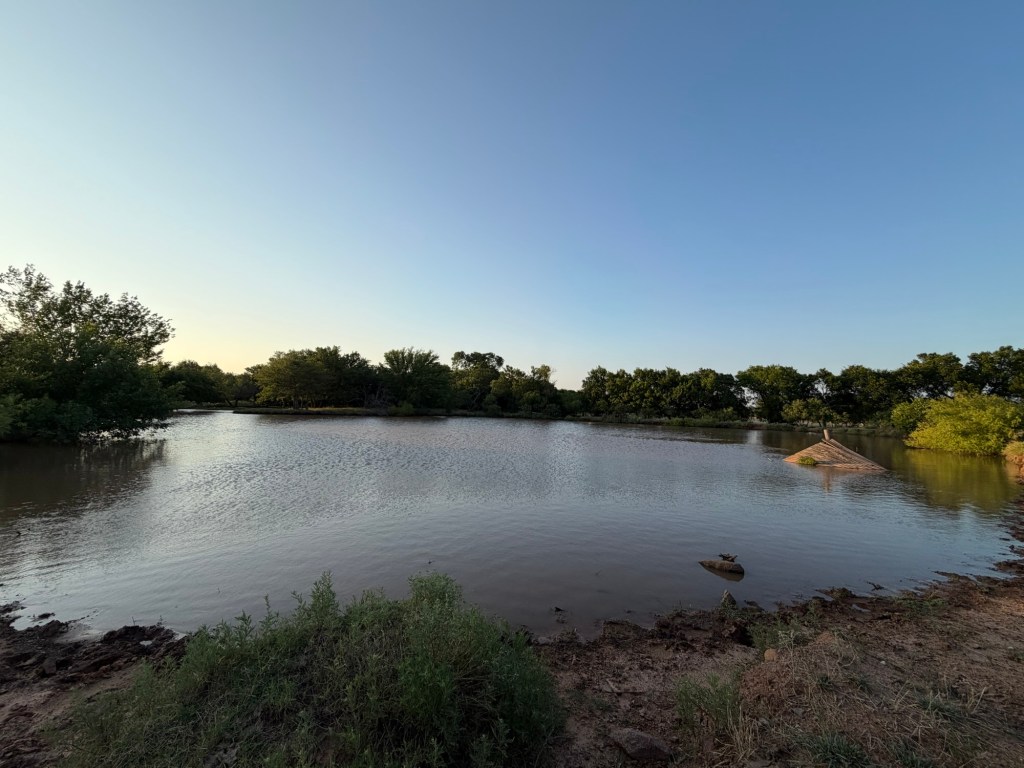
    Like the tree above, we all inexorably shed our old leaves no matter how vibrant they are in order to reset, rest, and to welcome the new.

    In five minutes or so, it will be time to turn the page on my 30s and see what comes next.

  • On Tragedy: Coming to Terms with Terms

    Clark  062018

    My son was diagnosed with an autism spectrum disorder earlier this week.

    While the diagnosis was not a complete surprise, to say that the news was personally devastating would be an understatement. After five years of explaining away the symptoms, after five years of hoping and anticipating that Clark would simply “outgrow” some of his peculiar behaviors, an expert from the University of Indiana’s Riley Children’s Hospital summarily crushed those hopes with the click of a mouse, and the stroke of a pen. 

    Naturally, I was crushed. 

    I can’t speak to how other, better parents would have responded to such news. For my part, my mind went into a spiral with a massive, neon “NO CURE” sign flashing before my eyes while I tried to sleep. Mostly, though, I thought about the horror stories of autism that I had read: 

    • Incidents of trigger happy cops murdering autistic men of color for simply having a blank stare. (Seems like a double whammy since Clark is both American Indian and autistic).
    • And even the latest news out of Miami-Dade County that would see Clark enlist in a “voluntary registry” with the police as a child ‘suffering’ from mental illness. (No way in hell). 
    • Would he even live to be as old as his mother, and reach the ripe old age of 36?

    I didn’t sleep much on Monday night. 

    The following day, I spent much of it trying to process the news, and how to sort out my own response going forward. Worrying certainly wasn’t helping.

    Rather than worry, I tried to think about the language I would use when describing Clark’s diagnosis in my day-to-day interactions. It seemed wise to use the proper terms – both for my own edification, and given the fact that our society is fraught with offense. These days, people tend to get pissed off by nearly anything that rustles their jimmies. I certainly didn’t (and don’t) want to offend other parents of special needs kids unintentionally. Better to save a good offense for when you mean it.

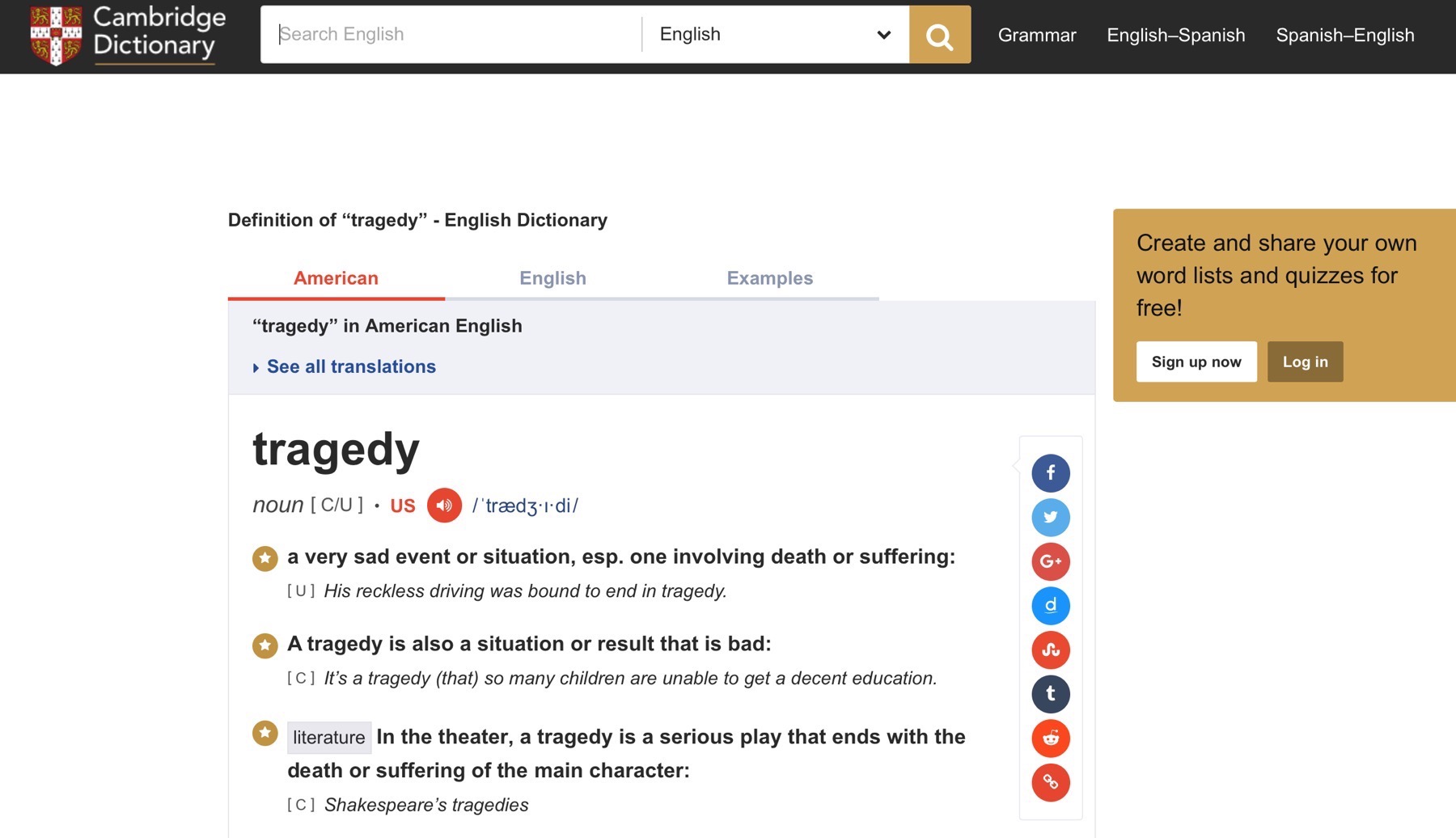
    In coming to terms with the terms of Clark’s diagnosis, the word that wanted glibly to sneak into my vernacular was the word tragedy. The Cambridge University dictionary defines tragedy as follows:

    Tragedy Defined

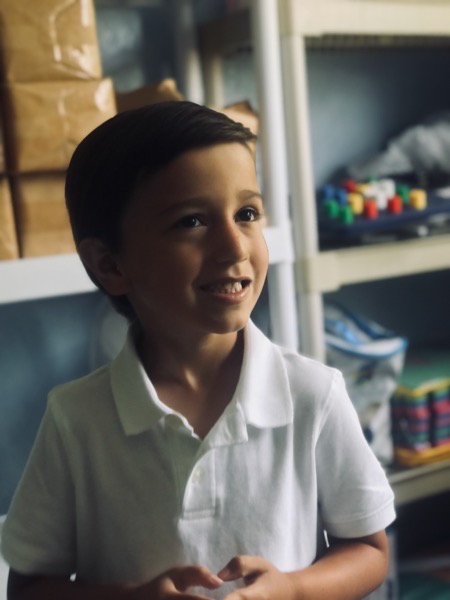
    I think the first definition is plainly eliminated. Clark isn’t dying anymore than we are all dying. And if the photo above is any indication, he isn’t really suffering either. His mischievous laugh, and megawatt smile certainly speak to the contrary. The third definition is also eliminated – at least until Clark decides to become an english major during college. 

    So really, the only way to classify autism as a tragedy is if one buys the second definition, and the narrative that autism is a situation or result that is ‘bad.’ And I’m not really convinced of this either.

    It’s very difficult to talk about the results and outcome of a life and call them bad when Clark hasn’t really begun to live. Sure, as life milestones go he was born. He learned to walk. He has mastered potty-training (thank God). He’s even developing speech and language skills. But the rest of the broad canvass that is his life is wonderfully, beautifully blank. 

    Now, it could be that his diagnosis will enable him to make a positive impact on the lives of many. I suppose it could be the opposite. After all, no one wants to think of raising the next dictator, but somewhere in the world there’s a couple or a parent who is doing exactly that. Regardless, it seems misguided to use a term like ‘tragedy’ to define a life that has not yet truly begun. Clark is five years old. His concerns this summer are when he will go swimming, and whether he can have only two Go-Gurts or perhaps sneak a third during breakfast. It’s a bit dramatic to say that his condition is a tragedy.

    Having reached that conclusion I calmed down a bit. I did some more investigating. I was intrigued to see that there are scores of parents and autistic folks who agree that tragedy is NOT how they would describe their lives, or their kids. From one parent, I learned that I’ve basically been doing everything wrong since Clark was born. From another, I was inspired to see that maybe I’m actually doing alright, and that perhaps triumph is a better ‘t’ word to describe Clark.

    Given the disparate reactions, I was relieved to confirm a lingering suspicion: no one has cornered the market on how to respond to adversity – particularly when it relates to medical conditions affecting loved ones. And especially situations that no one can control. 

    In all, I can’t say that I have any more answers than I did almost a week ago Monday evening.

    But I can say that I love my son. And that as long as I draw breath, I will strive to given him every advantage that I can, and meet every need that he has. Despite the seriousness of the news, it’s a comfort to see that, in some ways, nothing has changed at all.

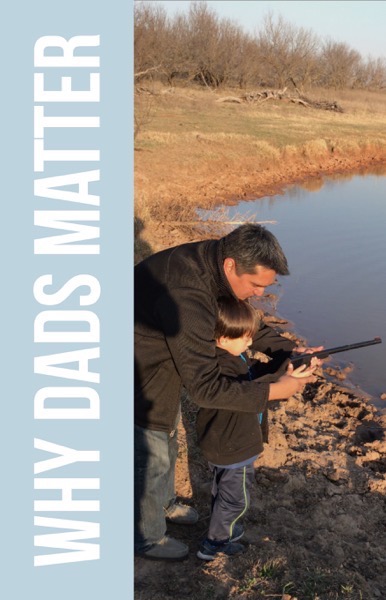
  • Why Dads Matter

    My Post

    It has been a long while since I’ve graced the pages of Pax Plena with a new post. Given a quiet Father’s Day Sunday here in the U.S., I couldn’t think of a better time to resurrect our ailing blog once again. Like Lazarus rising from the dead, this disease of blogging silence never quite seems to lead to death. Our blog has merely fallen asleep.


    What prompted me to write this afternoon was an opinion column by the Washington Post’s Megan McArdle that shared some personal reflections on why fathers matter.

    [Link]

    Truth be told, I don’t really know of any camps that are ardently claiming that fathers do not matter. Granted, an article in the Atlantic, circa 2010, made the case that “there’s nothing objectively essential” about the contribution of a father to the well-being of a child. The point seems a bit weak. The absence of evidence is not evidence of absence. Indeed, other sources cite a wide body of literature that assess the importance of fathers and their role in fostering the well-being of their kiddos.

    Then again, it is the Atlantic, so one would do well to consider the source… 

    By contrast, McArdle notes of her own family life that “my mother was usually the one who dressed wounds if you fell off the jungle gym; my father was the one who encouraged you to climb a little higher than felt strictly safe.”

    Sure, the point is anecdotal, but I think it’s about right. In our family, Mother was always the one who set the rules, bedtimes, and made sure that we went to church. My Father seldom went to church, and had zero inhibitions about letting me ride in the open bed of a pickup truck while we drove around dusty county roads picking up cans to take to the recycling center. Note: This wasn’t something we did for the sheer virtue of a good deed, or environmentalism. There were no such bourgeois luxuries in the Fodder family of the 1980s. We just needed the money.

    Such parenting today would immediately draw the ire of the nearly every child advocacy group in America, and quite possibly one’s local Department of Child Welfare. Suffice it to say, times were different in the 80s. And, to be fair, if Dad had insisted that I sit next to him inside the cab of the truck, I probably would have pitched a royal fit, and left him wishing that I had just rode in the back of the damn truck to begin with. We poor kids could be a precocious lot. 

    But there was something that was actually quite important that I learned from those dusty drives with dear old Dad. I gained a sense of independence, and self-sufficiency that I never would have gotten had either of my parents been the “helicopter parent” that’s en vogue today. From Dad, I learned to search within myself, and try to solve problems instead of complaining about them. I learned that you can’t always have what you want, but that you can obtain what you want if you’re willing to work for it. And I learned that there are literally millions of ways one can perish by eating a Twinkie.

    (Family Joke: Whenever someone passes away, and one is foolish enough to inquire as to their cause of death within earshot of my Father, Dad’s glib response is always that they “choked on a Twinkie.” We usually groan and laugh, but I suppose normal folks might think this is morbid. Tomāto/Tomăto.) 

    And really, that’s why Dad’s are important: they show love to kids in a fundamentally different way from that of a Mom. And the difference is accounted for in that each parent brings their own lived experiences to the child rearing table, and kids are better for it. After all, what kid doesn’t need more love in their life?

    So, to all of the Dads out there, take heart: you matter. And don’t let the Atlantic tell you otherwise.

  • Children at Play

    We took Clark to the park today. The playground equipment had all the usual trappings of a large park in the center of town, including scores of parents, kids, and pooches out for their afternoon walk. 
     
    Amid the chaos, we discovered the slides fairly quickly. Clark and Gwyn spent most of the time going up, and down the slide head first. No worry given to broken necks, or petrified father watching from the side. Only the occasional mischievous glance, and the squeal of joy at landing in the wood chips beneath the slide. 

     
    It’s a remarkable thing to see a child at play. Engrossed in the moment. Utterly fascinated by whatever it is that captures the attention, and imagination of a young mind. 
     
    But what I envy most is Clark’s ability just to be. To enjoy. To play. Some nights when my mind races with things to do, with the things that I didn’t get done, with the typical cares of life that keep one awake late into the night, I wish I had his young heart, and innocence – things forever etched on the face of a child at play. 
     
    I suppose that’s something I can’t get back. And yet, I can’t help but pray it’s something he never loses.