Tag: Travel

  • The Problem with Pictures

    Kitty (aka Mario / Kit-tums)

    It was an early Sunday morning, I was packing my suitcase. Predictably, I waited until the last minute. My flight back to Oklahoma was set for noon and it was an hour’s drive to the airport in Denver.

    I raced about the house trying to collect my scattered electronics and books. It wasn’t as if the flight was a surprise, but I tend to put off the reality of leaving until the last possible moment. Somewhere in the chaos of tangled cables and missing chargers, I gained a helper who was none too pleased with my shenanigans.

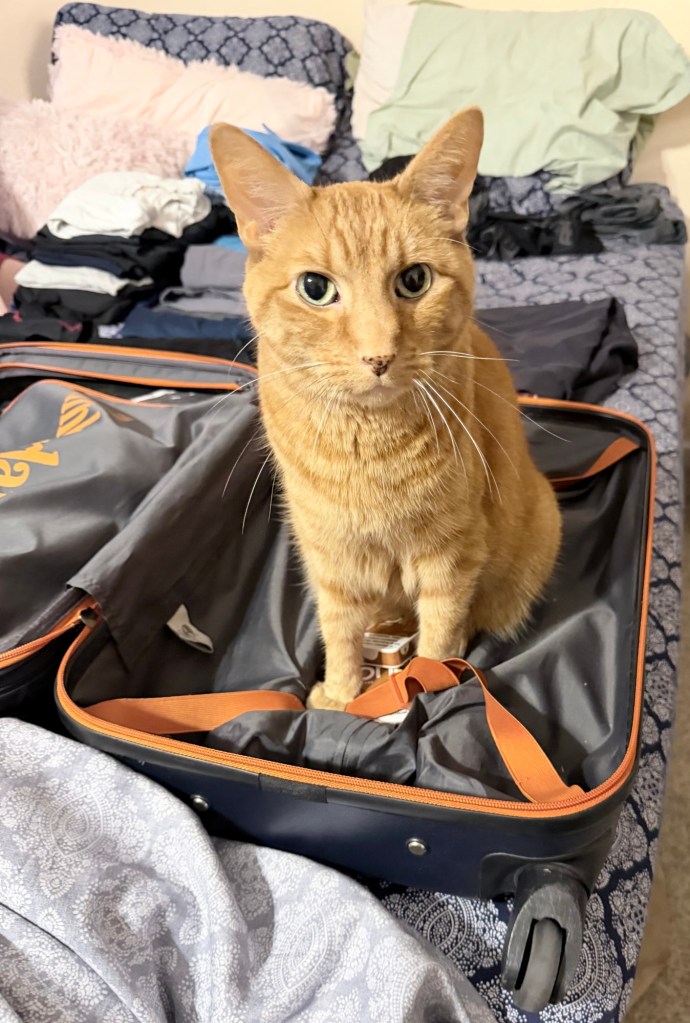
    “Kitty” (whose actual name is Mario) decided that all of this packing nonsense needed to come to a stop. Being the pacific belligerent that he is, Kitty opted to occupy my carry-on bag rather than actually allow me to fill it with my belongings. The result is that I snapped a lovely photo demonstrating how helpful cats can be and how annoyed they can get with their humans: “Just where do you think YOU’RE going???”

    It wasn’t until I was safely in the air (and a couple of hundred miles away from Kitty) that I looked back at the photos from my trip. I thumbed through the camera roll and wondered about the picture I took of him. It was just a quick, one-off snap before I shooed him out of the suitcase. But it struck me that a picture can capture a lot about life in our age of hyper mobility – yet also so little.

    My son lives in Indiana. My girlfriend lives in Colorado. I live in Oklahoma, and until this past spring, I worked out of a base in Arizona. The past ten years of my life have been spent in constant motion. While I’ve taken plenty of pictures and put myself through the paces of travel, I can’t help but think about all of the things a photo doesn’t capture.

    Sure, Kitty looks sufficiently irritated. But the picture doesn’t capture the moment before when I was frantically trying to collect my books for the carry-on. It doesn’t capture the night before, making guacamole on Saturday evening, and the movie night with my gf for which the guac was mandatory. It doesn’t capture the goodbye kiss at the airport or video chats with my son from afar.

    I guess the problem with pictures is that they don’t capture love and life on the run. They miss the gate to gate, week to week, and ultimately year to year dedications of a life that’s too vast to preserve in toto.

    Ultimately, a picture is just a moment we try to preserve in hopes that it will conjure both memories and context. A still of life that we can set aside. Even as good as a photo may be, its true meaning will eventually be lost.
  • My Neighbors

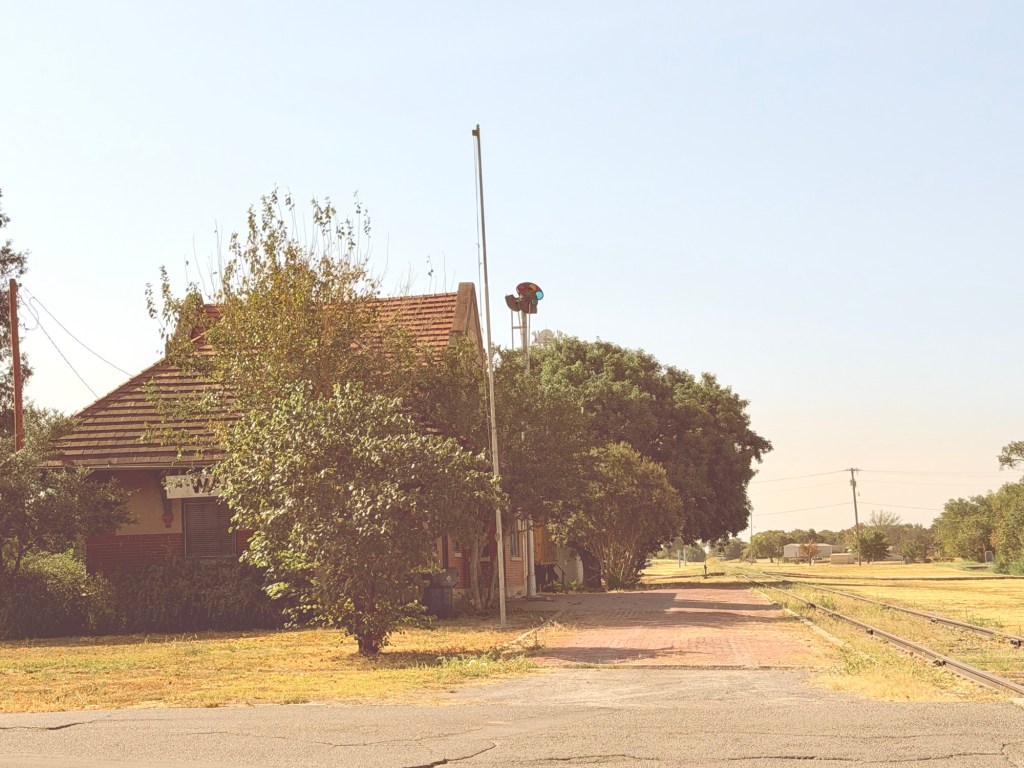
    Back in Walters, I live about a block from the old train depot. Built in 1920, the Rock Island Depot put Walters on the map in Cotton County and heavily influenced the town’s selection as the county seat. The line itself served primarily as a local passenger stop along the Rock Island and Pacific Railway line – although the tracks eventually linked up to points well beyond the confines of Cotton County, particularly once one reached Oklahoma City or Dallas.

    Today, the depot is on the National Register of Historic Places. It mostly hosts community art events and is home to a newly-minted playground for the kiddos in town.

    I guess one could say its heyday has long passed. But it’s still interesting to think about the people that boarded and disembarked all those trains back in the day. The passenger line ran until the 1950s before cost cuts closed the local lines, opening the tracks to mostly freight (viz., grain) until the depot’s ultimate closure in 1980. Sometimes when I walk by, I think about the age when train travel was a major form of transportation. Folks boarding and waving good-bye to loved ones on the red brick walkway outside. Perhaps soldiers going off to war or returning from battle. Thousands of lives lived and now long gone, even while the building remains – a testament to life in a different era.

    I sometimes wonder about the lives of those people. What their goals were. What they dreamed of accomplishing. The people they were dating. Who their friends were. What they did for work. What they did for fun. How did things turn out for them.

    That kind of wondering has a way of raising larger questions. Lately, I’ve been reading about different schools of psychology and the great debate between Freud’s etiology and Adler’s teleology, and the contrast keeps returning to me. As a former, law-trained academic, I’m out of my depth, but the difference is clear enough. The rub of Freudian etiology looks to the past as a way to explain current behavior. Meanwhile, Adlerian teleology looks to purpose and what a particular behavior is trying to achieve, and whether that purpose can be redirected toward more constructive ends. To a layman like yours truly, the differences seem like an exercise in semantics. But they’re actually quite distinct.

    In Freud’s world, people are the way they are based on their past. And the way to address the present is to work through what has happened in the past. In Adler’s world, a person’s past is irrelevant. What matters is the goal a person is trying to achieve through a behavior, and how to redirect the individual toward a more constructive goal. Freud asks, what happened. Adler asks, what’s the point.

    The link between etiology/teleology and the depot actually gets back to an ancient question that was also posed by a lawyer to Jesus: “Who is my neighbor?” While the depot itself is surely in the neighborhood, I can’t properly call it a neighbor – no matter how compelling the depot’s past may be to Freud. Adler, by contrast, would say the history of a building and its former patrons really isn’t that important. What’s more important are the interpersonal relationships I have with the people around me right now. In other words, my actual neighbors are all of the people who live in my vicinity. My neighbors are the people I worked with. My circle of friends. My family. My child. My person here in Colorado. Location doesn’t matter so much as the depth and breadth of the interpersonal relationships that make up my life.

    And I think that’s a good thing. Perhaps I am, by nature, much more Adlerian than Freudian.

    To me, dwelling on the past only accomplishes so much. The real question for each of us is, “what are we trying to accomplish in the limited time we have on this earth?” I think when we put life in stark contrast to the ticking clock that I’ve alluded to in other posts, it makes one acutely aware of the need to treat each moment as an irreplaceable gift.

    Maybe that’s the point. It’s fine to think about the people who have come and gone from the old depot. It’s okay to wonder about their lives and even about what life was like way back when. But that’s not the same thing as loving your neighbor. Loving your neighbor requires active participation. It’s contemporaneous. It requires an investment. And even as frightening as investment can be, even a failed investment of time, love, energy, and effort is better than having never left the past.

    So, I think Mr. Rogers said it best: “Won’t you be my neighbor?”

  • New Year’s Reflections 2019: For Auld Lang Syne


    I haven’t written much in the past few months. Each time that I’ve tried to sit down to write, I found myself at a loss for words. Mostly, I’ve lacked inspiration. This year easily ranks among the most difficult in my life. It caps off a roller coaster decade filled with ups and downs.

    Suffice it to say, when the clock strikes midnight, there will be no love lost for 2019.

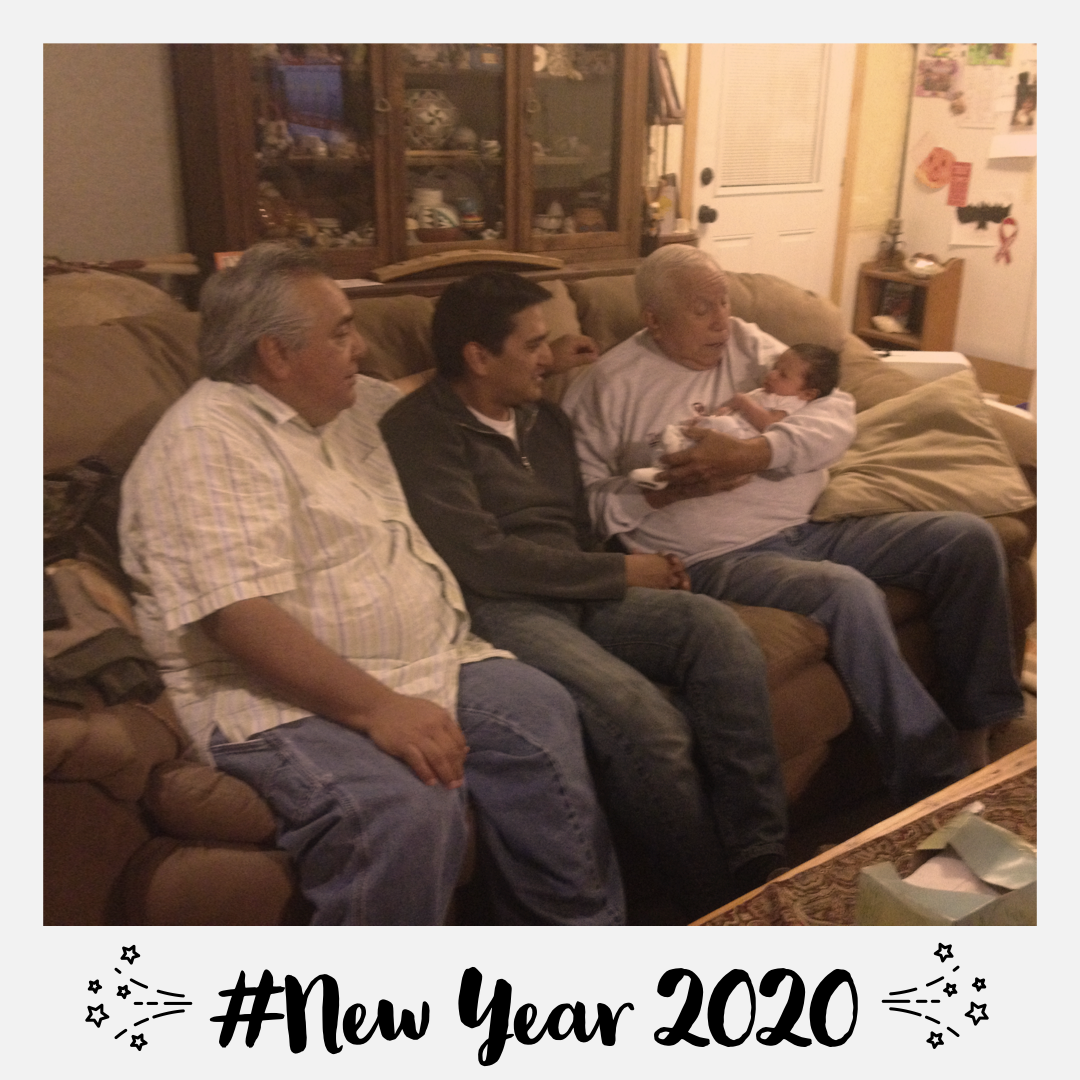
    In no particular order, here’s a short summary of the past ten years: I’ve welcomed my son into the world and two nephews to boot, completed law school, earned an advanced doctorate in law, moved to and lived in a foreign country, traveled the world multiple times, adopted a dog, moved home, moved to Wyoming, moved to Arizona, got married (8/15/09 but close enough), got divorced, saw my career develop, stopped attending church, saw my physical and mental health decline, gained weight, lost sleep, and saw the decade cap off with my Grandpa’s passing on August 2, 2019.

    Along the way, I’ve also met scores of people from all over the world. Some are like family. All of them are good people. Folks that are passionate about their work. Some passionate about their faith. Others passionate about their families. To a person, these people have affected my life in positive ways and have inspired me to try and be a better person even when that didn’t seem possible.

    While I cannot say that the decade has been a total bust, I think it’s objectively fair to say that it was a difficult one. Highs and lows. Not just little dips: soaring highs and shattering lows. It’s a small miracle that I’ve made it through. In retrospect, it’s easiest for me to think of the 2010s as a hurricane battering the little ship that I call life. Now, as I come into port for 2020, I’m a threadbare schooner, wood split in places with a broken mast. A new year, a new decade are most welcome for my money.

    Still, a friend made me think about today and about the importance that I’m placing on a year that reads 2020 rather than 2019. According to her, “it’s just another night and a new year.” No big deal.

    So why is a new year so important? To me? To us? To the majority of the world that’s celebrating as I type? My friend is right on some level. Just another day/night. There’s nothing magical about the date January 1. Nothing substantively will change in my situation from Dec. 31, 2019 to Jan 1, 2020. But I think the importance of a new year is less about the date on the calendar and more about the chance to hit reset.

    A new year brings an opportunity to set in motion all of the goals a person can set for the year. It allows us to assess where we are as people over the next 365 days. It’s not the date that matters. What matters is the mindset we carry forward into a new year, and by extension the fact that it matters how we approach life as a new year kicks off. As a bit of caution, it seems pretty obvious to me from the past ten years that negative thoughts begat negative outcomes. Pessimism becomes the enemy of progress because it is self-sabotage from the outset. Nothing guarantees a bad year quite like making up the mind that it’s going to be a bad year.

    It’s also unnecessary.

    If I’ve learned anything from my tumultuous 2019, it’s that hope is the critical element of being happy in life (aside from God himself). When we lack hope, we lack that piece of us that makes us look forward to tomorrow. Hope is our internal motivation. It’s the reason we endure the troubles of a decade, fall asleep, and awake with the expectation that a new year will be better than the year and decade that has passed. (And while we are on the topic – how in the world did ten years fly by so quickly?)

    So, in response to my friend, I think a new year is important because it reminds us to hope. Hope is important because it’s the means by which we wake up and do it all again no matter what life deals our way. And the motivation we have through hope is what keeps us living life rather than merely waiting around to die.

    With that, here’s to 2020, friends. May the best of your 2019 be the worst of your 2020.

    Auld Lang Syne

    Should auld acquaintance be forgot,
    And never brought to mind?
    Should auld acquaintance be forgot, And auld lang syne.
     
    CHORUS
    For auld lang syne, my dear,
    For auld lang syne.
    We’ll take a cup o’ kindness yet,

    For auld lang syne.

    Courtesy of CNN.com

  • A Dispatch from New Zealand


    The Tukorehe Marae is an unprepossessing structure. Nestled behind a grove of lush palm trees, its paint is gradually fading, unveiling layer upon layer of cosmetic efforts past. The predominance of white paint is strong in the front. But in the back, it yields to flecks of salmon, and some of the wood has worn itself bare.

    Our host at the marae is a man named Shawn, or “Papa Shawn,” as the kids call him. And while he’s hardly the garrulous sort, he clearly loves this place – a place that he simply calls home. 
    Māori in New Zealand often call a particular “mare,” such as this, home. For the descendants of Tukorehe, a Māori ancestor from the distant past, this marae is theirs, carrying with it all the trappings of ownership as if they had helped Tukorehe himself hew the logs that support its roof. 
    By way of explanation, the focal point of the marae grounds is the meeting house, or wharenui, which resembles a small wooden chapel that congregations in the Southern United States might have used over a century ago. However, far from practicing Christianity, Māori consider their meeting houses to be the living iteration of their ancestors. Photos of deceased relatives line the wooden walls of the wharenui, each ancestor looking after the occupants in a very literal and symbolic way. The walls themselves are ornately decorated with wood carvings and flax tapestries that tell both the exploits of the ancestor, as well as the philosophy/theology that undergirds the Māori worldview. 

    The marae, then, is not so much a chapel as it is a cenotaph dedicated to the presence of the absence of ancestors who never truly left to begin with. 
    If there’s a nugget of wisdom I’ve gleaned from the complexities of the Māori cosmology (one I will, admittedly, never fully understand), it’s that they do community rather differently than we do in mainstream America. 
    I won’t say it’s better, because I’m not sure it is. But it is different, and special. 

    The first difference is the Māori emphasis on all things communal. Sleeping in the marae, for example, is a wholly collective affair. The end result is that our group of ten from the University of Wyoming have spent the past three days sleeping in the wharenui, sharing snores, showers, and sleeping patterns alike. This is, of course, a stark contrast to America where privacy is the order of the day, no matter how much the NSA might say otherwise. 
    The second difference is in the Māori emphasis on social extroversion. Back home, my normal routine involves quiet, reflection, dedicated time for writing, and the occasional game of Call of Duty
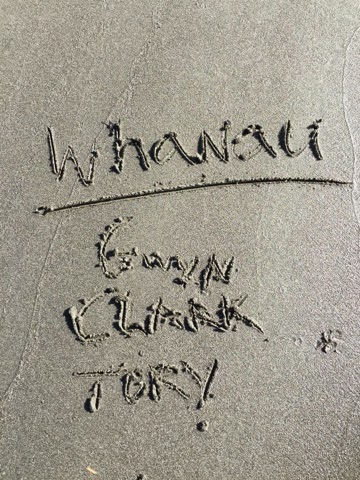
    For Māori, nearly every interaction is focused on the shared, lived experience of family or whanauFamilies and extended families all come in equal turn on the marae, sharing meals, entertainment, and social activities in common. Needless to say, this American’s time for reflection has been almost non-existent, and in all honesty this has taken its toll on my frazzled nerves. It seems I crave quiet in the same way Māori crave togetherness. I suppose both the individual and the collective have their place and needs. 
    Of course, I knew all of this coming in. The marae was never a mystery to me given the year/plus that Gwyn, Clark and I lived in New Zealand. But perhaps the difference on this trip is the presence of the absence of my own whanau. While the Māori ancestors look after us from behind their frames in the wharenui, my own family is ensconced miles across the mighty Pacific, visiting family back in Indiana. 
    It seems this is the real lesson from Māoridom. There’s precious little that’s more important than family.  Of course, we all take this to different extremes. 
  • On Leaving

    The hardest part of the holidays is always the ride back to OKC Airport. I’ve made the trip a fair few times now, and while it becomes more familiar, I can’t say that it’s ever any easier.

    In my discipline, we often talk about the unique connection that American Indians have to their lands. And I think that’s right.

    But on days like today, as we prepare to depart and return to the regular business of busy and hectic lives, I wonder if we’re only discussing half of the issue in the relationship between native peoples and their lands.

    For my view, any attachment to place has to be coupled with the family/friends/loved ones who are there. Without relationship, a place is just a place. Land is just land.

    But when one adds in family, and friends, and loved ones, and multiplies this across the generations, an attachment to lands makes a lot more sense.

    In a way, we call this attachment, “home.” And leaving home is always a hard thing to do.