Tag: Book Reviews

  • Book Review: Malarky

    Book Review  Malarky

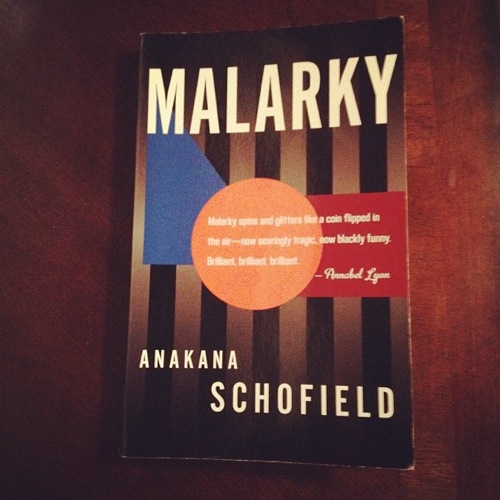
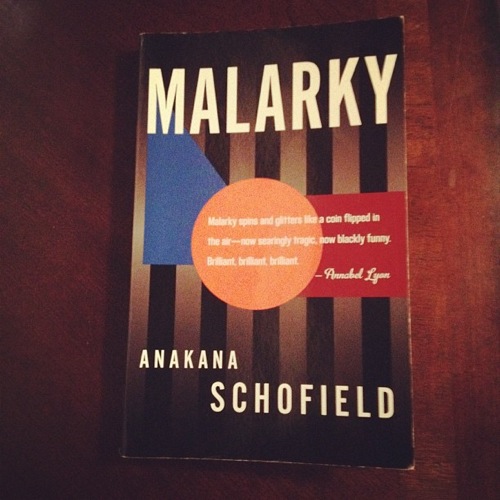
    The subject matter of Anakana Schofield’s Malarky is one that appeals to a very specific subset of readers. The novel presents an Irish farmwife’s perspective of marital infidelity and her struggle to accept her son’s homosexuality. Being neither an Irish farmwife, nor (thankfully) having ever been in a situation to deal with marital infidelity, suffice it to say, empathy was not something that abounded within me as I read the work. 

    But what I can appreciate about Schofield’s novel is how her writing style adds structure and definition to the lead character’s stream of consciousness. The book itself is written non-linearly, in a series of twenty episodes. That is to say, each episode (or chapter) reads like an individual short story, as opposed to each chapter advancing a greater narrative. The disjointed nature of the book places even greater emphasis on Ms. Schofield’s writing abilities. A lesser writer would not hold a reader’s attention for long, but Schofield’s running narration of “Our Woman’s” thoughts makes for an entertaining, thought-provoking read that surpasses the novel’s lack of constancy. 

    Regarding her peculiar format, Ms. Schofield explains away the method as an attempt at being truer to life: 

    This structure serves to reflect the nature of a whole life and the act of remembering and to record the fact that we do not remember chronologically. We do not recall necessarily “in sequence,” so I find the chronological unrolling narrative to be a falsehood.

    Anakana Schofield, Press Release: Malarky – A Novel in Episodes

    Given the author’s caveat, it strikes me as misguided to attempt to analyze the work chronologically, as a book review typically would. To summarize the book would to be to write twenty, separate summaries of each episode – a particularly harrowing prospect for my own readers, I’m sure. I suspect it is a better use of time to provide some thoughts about the work thematically. As I read the novel, three important themes emerged from the twenty episodes, all related to the modern notion of relationship. Specifically, Ms. Schofield seems to communicate that friendships are transient, romantic relationships are often rooted in the transactional, and familial relationships are never very far removed from the lurking specter of grief.

    The Transience of Friendships

    Regarding the first point, Our Woman lives a relatively atomized existence. Her social circle consists of four or five friends, her husband, and her son. From this network of relationships, the novel traces the breakdown of Our Woman’s friendships following rumors of her husband’s affair, through the actual details of how her marriage became so stagnate as to render the affair unsurprising, and ultimately through Our Woman’s graphic discovery of her son’s sexual orientation. 

    The result is that her friends make only fleeting, shallow appearances in the novel’s the episodes, rendering the characters less flesh and blood and more like the outlines and caricatures of people. It’s probably giving Schofield too much credit, but the sketch characters remind me of the Bible’s Book of Job where superficial friends berate Job only to lead him askance of God’s purposes in suffering. Similarly, in Malarky, the friends serve as distractions that prevent Our Woman from actually dealing with the various griefs that beset her. Because the friendships aren’t well-developed in the novel, Our Woman exists in a sort of void, forced to deal with her husband’s infidelity and the shock of her son’s sexual orientation without a support network. To wit, when she needs them most, her friends never appear.  

    Romance as Transaction

    The notion of relationship is further muddied in Malarky through Schofield’s treatment of marriage and romantic attachments. Malarky approaches romantic attachment from a transactional perspective, not unlike many other contemporary works of literature and cinema. For example, E.L. James’s Fifty Shades of Grey approaches the relationship between lead characters Christian and Anastasia as a literal contract of consent before the novel delves into the erotic content for which it has become so well-known (not that I would admit to reading it). Similarly, the PBS series Downton Abbey revolves entirely around the transactional nature of marriage and the question of arcane British inheritance rights. In the show, lovers and would-be lovers are constantly haunted by the question of whether they are genuinely interested in on another or simply ‘in it’ for the money.

    Given the tired motif of romance as transaction, it was difficult to see what Schofield would add to our collective understanding of the concept in general. Rather than taking readers back into the actual process of relationship as transaction (à la Downton Abbey), Schofield’s work offers a surprising glimpse into the analysis – viz., Schofield offers us a look inside the mind of a woman that is morally torn by the reality and prospect of marital infidelity.

    At risk of giving too much away, readers learn early on that Our Woman’s husband has had an affair. What boggles Our Woman’s mind is less the affair itself, than what the proverbial other woman would possibly see in her husband. Schofield writes:

    There’s so little to recommend him. And yet a woman has taken him and he has taken this woman and there’s nothing for it, she must investigate the very bones of this transaction. p.45

    Our Woman’s revelation is that her marriage had become so routine and lifeless that her husband’s affair is more intriguing than disturbing. The conclusion is a sad one in many respects, but the lack of moral outrage presents an interesting dilemma as Our Woman weighs the actual costs and benefits of whether to have her own affair in return.  

    Family and Grief

    Finally, Ms. Schofield’s work explores the concept of family through her relationships with her husband, and son. It is, of course, telling that both men die early on in the novel. In fact, page one communicates the fact that Our Woman is a widow. But the bigger point Schofield makes through the disclosure of infidelity and the details of Our Woman’s marriage is that the familial bond between husband and wife and already expired for quite some time, long before infidelity was even entered into the equation. Schofield makes the point particularly well as she recounts a conversation between Our Woman and her husband before the two fall asleep: 

    There was a brief lapse in time between them when she settled into bed that night beside Himself. He stared at the ceiling as thought his eyes are searching for a new planet to rest on, betraying an allergy to the current one. p.57.

    The excerpt communicates the husband’s (aka, Himself) obvious desire to be ‘anywhere but here’, as the saying goes. But Schofield’s writing treats the moment as an instance of lament rather than anger. In this subtle way, she transforms one of the book’s major ideas, viz., infidelity, into a synonym for grief. As readers continue in the story, the transition of infidelity into grief becomes even more stark. Schofield’s bold point is that few things in life are more tragic than a couple sharing a bed, while being veritable light years apart. 

    Schofield’s exploration of Our Woman’s son’s death makes a similar point about grief but in a much more conventional manner. Toward the end of the work, Schofield describes conversations that Our Woman has with “Grief” regarding the death of her son Jimmy – from the inside of a mental ward, no less. Jimmy has long since passed away when Our Woman reveals to Grief that she has conversations with him on a regular basis: 

    – Jimmy and I had an understanding. And in that understanding he wanted me to tell people only when I was ready. 

    – And how did you know about this? 

    – We’ve talked about it, I said. Defeated. 

    – Do you talk to him regularly?

    – As a Matter of fact I do…that was how my husband put me inside the hospital. p.151.

    Schofield’s wit makes it difficult not to laugh at Our Woman’s conclusion, despite the gallows humor of the situation. But the not-so-subtle point Schofield makes about Jimmy’s death is that Grief has become too difficult for Our Woman to bear. The remainder of the novel chronicles Our Woman’s downward spiral, and the interesting gaggle of friends she seems to make during her stay in the mental hospital. This aspect of the novel isn’t particularly original in form. Yet, Schofield’s writing as excerpted above does an admirable job of rescuing it from the realm of cliché. To put matters differently, Schofield’s writing is so entertaining as to beg one’s pardon for the overdone theme. 

    In all, I was pleasantly surprised by Ms. Schofield’s work. The novel used fairly conventional topics to make relatively unique and modern points about our understanding of relationship. Though the structure was a bit difficult to follow, the format was effective in redirecting my attention to Schofield’s writing. For those seeking a simple summer read, the work is certainly no beach read. But given the current state of trade fiction, that’s definitely a good thing.
  • Coming Soon…

    Book Review  Malarky

    Apologies for a long delayed post. When my friends at Biblioasis first approached me about doing a review of Anakana Shofield’s latest work Malarky, I had no idea that a busy travel schedule would suddenly bloom in the midst of my formerly uneventful summer. 

    Not to worry though.

    I am happy to say that the book review of Malarky is in the works, on pace for release over the weekend. If you are so inclined, please stay tuned for my thoughts on this unique bit of Canadian/Irish fiction.

  • Book Review: The Cottage at Glass Beach


    IMG 0065

    Heather Barbieri’s The Cottage at Glass Beach is admittedly not the typical book that makes it way on to my desk. Committing the unpardonable sin of judging a book by its cover, the dust jacket clearly shows a young woman traipsing along the beach, starfish well in hand. Given the title, it’s easy to dismiss the work as a cliché and move on to other reads.

    The book’s description also doesn’t help to pique the reader’s interest. The opening lines read as follows:

    Married to the youngest attorney general in Massachusetts State history, Nora Cunningham is a picture-perfect political wife and a doting mother. But her carefully constructed life falls to pieces when she, along with the rest of the world, learns of the infidelity of her husband, Malcom.

    I’m sure that writing cover descriptions is a challenging gig, but the summary reads like the re-run of a Lifetime, made-for-TV movie. This does a serious disservice to the novel and what actually makes it special.

    The real contribution makes Barbieri makes in her new book is the way she captures the relationship between mothers and daughters in clear, unvarnished prose. This honesty allows her to provide a modern insight into a particular dynamic of literature that has more or less lain dormant since the era of Victorian literature.

    One example comes early in the novel, as main character Nora Cunningham evacuates her family to Glass Beach. Eldest daughter Ella is clearly a Daddy’s girl who blames her mother for driving him away. Youngest daughter Annie is an open mind, as free of judgments as her sister is filled with them, and a bit too young to fully understand her parents’ separation. As the three set out to explore the island, Ella scorns the main village Portakinny as “Portapotty,” and repeatedly echoes her hopes to return to Boston. This makes Ella a constant source of negativity for Nora, yet it is easy to sympathize with the little girl’s frustration. The scandal besetting her parents has had incalculable effects on Ella, both personally and socially, leaving her confused, not knowing whom to trust.

    Ella’s reticence to embrace the island and her parents’ circumstance creates a palpable stress for her mother Nora who is genuinely torn about the future of her marriage. Whenever questions about the future arise, Nora’s reply is the universally recognized phrase of non-commitment, “we’ll see.” But Barbieri’s prose demonstrates that the answer is a pained utterance for Nora who acutely realizes how disingenuous the words are. The fact is, Nora is just as lost as Ella and the whole point of coming to Burke’s Island is to discover some insight that will shed light on what is to come.

    This notion of deliberate self discovery gives Nora a dimension of strength that makes her character extremely dynamic. The storyline is that Nora is lost, trying to make sense of her life, but the story itself is more about how Nora holds it together for her girls and learns about herself in the process.

    Nora’s love interest in the book makes this sense of strength even more pronounced. Even as she struggles to sort out her feelings toward her estranged husband, Nora is also left to grapple with how she feels toward a new man in her life. Again, this could easily become a cliché, but Barbieri’s writing frames the situation as the simple reality that relationships are messy – particularly when a partner’s infidelity is at issue. In Nora, readers see the concurrent facts that old habits of love die hard, while the human need for intimacy never completely vanishes.

    The mother/daughter theme is further reflected in Nora’s relationship with her Aunt Maire. Nora’s own mother has passed away at some point in her early childhood, a matter that also becomes an integral aspect of the plot. But her aunt acts a subtle mother figure for Nora over the course of the novel. Over blueberry pie, wine, and walks in the garden, Aunt Maire provides arms-length advice to Nora about her situation and the mysterious death of her mother – all while commending a keen sense of love toward Nora when she sorely needs it.

    I suppose the themes above may not resonate for all readers. This is true for any novel. But for those seeking to get lost this summer and reconsider life’s priorities, Barbieri’s voice is clear and inviting. Whatever the book lacks in plot, it makes up for in character development and introspection in spades.

    – Posted using BlogPress from my iPad

  • May Book Review: The Cottage at Glass Beach

    IMG 0065

    According to my friends at HarperCollins, Heather Barbieri’s latest novel, The Cottage at Glass Beach is poised to become one of the sleeper hits of the summer.

    The story chronicles the life of heroine Nora Cunningham, the spurned wife of a cheating Massachusetts Attorney General and the frazzled mother of two daughters. As Nora attempts to pick up the pieces of an otherwise broken existence, a mysterious, almost mythical being enters her life, providing both comfort and challenge as she confronts the demons of her past.

    According to the author:

    The overriding message is that it is possible to navigate life’s uncharted waters and find our own happiness.

    Barbieri’s novel will be available beginning May 15th, 2012. Preorders can be made here. I hope to have my review posted some time before then.

    As always, stay tuned…

  • Book Review: A Silence of Mockingbirds – The Memoir of a Murder

    2012

    For reasons having nothing to do with the author’s more than capable abilities, Karen Spears Zacharias’ new book A Silence of Mockingbirds ($16.50, MacAdam/Cage Publishing 2012) was an extremely difficult book to read and an even more difficult book to review. Zacharias’ work chronicles the true yet sordid tale of an innocent little girl named Karla “Karly” Sheehan.

    Sadly, Karly Sheehan’s tale would become the inspiration for Karly’s Law in the State of Oregon, which requires mandatory medical intervention in suspected child abuse cases where victims exhibit signs of suspicious physical injury. Ultimately, this is the end of Zacharias’ book. But this suggests that a tragedy had to occur before the powers that be reacted. And this reflection upon tragic events is what much of Zacharias’ book consists of.

    From the outset, the author is quick to note her own affiliation with the story. Ms. Zacharias’ family at one point had a familial relationship with Karly’s mother Sarah – a figure that comes across almost as much a villain in the tale as the actual villain who would abuse poor Karly to death. This relationship makes it quite impossible for Zacharias to be objective. But this misses the point of Zacharias’ work. Her point is not to be objective, but to use the story to raise awareness about “the epidemic of child abuse in our nation.” And on this score, the memoir could not have delivered better. I mention the point about objectivity, because it is important to remember that not all works of non-fiction need to be told through an objective lens. There is certainly a role for the objective eye, but when the point of a piece is to advocate, objectivity inevitably yields to the story being told.  

    The bulk of the work can be glibly typified as “somber” in tenor, but only insofar as readers know the outcome. Each detail of Karly’s life is lovingly presented. From Zacharias’ writing, it is clear that there were many moments in Karly’s life that were filled with love and with joy. Her account of Karly’s trip to Ireland to visit her father’s family comes readily to mind. But the final outcome of the account stalks even the happiest memories, ever lurking in the background of the book. Karly’s own presence in the memoir reminds me a bit of a delicate glass set precariously on the edge of a table. For but a moment all seems safe as Zacharias describes Karly’s sky blue eyes and whispy golden hair. Readers get every sense that she was a precious, perhaps precocious, little girl who was much beloved by the many people in her life. But knowing the outcome of the story, readers also understand that this cannot last. The glass on the edge of the table is doomed to shatter, and the result is that an innocent little girl must die. 

    My choice of the word “must” is intentionally provocative. In addition to presenting the tragedy of Karly’s death, Zacharias consistently explores the broader public policy implications, directly addressing the question of whether Karly’s death was preventable. The villain in the book and the man ultimately convicted of Karly’s murder was her mother’s boyfriend Shawn Wesley Field. But equally complicit in the sad outcome is a system that failed to protect Karly at manifold turns. As Zacharias writes:

    Karly’s death is not simply a tragedy – it’s an unforgivable shame.

    It takes the complicity of a community, and a nation, to stand by in silence as a child is tortured to death. That ought to give us all nightmares of children weeping.

    If there is a moral imperative to be gleaned from Zacharias’ work, this is it. And as the tale proceeds, the root of Zacharias’ anger becomes more clear. From a mother in denial, to the first child services inquiry filed by a worried daycare worker, to the shoddy follow-up investigation by Oregon’s Department of Human Services, to the failure of the Corvallis Police Department to have Karly’s physical symptoms examined by a doctor with expertise in child abuse cases, the list of should-haves in the book is depressingly long.

    The trial of Shawn Wesley Field is also an interesting aspect of the story. While readers at this point will long for justice, what actually struck me most was the lack of state’s evidence available to convict Field, despite the fact that Karly was abused for such an extended period of time. The trial turned on pictures that Field had taken of Karly that were timestamped only a few minutes before she died. The photographs showed Karly battered, yet clearly alive, leading prosecutors to conclude that the blow which ultimately took her life had to have happened while she was in the clutches of Shawn Wesley Field before the paramedics and officers arrived

    The lawyer in me recoils at hearing how such circumstantial evidence can connect a defendant to a crime. But this is true of a number of cases, and the inference made between the timestamped photo and the time at which paramedics and police arrived at Field’s house makes a lot of sense. What is most appalling is that in the two year span of abuse allegations, the best the State of Oregon had at trial were a few pictures. If there is a fortunate aspect of the tale, it may well be that so little evidence was sufficient to convince the jury of Shawn Wesley Field’s guilt. 

    Finally, it’s worth mentioning that the outcome of the trial really only hints at the title of Zacharias’ curiously titled book – although she addresses this directly toward the end. Mockingbirds are symbolic of people in society – we are a notoriously protective and obnoxious lot, always around, always causing some ruckus or another. Yet, in Karly’s case, when their alarm was needed most, the gaggle of people around her went silent and a little girl died. The natural question is “why.” Or whither the empty nest?

    While it’s true that we can address the public policy questions of Karly’s case through changes in law, and we can encourage individuals to be more vigilant, particularly when it comes to the vulnerability of children, there are never answers to questions like these. We can no more “know” what drives individuals toward evil anymore than we can know what drives saints and martyrs toward the light. But I like the approach Zacharias suggests. We can cry together. We can learn together. And we can take every precaution to ensure that our children are protected.

    I never knew Karly, but I have a hunch that protecting other kids would make her smile.