Tag: Book Reviews

  • Updates & Book Reviews for April & May

    Update

    I realize it has been a few weeks since I provided any updates on blogging or any new book reviews here at Pax Plena. Regular visitors may have noticed that lately I’ve put more effort into tweaking the design of the site than actually uploading new content.

    As any mildly narcissistic blogger will admit, this lack of focus isn’t good for a number of reasons.

    First, I suspect deep down, most people don’t really care how the site looks so long as the content is interesting. And yet, my own neuroses have left me obsessed with pushing the boundaries of a minimalist site while wanting all of the bells and whistles of a site made for web 2.0. This creates an unfortunate dilemma: I can sit and adjust html and css codes for hours, but what I really need to do is write and create content for the blog. Of course, if you have any thoughts on how to improve Pax Plena, or some cautions about the aesthetic direction I’ve taken with the layout – I would really like to hear your ideas. My personal tastes lean toward a minimalist design and layout, but I welcome any challenges to my preference.

    Second, my foray into web design and my lack of new content is not without reason. My dissertation is blessedly nearing it’s end, like a sheep being led to the slaughter – to keep the Easter imagery alive. Minor heresies aside, I’ve spent the better part of three weeks doing dissertation stuff – handing in final chapters, doing final edits, checking footnotes, getting feedback from professors, etc. – all in hopes of nailing my defense next Tuesday. My work continues apace, though I expect that the defense will be a curiosity for many in the Indian law community. Most folks studying Indian law do not apply libertarian critiques to the Federal Indian law system. My work tries to accomplish this while building a philosophical framework for advancing Indian rights under libertarian principles.

    For those interested, my defense is next Tuesday, April 10th in the Law School’s Rountree Hall, Room 215 from 10AM – 12PM. During the first hour, I will hold a public lecture about my work followed by a question/answer session. If the topic at all interests you, feel free to attend the lecture, meet me, and ask a question or ten. The last hour of the event, however, is closed to the public. There, I meet in camera with my dissertation committee to field questions, and talk more in depth about my work. Assuming all goes well, after that meeting, I should become the 12th person in the world to hold a Doctorate of Juridical Science in Indigenous Peoples Law and Policy.

    For those interested in my academic work generally, I’m planning to release a series of posts detailing my research over the past year. I hope to get these pieces published as a book at some point, but for now, I plan to share some of the ideas once a week or so via blog post when my dissertation is finished. My hope is to make the posts fairly easy to read so that even those without an Indian law background can understand the issues and begin to construct an informed opinion. Topics will include many of the major problems of Indian rights in the U.S. including – reservation poverty, ambiguous property rights, economic underdevelopment, lack of law and order on reservations, gender roles within cultures, and the role of technology in traditional societies.

    Book Reviews

    Because of my web-design misadventures, and the time consuming nature of my dissertation of late, I realize that book reviews have taken a backseat to mi vida loco. To rectify the imbalance, I wanted to give a quick preview of coming attractions.

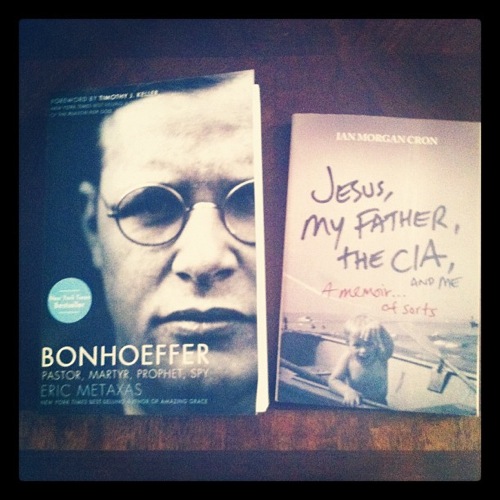
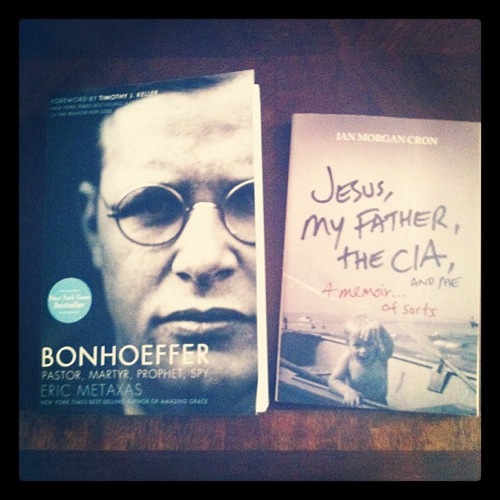
    First off, special thanks to Meryl Zegarek Public Relations, Inc. for keeping me in the loop on new and newly released books. Meryl is a top-notch publicist that has the patience to get even miscreants like yours truly up to speed on good books that deserve a second look. Some readers may recall that Ms. Zegarek was my contact to review Ian Morgan Cron’s Jesus, My Father, the CIA and Me. She also very graciously offered me the chance to review Eric Metaxas’ Bonhoeffer. While I am more than half-way through, this remains a project that is still very much in the works.

    So here’s a few book reviews you can expect to read – ideally by the end of April.
    Book Review 04/2012

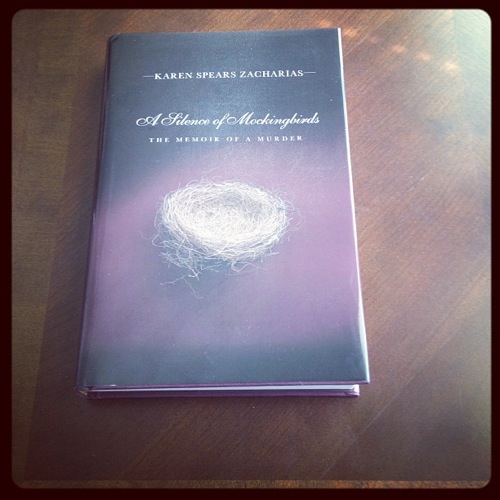
    Karen Spears Zacharias, A Silence of Mockingbirds: the Memoir of a Murder. Release: April 1, 2012.

    Ms. Karen Spears Zacharias is a former investigative journalist chronicling the heartbreaking murder of a young girl. The story is especially meaningful and touching given the author’s close relationship with the mother of the deceased child, and even the accused murderer himself. Look for a review in early April.
    Book Reviews Nov and Dec

    Eric Metaxas, Bonhoeffer: Pastor, Martyr, Prophet, Spy. Release: August 30, 2011.

    As the title suggests, this book is a biography of famed WWII era pastor/theologian Dietrich Bonhoeffer. The author tells a compelling narrative about Bonhoeffer’s life, beginning in the early years of his childhood through his death at the hand of the Nazi regime. It really is a fascinating read. I had hope to have the review done late last year, but life and work managed to get in the way. Look for a review sometime during the middle of April. I owe this one to Meryl.
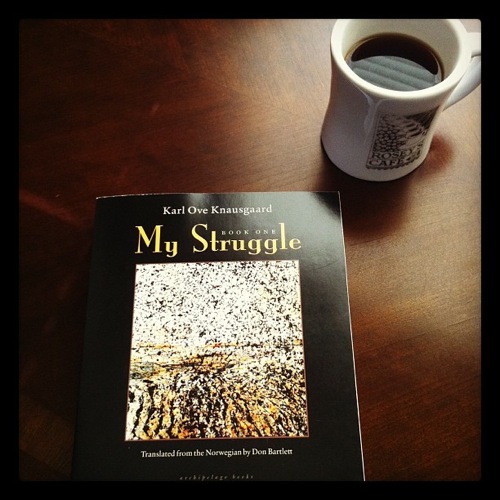
    My Struggle  Karl Ove Knausgaard

    Karl Knausgaard, My Struggle: Book One. Release: May 1, 2012.

    Knausgaard has been fancifully called the Norwegian Marcel Proust. Having spent some time leafing through In Search of Lost Time, I’m not sure I agree at this point. But the largely autobiographical work is nonetheless compelling, if a bit laborious in places. While I’m not very far into the work, I suspect that each page will be a mini, literary cosmos all its own. And that’s the benefit of such a book really. Sometimes it’s just nice to simply enjoy the language of a work for the sheer joy of language itself. Look for a review by the end of the month.

    As always, thanks for your patience. And stay tuned for more…
  • Book Review: Jesus, My Father, The CIA, and Me

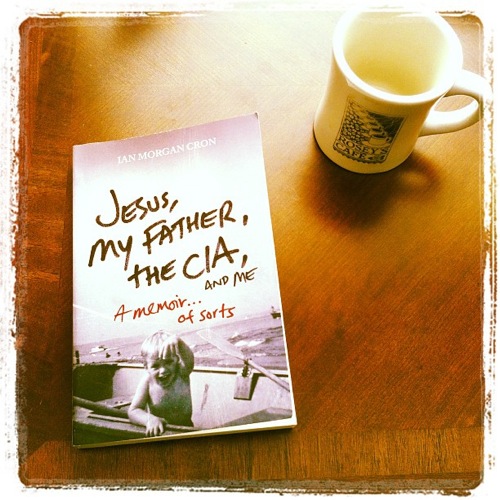
    Jesus My Father The CIA and ME

    On the shelves of our office library are a number of biographies. From Winston Churchill to Johnny Cash, we have no shortage of books about the lives of other, much more interesting, people. The number of memoirs, or autobiographies on our shelves is relatively paltry by comparison. This is not an accident. I tend not to buy memoirs because they are uniformly terrible. Given my reluctance to even read such a dust jacket, I was pleasantly surprised when I read Ian Morgan Cron‘s Jesus, My Father, The CIA And Me: A Memoir…of Sorts (Thomas Nelson, 978-0-8499-4610-3, $15.99, June 2011).

    From the outset, it’s important to recognize that writing an engaging memoir is difficult. Most attempts at autobiography try to paint life in its best light (think Sarah Palin’s Going Rogue). But it’s the rare, brave author who communicates the essence of a life as it was actually lived, as opposed to producing a censored version of how one would like life to have been. This sense of honesty is what really sets apart Cron’s book. Taking the back drop of an interesting, and complex childhood, Cron communicates in 252 pages the simple idea that life is messy.

    As I noted, giving life a sincere rifling isn’t an easy undertaking. Ours is a veritable age of depression. Whether it’s feeling inadequate for being stuck in the 99%, or latent concerns about the future of humanity, we homo sapiens tend to have more skeletons in our closet than Conrad Murray after a fresh supply of Propofol.

    But somehow, Cron’s memoir reassures readers that this is ok – that wading through the bullshit of life isn’t a journey taken alone, but something we all do to cope with the complexity or our own existence. Somewhere between page one and the end, readers come to understand that they are reading Cron’s piece, but the themes explored could well be their own.

    The most important theme of Cron’s memoir is how he copes with the chronic feeling of being unloved. I realize that at first this theme can sound a bit like a cliché. It’s fair to say that no one gets through life without developing some sort of “daddy” issue. But in Cron’s case, the daddy issue wasn’t a simple matter of Father threatening to pull the car over after roughhousing in the backseat finally got unbearable – say, hypothetically, on a trip to Taos, NM, circa 1989. Cron’s issues with his father involved the profoundly more complicated reality of having an abusive father who was not only an alcoholic, but also an agent for the CIA. As one would expect of a good Company Man, Cron describes his Father as being a bit “like Darth Vader, only less empathetic.”

    Detailing the life of a true Darksider, Cron painfully recounts numerous instances of abuse meted out by his father over drunken nights of scotch. While this is tragic in itself, the author suggests that the greater tribulation of his relationship with the elder Cron was the complete lack of interest he took in his son. The result is that the author was left to “begin life without a center of gravity,” foreshadowing the many ways in which the author would mirror the actions of his father.

    The second major theme of the memoir is something I’ve already alluded to. As a recovering law student, I’ve long taken it for granted that the majority of law students and attorneys are functioning alcoholics. And perhaps in Arizona more than most, we tend to revel in our reputation for debauchery. In fact, my alma mater the University of Arizona, James E. Rogers College of Law was recently dubbed “the top party law school” in the Nation. Work hard, play hard as the adage goes.

    While alcohol may be all fun and games here in Tucson, the hooch played a far more harrowing role in Cron’s memoir. In fact, some of the book’s most disturbing, and heartrending scenes come when the author describes the drunken physical abuse he endured at the hand of his Scotch-swigging father. What makes these moments even more poignant is that they serve as a dark segue into Cron’s descriptions of his own drunken nights and his painful mornings after. Even Darth Vader himself would mourn for the son who is controlled by the same ghosts that haunted his father.

    Finally, all of these stories, in some way reflect the final major theme of the book, the author’s journey as a person of faith. This shouldn’t be confused with dogmatic moralizing. The book is far from an exercise in Christian apologetics. Instead, Cron uses his life to illustrate how complicated it is to maintain faith in the Divine when so many aspects of life are unknown, unknowable, and often contrary, to the teachings of theologians and the various sects of Christendom. Rather than avoid doctrinal crises and moments of doubt, Cron honestly, and openly questions where exactly God was during his childhood, while admitting that he still “sees through a glass darkly,” lo these many years later. (1 Cor. 13.12).

    This is what makes the book so easy to appreciate. Unlike many Christian authors, Cron recognizes that grace isn’t cheap. Accordingly, he does not attempt to cheapen grace with empty platitudes of a “loving God,” or with talk of “damnation” for the sinner. Rather, Cron seems to recognize that in our own way we’re all damned — if not spiritually, then perhaps emotionally, as we struggle to confront the demons of our own past; or perhaps physically, as we yearn to strike a balance between work and life; or maybe even intellectually, as we attempt to maintain a sense of what is right, while also keeping our minds open to new ideas and change.

    Whatever the challenge, Cron never shies away from the truth. The events are never understated. The stories are simply told. This makes the entire account read less like an exposition of morality, and much more like a beautiful meditation on life. Cron reminds readers that life cannot honestly be separated into good and bad because both coexist on a continuum. There is good. There is evil. In the book, a father drunkenly beats his son. And later, a father overcomes his alcoholism, as he lovingly tries to shield his children from harm. And so the light rises from darkness.

    In the end, Ian Morgan Cron uses his life to demonstrate that mere existence can be tough. But it is only through this dose of realism that Cron can use his own life to demonstrate how one can also endure, and thrive.

  • Book Reviews for November and December

    Book Reviews Nov and Dec

    Late last week, I was pleased to receive the opportunity to review two more books in the near future. The titles released earlier this year, but newly minted paperbacks are just hitting the shelves.

    The first review will be of author Ian Morgan Cron’s newly released memoir titled Jesus, My Father, The CIA and Me: A Memoir…of Sorts. Cron’s book chronicles the early years of his life, and explores the complexity of growing up with an alcoholic father who was also a spook for the CIA.

    N.B. Cron is also an Episcopal priest, so the memoir traffics into some weighty topics including depression, alcoholism, and the concept of grace. For those who avoid such books, consider yourself warned. And for those curious, Cron’s memoir has received excellent reviews from Publishers Weekly, and perhaps unsurprisingly, the Archbishop of Canterbury, Dr. Rowan Williams.

    The second review comes from a similar genre, although it’s more historical in tenor than spiritual. Author Eric Metaxas is most widely known for having written the biography of William Wilberforce that inspired the hit movie Amazing Grace. (A personal favorite of yours truly). His latest biography titled Bonhoeffer: Pastor, Martyr, Prophet, Spy is poised to become a similarly big hit. Released in April 2010, the book cracked number four on the New York Times Bestseller List only this September, and received glowing endorsements from such sundry quarters as the Wall Street Journal, The New Republic, Christianity Today, and even former President George W. Bush.

    The lengthy biography, of course, details the paradoxical life of pastor Dietrich Bonhoeffer, a theologian cum spy who was intimately involved in a plot to assassinate Adolf Hitler during World War II. Bonhoeffer was summarily executed for his heroics by the Third Reich, leaving the pastor/spy’s legacy shrouded in myth, and reverence among modern Christians.

    Check out the Thomas Nelson Trailer here:

    As always I would be remiss if I did not thank the appropriate parties for providing me the opportunity to review their works. Special thanks to Ms. Meryl Zegarek and her team at Meryl Zegarek Public Relations, Inc.

    More to come…

  • Book Review: The Scrapbook of Frankie Pratt – a novel in pictures

    Book Review  Scrapbook of Frankie Pratt

    I think each of us has an inner packrat. Whatever the object – say, hypothetically, it’s an empty lighter from a Vegas casino where you celebrated your first wedding anniversary (I digress) – whatever the object, we tend to invest items with emotional significance because of the memories associated with the object. Just by looking at the item, we can go back in time. And we remember.

    It’s this feeling of reminiscence that Caroline Preston captures superbly in her latest novel, The Scrapbook of Frankie Pratt: a Novel in Pictures (ECCO/HarperCollins Publishers; ISBN 13: 9780061966903; $25.99; Hardcover; 240 pages; Release: October 25, 2011). The novel tells the story of its eponymous heroine Frankie Pratt, tracking her life from a modest, New Hampshire farmhouse to the City of Light and the Left Bank. Along the way, readers encounter Frankie’s various romantic interests, a host of literary luminaries, and Frankie’s witty impressions of the “whiz-bang” years of the 1920s.

    The story is interesting in its own right with plenty of twists. But what makes Ms. Preston’s novel really standout is the telling. Rather than following a conventional novel form, one void of pictures and so often void of talent, The Scrapbook of Frankie Pratt is an actual scrapbook built “item by item” from vintage 1920s memorabilia.

    The effort was obviously painstaking. Preston notes spending “countless hours” to amass the 600-item collection of 1920s ephemera required to tell Frankie’s story. This lends the tale an appreciable degree of authenticity, with every detail of Frankie’s life requiring a genuine period piece. The range of items is impressive, from a first-edition dust jacket of The Sun Also Rises, to the 1915 Corona typewriter used for the captions of the book. The end result is a 240-page novel comprised of full-color photographs of the scrapbook built by Caroline Preston. For bibliophiles, this means a new type of novel that readers can not only read, but experience in a concrete, visceral way.

    One criticism I expect the book will receive is that scrapbooking itself is an anachronism, a hobby lost in the digital age not unlike stamp collecting and the U.S. Postal Service itself. But even while the story is told in a very specific way, and set in a very famous moment in time, the larger theme driving Preston’s novel is one that every sentient person can relate to: memories.

    At its core, scrapbooking is about preserving memories by compiling a personal history derived from objects that people ascribe significance to. While Preston communicates this preservation in the form of a novel, the concept of memory has a lengthy scholarly history. One quick example can be found in the unlikely source of German philosopher Friedrich Nietzsche. In his 1874 essay, On the Uses and Disadvantages of History for Life, Nietzsche muses about the the role of history, and its implications for those sad souls doomed to live in the present. His conclusion of the matter is that “the unhistorical and the historical are necessary in equal measure for the health of an individual, of a people and of a culture.” The implication is that dwelling too much in the past, can inhibit human proclivities for progress, while living hedonistically in the present without regard to the lessons of history can lead to a vacuous existence full of narrow-mindedness and selfishness.

    Nietzsche’s observation is something we tend to internalize intuitively as a species. We give objects significance because they remind us of a special moment, or because they mark an important occasion. In this way, we tend to balance our ‘living in the now’ with memories and lessons from the past. What Caroline Preston does in The Scrapbook of Frankie Pratt is explore this tendency to preserve memories on a personal level through the lost art of scrapbooking.

    In truth, scrapbooking itself isn’t all the foreign a concept either. When I was a young child, my sister and I took a trip across the American west with our grandparents. From the backseat of a late-80s, Ford Crown Victoria, the four of us visited nearly every American landmark that mattered. We made stops at Petrified Forrest National Park, an honest-to-God forrest of petrified wood; a massive meteor crater that would easily swallow our hometown; the Mesa Verde cliff dwellings; and Grand Canyon National Park. On the way home, we stopped at Toys ‘R Us in Amarillo, TX, before hopping the highway for a stake at the Big Texan Steakhouse.

    From each stop, we gathered a small library of brochures, park guides, ticket stubs, and receipts.  And when we weren’t pestering our grandparents with questions, my sister and I managed to take enough cheesy photographs to make the other tourists blush. Tucked away in the Fodder family annals is a photo of my sister getting in trouble for trying to swipe a large stump of petrified wood, and a snapshot of me awkwardly lying down in four states at once.

    Five years later, Grandma would pass away. Though we had resolved to take another trip west, the stars didn’t align for us to make the trek again. But even after all of these years, that three-week trip was one of my best memories of growing up. Whenever I look at the old shoe box of memorabilia from the trip, I’m instantly taken back to the long hours spent in the backseat of my grandparents Crown Vic, staring at the rolling desert as we made our way west.

    My items rest in a dusty shoe box, but the transition from storage to scrapbook is fairly easy to envision after having read The Scrapbook of Frankie Pratt. And quite literally every person could do something similar.

    In this way, far from being an anachronism, The Scrapbook of Frankie Pratt captures something we can all relate to. We all have our own coming of age memories. We can all recall having taken a trip to some place special. And we can all think of objects that we have imbued with significance, either because they remind us of our youth, or because they remind us of a unique event.

    Memory is simply the collective human experience. Caroline Preston understands this, and manages to bring memory to life in The Scrapbook of Frankie Pratt.

  • Book Review: Irma Voth

    Irma Voth

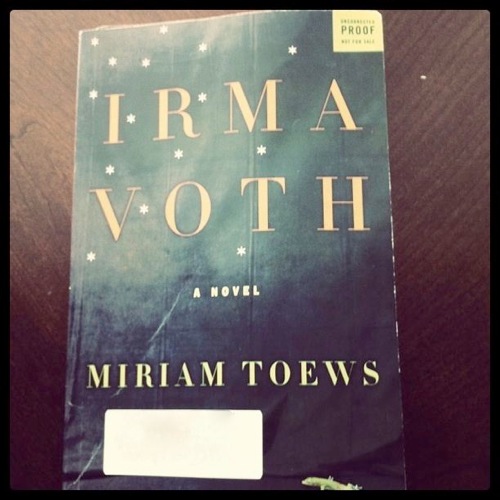
    The desert of Northern Mexico seems an unlikely place for religious dissidents to settle. Yet, in the late 19th and early 20th centuries, Mennonite families exited Canada in droves, en route to Chihuahua, Mexico in hopes of finding freedom, cheap land, and the opportunity to maintain their religious and cultural practices – the most important of which included the right to speak the Low German language. Miriam Toews’ latest novel, IRMA VOTH, (Harper; Sept. 6, 2011; $23.99), draws on the Mennonites’ history to present a concept of language that is at times both humorous and haunting.

    First, Toews uses language to fundamentally distinguish the Mennonite wayfarers of Chihuahua from the broader Mexican population. Early on, readers learn that the novel’s eponymous, main character, Irma Voth has married a Mexican man named Jorge. The union creates a host of problems for Irma, not the least of which includes a strained relationship with her mercurial father – who would very much prefer that the Voths live “in” the world while doing all they can to avoid becoming “of” the world.

    The clash between father and daughter results in Irma’s painful exile from her immediate family to a second house on the Voth family property. It’s unclear whether Irma’s father reacts to her marriage angrily because of racial, cultural, or religious differences. All three justifications make an appearance, yet, all three are united by Toews’ use of language as a differentiator. Race and cultural differences between Mexicans and Mennonites are typified in the novel by each group’s embrace of its particular language – obviously, Spanish in the case of the former, and Low German for the latter. The same divisions are present when analyzed from the perspective of religion. Low German is venerated by Irma’s father as the principle method of maintaining religious purity and social homogeneity among the Mennonite campos.

    Second, shortly after Irma’s banishment, Toews uses language in a markedly different way. Rather than using language as a tool for division, Toews uses language as a source of unity to develop the relationship between Irma and her sister Aggie. The entire Voth family has been instructed to avoid Irma. But Aggie is a fiery pre-teen and has absolutely no intention of avoiding her older sister. She mischievously begins a routine of making her way over to Irma’s house. Although somewhat precarious, the clandestine visits restore a sense of family, and love missing from Irma’s otherwise isolated existence. Irma and Aggie communicate in the hushed whispers of Low German to share news from home, and to share hopes for a brighter day.

    In this way, Aggie’s entry into the story presents language as a stark foil of the earlier scenes. Rather than using language to drive Irma away, Toews uses language to draw Irma and Aggie closer together. Language is used in a similar way when the novel’s other gaggle of characters arrive. A ragtag group of Mexico City film makers have designs to shoot a movie about life in the rural campo. The bulk of the novel develops as a result of Irma’s ability to communicate trilingually, landing her a gig as a translator for the film crew. This sets Irma up for exposure to a number of foreign, and secular ideas about life, culminating in a formative decision, that shakes the very foundations of existence as she knows it. But the point about language as it relates both to Aggie and the filmmakers is really the same: language is redemptive, wielding the ability recast a mechanism for dividing into a mechanism for uniting.

    And this manipulation of language is the point of the novel in a macro sense. Toews uses language not only to advance her plot, but also to communicate ideas, thoughts, and emotions. This is true of any story, but what makes Toews’ novel unique is its ability to immerse readers in the exercise of language manipulation from page one. Her prose has been called minimalist, but this is an understatement. The writing style is absolutely Spartan. This has the odd effect of causing readers to dive into her works not only for the sake of understanding the story, but also for the sake of carefully exploring each word for meaning.

    This is largely how the novel reads in its entirety. Each page is a potential hiding place for beauty – whether it’s a thought, a feeling, or an insight. And all the while, a reader’s search for these gems inexplicably unveils the novel’s plot.

    I suppose in this way Toews’ work mirrors life. In Irma Voth, she demonstrates life’s complexity through language, underscoring that life is not often lived in the world of black and white envisioned by Irma’s father. Rather, it is lived in the shades of gray where our ethical, moral, and religious suppositions are challenged by life itself – a world trafficked by Irma and Aggie, and all of the wonderful characters they meet.

    Miriam Toews’ Irma Voth is set for public release on September 6, 2011. It is available for pre-order here.