Tag: Living

  • Updates & Book Reviews for April & May

    Update

    I realize it has been a few weeks since I provided any updates on blogging or any new book reviews here at Pax Plena. Regular visitors may have noticed that lately I’ve put more effort into tweaking the design of the site than actually uploading new content.

    As any mildly narcissistic blogger will admit, this lack of focus isn’t good for a number of reasons.

    First, I suspect deep down, most people don’t really care how the site looks so long as the content is interesting. And yet, my own neuroses have left me obsessed with pushing the boundaries of a minimalist site while wanting all of the bells and whistles of a site made for web 2.0. This creates an unfortunate dilemma: I can sit and adjust html and css codes for hours, but what I really need to do is write and create content for the blog. Of course, if you have any thoughts on how to improve Pax Plena, or some cautions about the aesthetic direction I’ve taken with the layout – I would really like to hear your ideas. My personal tastes lean toward a minimalist design and layout, but I welcome any challenges to my preference.

    Second, my foray into web design and my lack of new content is not without reason. My dissertation is blessedly nearing it’s end, like a sheep being led to the slaughter – to keep the Easter imagery alive. Minor heresies aside, I’ve spent the better part of three weeks doing dissertation stuff – handing in final chapters, doing final edits, checking footnotes, getting feedback from professors, etc. – all in hopes of nailing my defense next Tuesday. My work continues apace, though I expect that the defense will be a curiosity for many in the Indian law community. Most folks studying Indian law do not apply libertarian critiques to the Federal Indian law system. My work tries to accomplish this while building a philosophical framework for advancing Indian rights under libertarian principles.

    For those interested, my defense is next Tuesday, April 10th in the Law School’s Rountree Hall, Room 215 from 10AM – 12PM. During the first hour, I will hold a public lecture about my work followed by a question/answer session. If the topic at all interests you, feel free to attend the lecture, meet me, and ask a question or ten. The last hour of the event, however, is closed to the public. There, I meet in camera with my dissertation committee to field questions, and talk more in depth about my work. Assuming all goes well, after that meeting, I should become the 12th person in the world to hold a Doctorate of Juridical Science in Indigenous Peoples Law and Policy.

    For those interested in my academic work generally, I’m planning to release a series of posts detailing my research over the past year. I hope to get these pieces published as a book at some point, but for now, I plan to share some of the ideas once a week or so via blog post when my dissertation is finished. My hope is to make the posts fairly easy to read so that even those without an Indian law background can understand the issues and begin to construct an informed opinion. Topics will include many of the major problems of Indian rights in the U.S. including – reservation poverty, ambiguous property rights, economic underdevelopment, lack of law and order on reservations, gender roles within cultures, and the role of technology in traditional societies.

    Book Reviews

    Because of my web-design misadventures, and the time consuming nature of my dissertation of late, I realize that book reviews have taken a backseat to mi vida loco. To rectify the imbalance, I wanted to give a quick preview of coming attractions.

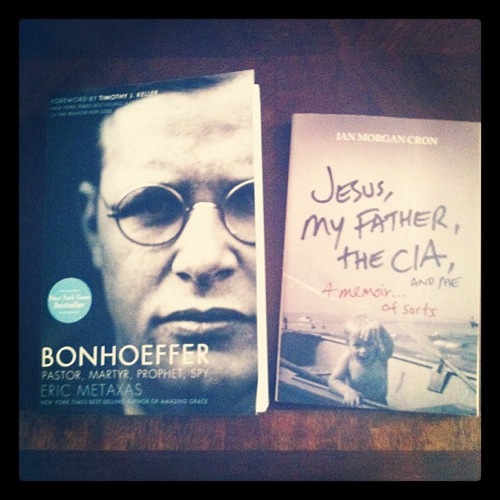
    First off, special thanks to Meryl Zegarek Public Relations, Inc. for keeping me in the loop on new and newly released books. Meryl is a top-notch publicist that has the patience to get even miscreants like yours truly up to speed on good books that deserve a second look. Some readers may recall that Ms. Zegarek was my contact to review Ian Morgan Cron’s Jesus, My Father, the CIA and Me. She also very graciously offered me the chance to review Eric Metaxas’ Bonhoeffer. While I am more than half-way through, this remains a project that is still very much in the works.

    So here’s a few book reviews you can expect to read – ideally by the end of April.
    Book Review 04/2012

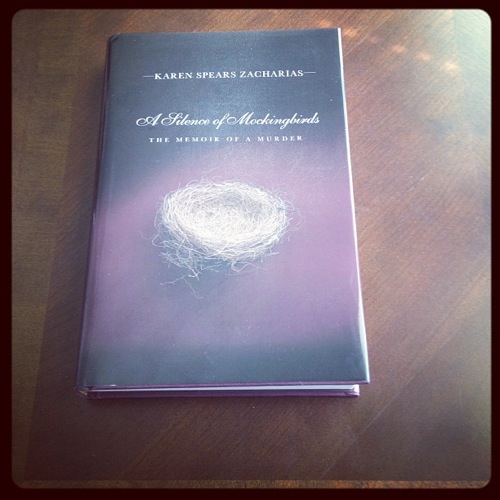
    Karen Spears Zacharias, A Silence of Mockingbirds: the Memoir of a Murder. Release: April 1, 2012.

    Ms. Karen Spears Zacharias is a former investigative journalist chronicling the heartbreaking murder of a young girl. The story is especially meaningful and touching given the author’s close relationship with the mother of the deceased child, and even the accused murderer himself. Look for a review in early April.
    Book Reviews Nov and Dec

    Eric Metaxas, Bonhoeffer: Pastor, Martyr, Prophet, Spy. Release: August 30, 2011.

    As the title suggests, this book is a biography of famed WWII era pastor/theologian Dietrich Bonhoeffer. The author tells a compelling narrative about Bonhoeffer’s life, beginning in the early years of his childhood through his death at the hand of the Nazi regime. It really is a fascinating read. I had hope to have the review done late last year, but life and work managed to get in the way. Look for a review sometime during the middle of April. I owe this one to Meryl.
    My Struggle  Karl Ove Knausgaard

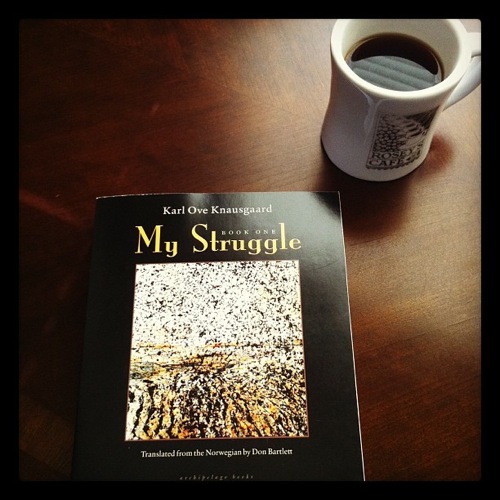
    Karl Knausgaard, My Struggle: Book One. Release: May 1, 2012.

    Knausgaard has been fancifully called the Norwegian Marcel Proust. Having spent some time leafing through In Search of Lost Time, I’m not sure I agree at this point. But the largely autobiographical work is nonetheless compelling, if a bit laborious in places. While I’m not very far into the work, I suspect that each page will be a mini, literary cosmos all its own. And that’s the benefit of such a book really. Sometimes it’s just nice to simply enjoy the language of a work for the sheer joy of language itself. Look for a review by the end of the month.

    As always, thanks for your patience. And stay tuned for more…

  • Some Thoughts About Our First Child

    Baby Fodder

    About a week ago, my wife and I found out that we are set to become parents sometime around October 22nd.

    The news was somewhat surprising, although not wholly unexpected. I considered sharing some of the details with you, but I think the entire matter can best be summed up in a bit of helpful advice to those actively participating in various forms of family planning: Doubling up on the pill after having missed a dose does NOT right the ledger.

    Just saying…

    Anyway, the funny thing is that for most of our marriage I have been the weaker part of our duo – the one opposed to all things baby, including baby carrots, baby tomatoes and baby as a term of affection for one’s significant other. In fact, my personal taste of hell was the time I booked a last minute flight to Oklahoma which left me wedged between two obese passengers and a screaming baby directly in front of me. I realize this sounds a bit like a cliché. If only reality had been so kind.

    Nevertheless, once we received the news and had it confirmed, my opposition to children strangely melted away. I found myself involuntarily wandering to Baby Ralph Lauren, Baby J. Crew, and scouring the web for a “big sister” t-shirt for our dog. I suppose even the mightiest wall can crumble. Any residual opposition vanished entirely when I saw the photo above and heard our baby’s heart beating at a healthy 179 beats per minute.

    Of course, my wife Gwyn has been ready for children for some time now. I don’t know that pregnant women ‘glow’ per se, but she certainly has a luminescence of late. And even if this weren’t the case, the grin she permanently wears all but broadcasts our news. In terms of health, and mood swings, I have to say that my cherished partner has done remarkably well. In fact, my lone complaint through the entire pregnancy, thus far, was the $8, CVS Pregnancy Test that she used to find out we were expecting. Obviously the home test worked just as well as any of the others, but something about it made me feel like a spendthrift considering the $149 Clearblue Easy Fertility Monitor that we could have been using all along. Apparently, if we had ordered on-line we could have gotten the thing for a drop over $6. At least we didn’t buy it on sale.

    I suppose the main reticence I have about welcoming my own spawn into the World stems from the abject fear that I will somehow find a way to royally screw up this parenting gig. Childhood is really one of the most formative periods in life. It’s a time that is both precious and precarious. Given the immense pressure to succeed (think Baby Mozart CDs, early childhood education, sports clubs, prep schools, college expectations, etc.),  I still can’t help but walk into Fatherhood with some degree of trepidation.

    More immediately, my concern is that personalities are formed during childhood and the process and experience that go into forging a human being are extraordinarily subjective. Dreams are hatched in the minds of precocious young kids. And while some kids are headstrong and sarcastic (viz., yours truly), for others the least bit of negative feedback can crush a childhood dream in an instant (viz., most of Generation X). On the other hand, one moment of well-timed encouragement could well spark a life long fascination in a child’s mind that leads it to incredible success. The possibilities and nuances are beyond my comprehension.

    Aside from personal quandaries, I also can’t help but think about the type of world that our child will be entering. With sabers rattling in Iran, the pervasive threat of terrorism, and pink slime in school cafeterias, I think it’s perfectly reasonable to wonder about our child’s future and the challenges it will face in the coming years. Of course, this reminds me that every child that has ever been born has also faced uncertain times. Our child isn’t being born in the midst of a World War, for example. And our child will be born in the United States of America, which even in the midst of recession is still the most consequential and powerful country in the world. It will have advantages that many of its peers around the world lack and will always lack. It will have access to the internet, clean water, healthy foods, health care, education, shelter, transportation, information, two laughably overeducated parents and the world’s laziest guard dog. Our child will not have every advantage. But it will have every opportunity to succeed after a decent start. And as a result of its generally favorable provenance, it will also have a moral and ethical obligation to serve others. I can’t help but think it all quite a lot to expect of someone that is, right now, less than an inch tall.

    Assuming there is a point to be drawn from any of the above, I suppose it is the obvious – that life is chaotic and unpredictable. And that’s ok.

    The best we can do is embrace the unknown, pray for strength and wisdom in our successes and failures, and resolve to forge ahead, day by day. In other words, c’est la guerre.

  • Innovation in America: The TiGr Lock Story

    I’ve been staying up inordinately late the past couple of nights, devouring the Suzanne Collins series The Hunger Games Trilogy. I think my approximate bedtime each night has been between 3:30am and 4:15am. I understand that moderation is the appropriate virtue that I should be seeking to develop – particularly with Lent beginning tomorrow. Still, there’s something very satisfying about greedily reading a book into the wee, small hours of the morning.

    After realizing that my long blinks were becoming increasingly longer, I decided to hit the sack. But a final check of my Email suddenly left me wide awake. Extricating myself from the vice-like snuggle of our pooch, I padded down the hallway as not to wake my wife. I fired up the computer, and in the dead of night I logged on to an obscure website called http://tigrlock.com/.

    The TiGr Lock is a kickstarter project that I have been following for almost nine months. The vision of a father/son duo, their goal was to create and market a bicycle lock that hit the holy trifecta of cycling – a bike lock that is secure, light weight, and aesthetically pleasing. Anyone who has cycled will immediately understand how such a lock has the potential to change the game in terms of bicycle security.

    The problem is that most bike locks on the market tend to be large and cumbersome – think massive chains, and weighty U-Locks. Needless to say, such prophylactic devices are hardly very convenient when riding around on a road bike that is engineered to be light weight and relatively minimalist in stye.

    There’s also the unfortunate matter that bicycle security devices, in general, aren’t terribly reliable. Security cables can be cut, and the ever popular U-Lock can be easily picked. As the market stands today, locking up a bike is more about theft deterrence than actual security.

    Enter the TiGr Lock.

    In preliminary testing, the TiGr Lock outperformed the typical U-lock in a series of three tests, using common bike theft tools: a tungsten-carbide handsaw, an angle grinder, and a (massive) pair of bolt cutters. And aside from its security benefits, the lock itself weighs about 1.5lbs  (or 24oz as the manufacturers cleverly note). The video below shows a side-by-side demonstration of the tests.

    Aside from the potential to revolutionize bicycle security, one of the things I find most exciting about this project is the way in which the TiGr Lock story so closely mirrors the adventures and misadventures of countless entrepreneurs. The scrappy idea began in the workshop of its father/son inventors John and Bob Loughlin. Realizing they were on to something, the two inventors first sought outside investment capital from grassroots supporters to get the project off the ground. In a matter of weeks, supporters funded the TiGr Lock Kickstarter program at roughly 300%.

    Sensing the lock’s obvious momentum, the next step for the team was to follow their Kickstarter program by doing live product testing using complimentary product samples for the same supporters who originally backed the project. After mailing sample locks to supporters of a certain donation level, they obtained device feedback over a period of several months. In the meantime, the team formed its own LLC, and sought patent and trademark protection from the U.S. Patent and Trademark Office.

    Finally, last night, the TiGr Lock website went live, offering customers the company’s first product run. Assuming the launch is a success, the rest may well be history. Already, the TiGr Lock story has been featured in a number of major publications including the Wall St. Journal, Forbes, and USA Today. Let it not be said that innovation in America is dead.

    After my clandestine rendezvous in our home office and another hour of reconnaissance, I quickly ordered my own TiGr Lock before slipping back into bed. Seeing as I neglected to inform my wife of the purchase, the $200 question will be how long I can keep a secret…

  • The View From the Top of the World

    Some eleven years ago, Vanity Fair contributor Bryan Burrough wrote a lengthy, if not macabre, article about the disappearance of a pair of mountaineers who were attempting to become the first individuals to summit Mt. Everest.

    The two were an odd pair. The leader of the 1924 expedition was renown British mountaineer George Mallory, who was making his third and final attempt to reach the top of the world. His partner was an accomplished, yet comparative neophyte climber named Andrew “Sandy” Irvine. The trek up Everest was Irvine’s first.

    As the duo braced for the final push, ascending the mountain’s infamous “second step,” fellow mountaineer Noel Odell spotted the two in the distance:

    From what Odell could see, they had barely 900 feet to go before they reached the summit. Then a veil of high white clouds dropped across the mountaintop, obscuring Odell’s view, and the two men disappeared.

    Forever.

    [Link]

    The fate of the two men, and their success was a complete mystery, left shrouded in Everest’s icy mist until May 1, 1999, when a gaggle of American climbers found the proverbial needle in the haystack on Everest’s icy slopes, and discovered the body of George Mallory. Whether Mallory and Irvine actually reached the summit remains unclear.

    Burrough’s tale is, of course, gripping. He describes Mallory and Irvine’s ascent through the “death zone” of Mt. Everest, and explains the remarkable odds faced by climbers who challenge the angry mountain.

    Since Everest was first conquered by Sir Edmund Hillary in 1953, roughly 219 people have perished in their attempt to follow suit. The death of Francys (Fran) Arsentiev is a particularly harrowing account. Arsentiev was an American climber who was discovered alive though ailing on the mountain by a group of climbers. After assessing Arsentiev’s condition, and the weather conditions on Everest, the group left her to die as they made their ascent.

    The accounts and documentaries on the difficulties of summiting Mt. Everest, leave me utterly entranced by the human need to accomplish. We homo sapiens seem to have something hard wired in us that cuts across cultures, and prompts us to test our limits. In the Arsentiev story, climbers saw the risks that awaited them, yet left her to pursue their climb anyway. A more callous interpretation of the story is that the climbers’ need to reach the summit trumped their concern for human life, sentencing Arsentiev to death – though the matter is admittedly much more complex. As for Mallory and Irvine, climbing in 1924, they were attempting the impossible. Everest had never been climbed. Their gear consisted of woolen jackets and hobnail boots. The odds of success had them doomed from the start. And yet, they climbed. Some theories even have Mallory actually summiting before his death – a full 29 years before Sir Edmund Hillary.

    Mallory reputedly said he wanted to climb Everest simply, “because it’s there.” Whether the quotation is true or not, it aptly sums up a great deal about the life we live. Why did mankind go to the Moon? What prompted our scientific advances in medicine? What made Steve Jobs and Steve Wozniak create the Apple I and Apple II computers? What makes an otherwise sane person pursue a doctorate (in any field)? What makes a group of disgruntled taxpayers think they can defeat the most powerful nation on Earth? Why do we set New Year’s resolutions, run marathons, smoke cigars, play video games, or create works of art, literature, and music?

    In the end, all of our creative and aspirational undertakings amount to some variation of Mallory’s “because it’s there.”

    I doubt that I will ever climb Mt. Everest, but knowing Mallory’s story leaves me with the inkling there’s something fundamentally human about the view from the top of the world. It’s in our DNA. It’s the feeling everyone gets when we conquer our respective mountains – literally, or figuratively; wherever, and whatever they may be.

  • A Dispatch from Taos

    It’s a drop past 11AM here in Taos Pueblo. The temperature has languidly paced it’s way into the 50s. A cool breeze makes its way beneath the carport here at my Grandmother’s house.

    It’s mid-October, but wood stoves burn in the distance, and the smells of piñon waft through the air as it has done for centuries in this ancient, mysterious place.

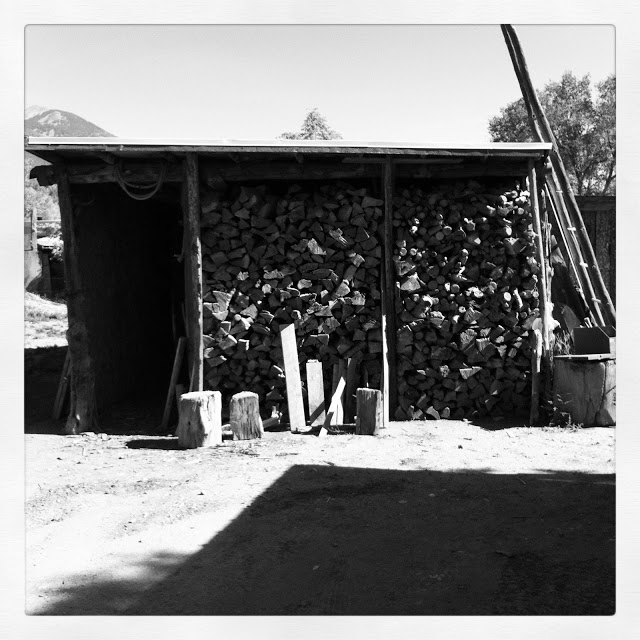
    There’s a shed across the dirt driveway. It is filled to the top of its 9-ft tall ceiling with enough wood to last two winters. I suppose the excess is important during the cold winter to come. But I’ve never seen the wood shed at less than capacity during any season.

    Maybe that’s the point. The cares and concerns here are about history and routine. Irrigating. Agriculture. Fishing. Hunting. Home repair. Tradition. Custom.

    In most respects, Taos is a full-throttled embrace of the historical. This disposition allows for language and tradition to coexist alongside the western/anglicized City of Taos less than a mile away.

    Naturally, this makes a balance with the unhistorical nearly impossible, as Nietzsche would say. Living in the moment, living for self, and the now are supreme challenges for Taos Pueblo and its denizens. Western arts, culture, and technology (aside from the ubiquitous Chevy trucks) are scarce on the reservation.

    Yet, as the leaves rustle, marking the passage of time, it’s a comfort to know that places like Taos still exist. Off the grid. A shrine to history.

    A place where time stands still.